Hidden gems for Oloro, Ageless Ascetic’s lifegain engine
Oloro looks oppressive on paper, but the best builds turn his lifegain into politics, pressure, and real decisions. Hidden gems are what make the old boogeyman feel inventive again.
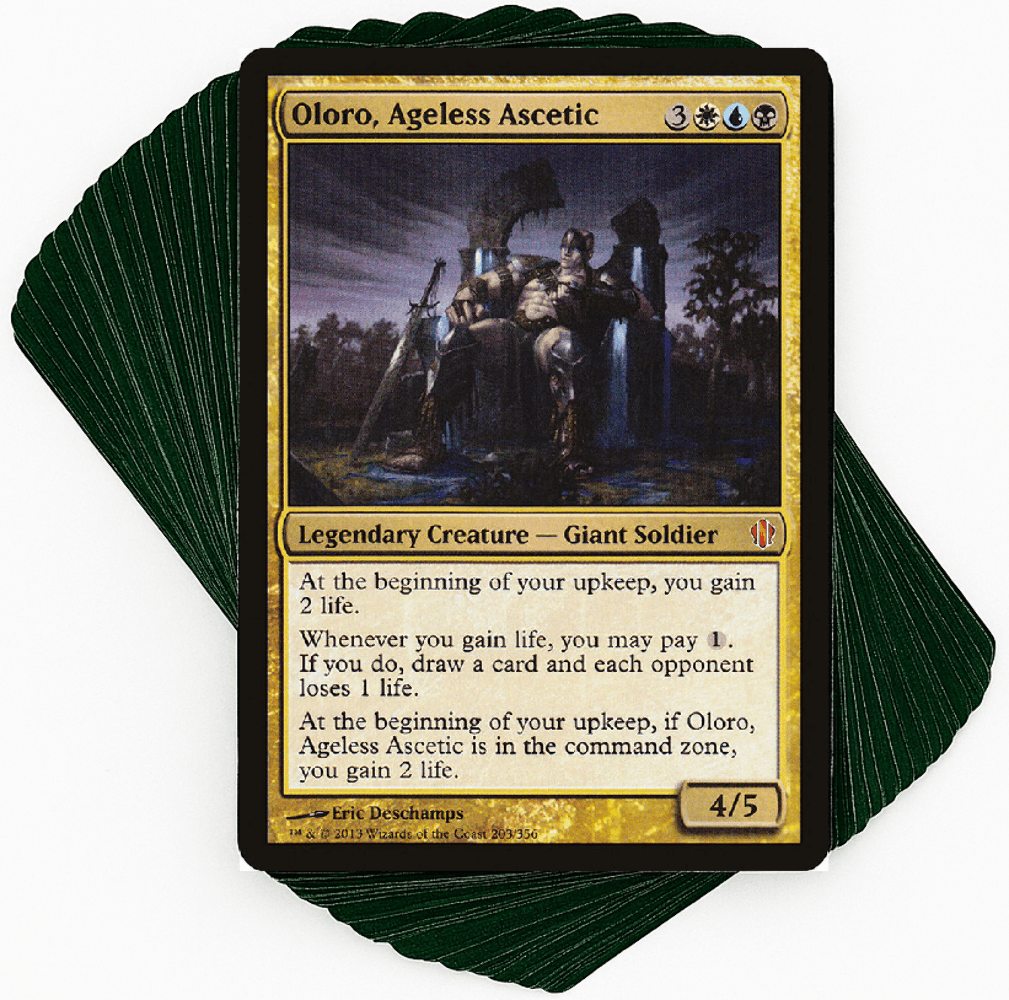
Oloro, Ageless Ascetic has spent years wearing Commander’s villain badge, but the most interesting builds do not lean on inevitability alone. Levi Perry’s Hidden Gems frame, with its 15 percent deck-share cutoff, pushes the deck away from obvious staples and toward overlooked support that turns life gain into a real engine. That is where Oloro gets rehabilitated: not as a passive pillowfort lecture, but as a commander whose upkeep trigger, drain text, and command-zone value can be tuned into something clever, interactive, and even political.
Why Oloro still casts such a long shadow
Oloro has always been more than a chunky lifegain legend. Perry’s take leans into the fact that he was a boogeyman in his day, especially during Commander 2013, and that his design helped popularize eminence, one of the format’s most polarizing mechanics. Even if you never cast him, Oloro gives you two life on every upkeep, which means he functions like a commander-sized emblem sitting in the command zone, generating value before the game has even stabilized.
If you do cast him, the engine gets nastier. Once Oloro is on the battlefield, he turns every instance of life gain into card advantage and life drain, which is why he has always sat at the crossroads of lifegain, pillowfort, and control. The real question is never whether the deck works. It is whether you can build it so the table feels the pressure without the list collapsing into the same stale pile of inevitability every time.
What the Hidden Gems lens changes
Perry’s June 11, 2026 column arrives with a clear filter: a hidden gem has to show up in 15 percent of decks or fewer for that commander. That rule matters because it keeps the spotlight off the obvious all-stars and forces the conversation toward cards that are quietly excellent, not merely famous. In Oloro, that means looking for pieces that do more than pad life totals. They need to keep the engine moving, survive long games, and convert small swings into meaningful pressure.
That approach is also why Oloro fits the moment so well during Precon Month. He is a nostalgic pick, but not a sleepy one. The best hidden gems are the cards that let an old commander feel fresh again without pretending his core plan has changed.
Eternal Bargain still tells you how the deck wanted to function
Oloro came to Commander as one of the commanders in Eternal Bargain, one of the three possible commanders in the Commander 2013 Esper precon. Wizards of the Coast previewed that decklist on October 18, 2013, and the shell already told the story: lifegain, control, and inevitability, all working together. The list included Well of Lost Dreams, Sanguine Bond, Sun Droplet, Pristine Talisman, Cradle of Vitality, Darksteel Mutation, Phyrexian Reclamation, and Toxic Deluge, which is a very clean snapshot of how Wizards expected the deck to behave.
Those cards sketch out the bones of the archetype. Well of Lost Dreams and Cradle of Vitality show that life gain was meant to be cashed into cards and creature growth. Sanguine Bond turns every life swing into a threat. Sun Droplet and Pristine Talisman keep the totals moving while smoothing out the early turns, Darksteel Mutation buys time against problem creatures, Phyrexian Reclamation makes attrition matter, and Toxic Deluge gives the deck a reset button when the table gets out of hand. The hidden-gem mindset does not replace that structure. It sharpens it.
The lore makes the gameplay feel intentional
Oloro’s official lore is part of why the card feels so singular. Wizards describes him as a manipulator of life and death who guards the secret to eternal life on a remote, mist-shrouded island, with thieves and mystics seeking him out for what he knows. That matters because the card’s mechanics match the story almost too neatly. He is not just gaining life, he is hoarding it, controlling access to it, and turning it into leverage.
That is also where the most interesting Oloro builds become political instead of merely oppressive. Lifegain can be a blunt instrument, but in a multiplayer game it becomes more nuanced when every point of life can be used as bargaining power, a buffer against attacks, or a way to steer removal elsewhere. The best support cards make those exchanges feel earned.
Why older commanders keep evolving
Commander’s own history helps explain why Oloro still has room to grow. Commander 2013 was released on November 1, 2013, after being announced at San Diego Comic-Con on July 20, 2013, and Wizards framed it as a follow-up to the successful 2011 Commander product. By 2017, Wizards was describing Commander as a format with a global, monstrous following, and Commander 2017 released on August 25, 2017. That kind of sustained support is what keeps old legends alive.
The important part is that the commander does not need new text to feel different. New printings, new support cards, and a better eye for hidden gems can make an old shell feel newly tuned. Oloro is proof that a notorious commander does not have to stay frozen in the stereotype that made him infamous. The right hidden pieces turn him from a passive life total machine into a deck that pressures the table through patience, politics, and precision, which is exactly where the legend becomes fun again.
This article was produced by Prism’s automated news system from verified source data, official records, and press releases, then run through automated quality and moderation checks before publishing. The system is built and supervised by the people who set the standards it runs under. Read our full AI policy.
Did this article answer your question?