Krarkashima cEDH builds shift as EDHREC tracks rising staples
Krarkashima is still a moving target, and EDHREC’s latest data points to the cards cEDH pilots are leaning on right now. The deck’s core is tightening around storm turns, board control, and a few unmistakable staples.
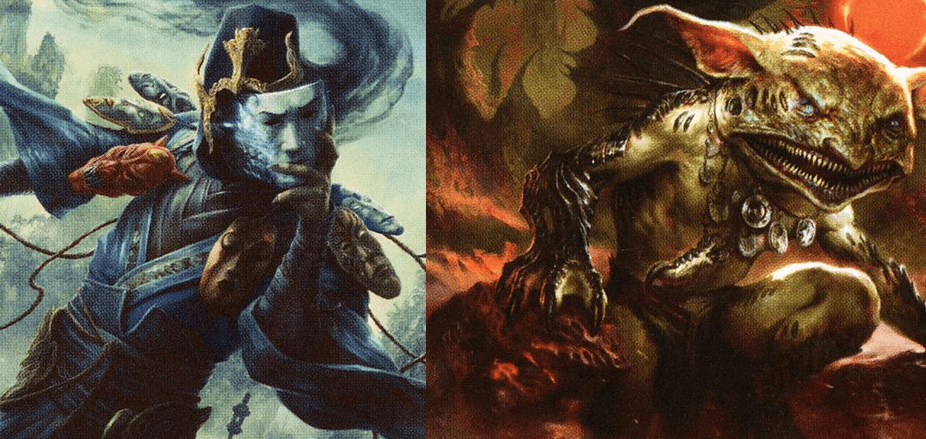
Krarkashima is changing in real time, and the biggest question for pilots is simple: what actually changed for Krarkashima players right now? EDHREC’s latest Fire and Ice installment answers that by treating Krark, the Thumbless and Sakashima of a Thousand Faces as a living cEDH shell, not a solved list. The deck still carries its trademark split personality, with one plan built to storm off and another built to keep the board under control until the combo turn arrives.
The current Krarkashima identity
The Fire and Ice column approaches the deck from a data-first angle, using EDHREC inclusion trends to show how the archetype has evolved over time. That matters because Krarkashima is not a pile of fixed staples so much as a high-churn engine with multiple viable subpackages, and the cards most players choose can reveal where the metagame is pushing the list.
This version of the deck is described as a Bracket 5 list, which fits the reputation perfectly. It wants to chain spells, exploit copy effects, and still have enough interaction to stop opponents from taking over first. That tension is the heart of the archetype: every slot has to support either the storm turn or the control plan, and often both.
What the deck is built around now
The article points to Tavern Scoundrel, Gitaxian Probe, and Grapeshot as major staples in the archetype’s current identity. Those names tell you a lot about the shape of the list. Tavern Scoundrel rewards the sort of spell-heavy turns Krarkashima already wants to play, Gitaxian Probe fuels information and velocity, and Grapeshot gives the deck a clean payoff when the engine gets rolling.
That combination also explains why the deck remains so dangerous in cEDH tables. Krarkashima does not need to settle for a single route to victory; it can pivot between incremental value, pressure, and outright combo finish depending on what the table gives it. The result is a list that looks elastic on paper and even more fluid in practice.
Why the hot and cold cards matter
The point of Fire and Ice is not just to name popular cards. It uses rising and falling inclusion data to show where competitive players are drifting, and in a deck like this, that drift is strategic. A card climbing the rankings is rarely just “good”; it usually means players have found a better way to survive, sculpt, or convert the Krark engine into a win.
That is especially relevant here because the archetype has so many subpackages. If one cluster of cards starts cooling off while another rises, the change can point to a metagame response as much as a raw power upgrade. For Krarkashima pilots, that means the real lesson is not to chase every staple in a vacuum, but to notice which kinds of effects keep appearing in successful lists.
What current pilots should swap in today
If you are tuning Krarkashima now, the safest move is to focus on the categories the deck clearly values today: repeatable targeted effects, spell-density payoffs, and cards that buy time until the storm turn. The current staples make that direction obvious. Gitaxian Probe helps the deck keep moving, Tavern Scoundrel supports the spell-copy engine, and Grapeshot remains one of the clearest ways to cash in a big sequence.
That also means weaker filler should give way to cards that do more than one job. In Krarkashima, a slot that only draws cards or only blocks damage is often less useful than one that advances the combo, protects the board state, or converts a burst of spells into damage. The archetype rewards density and flexibility, so every swap should strengthen the same core loop.
What the data says about the metagame
The most useful part of the Fire and Ice approach is how it turns raw inclusion numbers into actual deckbuilding advice. Instead of presenting popularity as trivia, the column frames it as evidence of how cEDH players are adapting to the current environment. That makes the article valuable whether you are piloting the deck or trying to beat it.
For opponents, the takeaway is just as direct. If Krarkashima continues to concentrate around spell-dense, repeatable, tempo-positive cards, then the deck remains built to punish slow starts and loose interaction. If you sit across from Krark and Sakashima, you are not just fighting a combo deck; you are fighting a list that can grind, sculpt, and explode depending on which part of its shell it needs most.
Krarkashima has always been infamous because it refuses to stay still, and that is exactly what EDHREC’s latest readout captures. The cards changing in and out of the list are not side notes. They are the clearest sign of what the deck is trying to do right now, and they point straight back to the same pressure-tested core: storm efficiently, control the table long enough to get there, and keep the spell count high enough that the whole machine keeps turning.
This article was produced by Prism’s automated news system from verified source data, official records, and press releases, then run through automated quality and moderation checks before publishing. The system is built and supervised by the people who set the standards it runs under. Read our full AI policy.
Did this article answer your question?