Mind Stone may be underwhelming, but still useful in Commander
Mind Stone wins by being honest: efficient ramp, not a hype machine. In Commander, that kind of restraint can matter more than a flashy name.

**Mind Stone is exactly the kind of spoiler-season card that can fool Commander players if they let the name do the work.** Levi Perry’s take on the reveal, published on May 13, 2026, lands on the right lesson for the format: don’t judge a card by the Marvel weight behind it, judge it by the job it actually does.
A famous name does not automatically mean a stronger Commander card
Mind Stone has a built-in problem and a built-in advantage. The problem is that “Infinity Stone” sounds like it should be absurdly powerful, the kind of thing that warps a table the second it hits the battlefield. The advantage is that Commander decks already know exactly what a good mana rock is supposed to do, and that standard is much more practical than the packaging around it. Perry’s read is measured for a reason: if the card simply ramps cleanly, without demanding you reshape your list around it, that is still a win.
That is the right way to evaluate spoiler-season reveals in Commander. A card can be useful without being headline material. In fact, the format often rewards cards that do one thing efficiently and ask for very little in return. A piece of ramp that is easy to cast, easy to replace, and easy to slot into an existing curve can be more valuable than a splashier effect that looks better in a vacuum and plays worse in a real pod.
The card’s value lives in its role, not its branding
This is where Mind Stone earns its keep. In Commander, the first few turns often decide whether you get to develop your game or spend the rest of the table trying to claw back tempo. A mana rock that quietly accelerates you, then later cashes itself in for a card, is not flashy, but it is clean. It fills a slot you already wanted filled, and it does it without forcing you into weird deckbuilding contortions.
That matters because the best ramp in the format is not always the ramp that creates the biggest story. It is the ramp that smooths your opening turns, supports your commander, and keeps your draw steps relevant later. Mind Stone’s appeal sits in that low-opportunity-cost lane. If you are building an artifact deck, a midrange shell that wants redundancy, or a list that simply needs another two-mana rock, the card can pull real weight without ever feeling like a centerpiece.
That is also why the word “underwhelming” is not an insult here. Sometimes the healthiest cards in Commander are the ones that are merely solid. They do not crowd out other options, they do not become mandatory in every colorless-adjacent deck, and they do not push the format toward the same pile of auto-includes over and over again. A fair card can be better for the format than another must-play mana rock.
Why “solid but fair” is a good thing for Commander
Commander already has enough cards that become default inclusions just because they are efficient in every context. When a new release hands you another obvious staple, deckbuilding gets flatter, not deeper. Mind Stone avoids that trap. It is useful, but it is not trying to be a universal answer, and that restraint should be read as a feature rather than a failure.

That is especially true in a multiplayer format where context matters so much. The decks that benefit most from a deliberately underpowered design are the ones that want efficiency without distortion: faster shell archetypes, artifact synergy lists, and decks that value ramp density over raw power. If your commander wants to curve out, if your plan rewards early development, or if you want another piece of mana acceleration that does not force you to abandon synergy slots, Mind Stone makes sense. If you were hoping for a card that would rewrite the way Commander is built, this is not that card, and that is precisely why it is healthier than one more all-purpose auto-include.
The Marvel Super Heroes framing changes the expectation, not the function
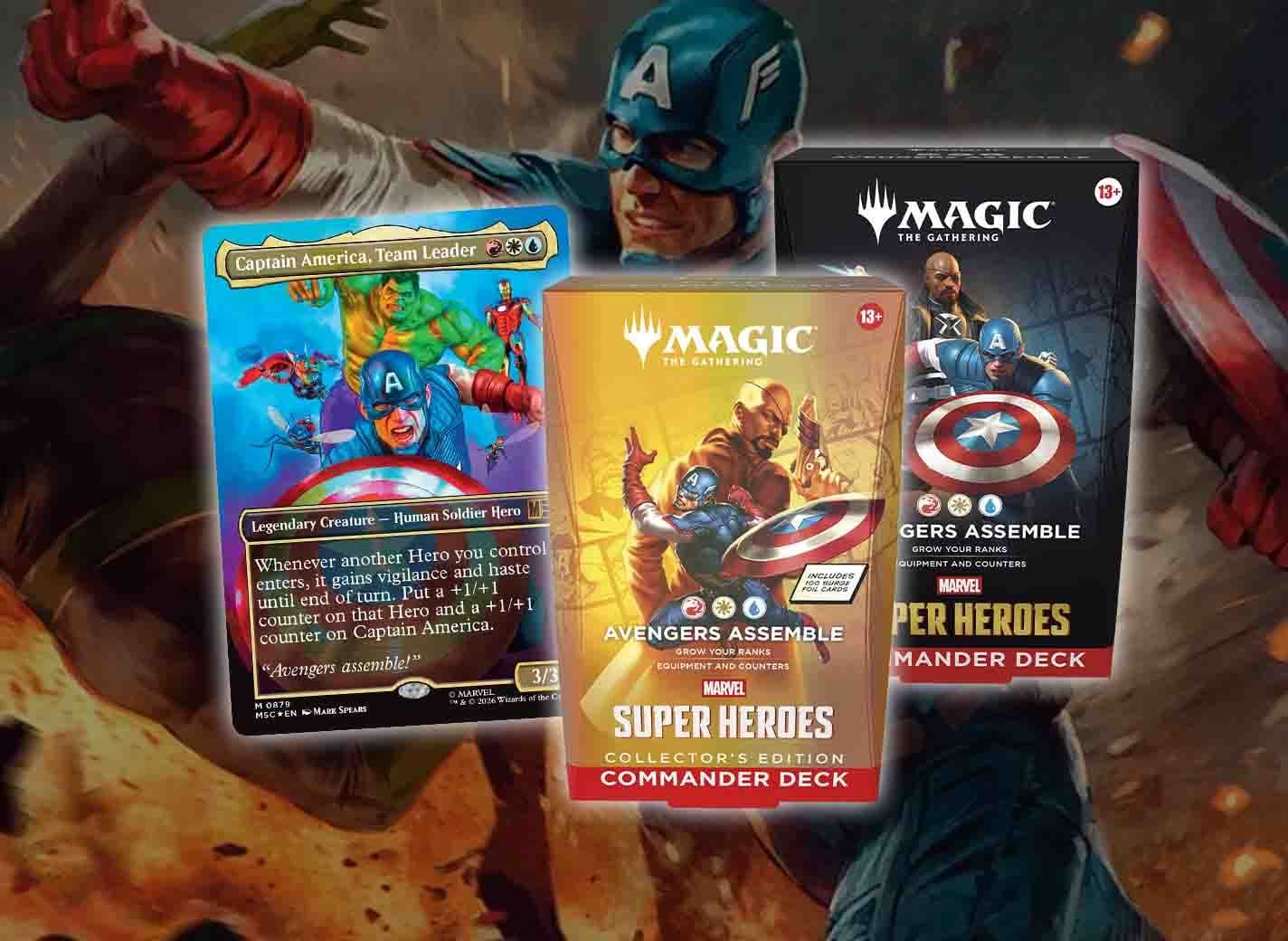
Wizards of the Coast has been clear about the broader context. Magic: The Gathering | Marvel Super Heroes releases on June 26, 2026, it is part of a multi-year team-up with Marvel, and Wizards has said 2026 will include seven Magic sets. That is a lot of product, and a lot of opportunities for crossover cards to be judged first by brand recognition and second by actual play pattern.
Wizards also says the Cosmic Foil version of The Mind Stone is mechanically identical to the other treatments of the card. That detail tells you everything you need to know about the set’s presentation. The collectible treatment is doing the heavy lifting on the premium side, while the game piece itself stays grounded. Mind Stone is one of six Infinity Stone headliner cards in the promotion, which only sharpens the contrast between the mythic Marvel identity and the very ordinary Commander reality of “good ramp, if you need it.”
That gap between spectacle and function is where a lot of spoiler-season overreactions happen. People see a famous object from pop culture and assume the card must be a format-defining monster. But Commander rewards the opposite kind of discipline. You ask what the card does on turn two, what it does on turn six, and whether it earns a slot without demanding applause.
EDHREC’s numbers explain why the reveal lands as expectation-setting
EDHREC’s Mind Stone page already shows the card in more than 1.24 million decks overall, which is a huge clue about how Commander players already treat it. This is not a forgotten relic waiting for a breakout moment. It is already established, already familiar, and already doing the kind of quiet work that keeps decks moving. EDHREC’s Marvel Super Heroes set page also shows that the set is already generating Commander-specific discussion and deck data, so the reveal is landing in a community that knows exactly how to weigh new cards against old habits.
That is why Perry’s reaction works so well. He is not pretending the card is secretly broken, and he is not dismissing it just because it is not splashy enough for a trailer shot. He is making the more useful point: Commander players should evaluate revealed cards by role and rate, not by nostalgic name recognition or the assumption that every marquee property must produce a staple.
Mind Stone may be underwhelming as a headline, but that is the point. In Commander, a card that simply does its job cleanly can be worth more than a louder card that asks too much. That kind of restraint does not just make Mind Stone playable. It makes the format better.
This article was produced by Prism’s automated news system from verified source data, official records, and press releases, then run through automated quality and moderation checks before publishing. The system is built and supervised by the people who set the standards it runs under. Read our full AI policy.
Did this article answer your question?