Old Hob turns temporary Mutant tokens into lasting Commander pressure
Old Hob turns disposable Mutant tokens into a sticky Boros pressure engine, and that makes the usual overextension problem much less punishing.
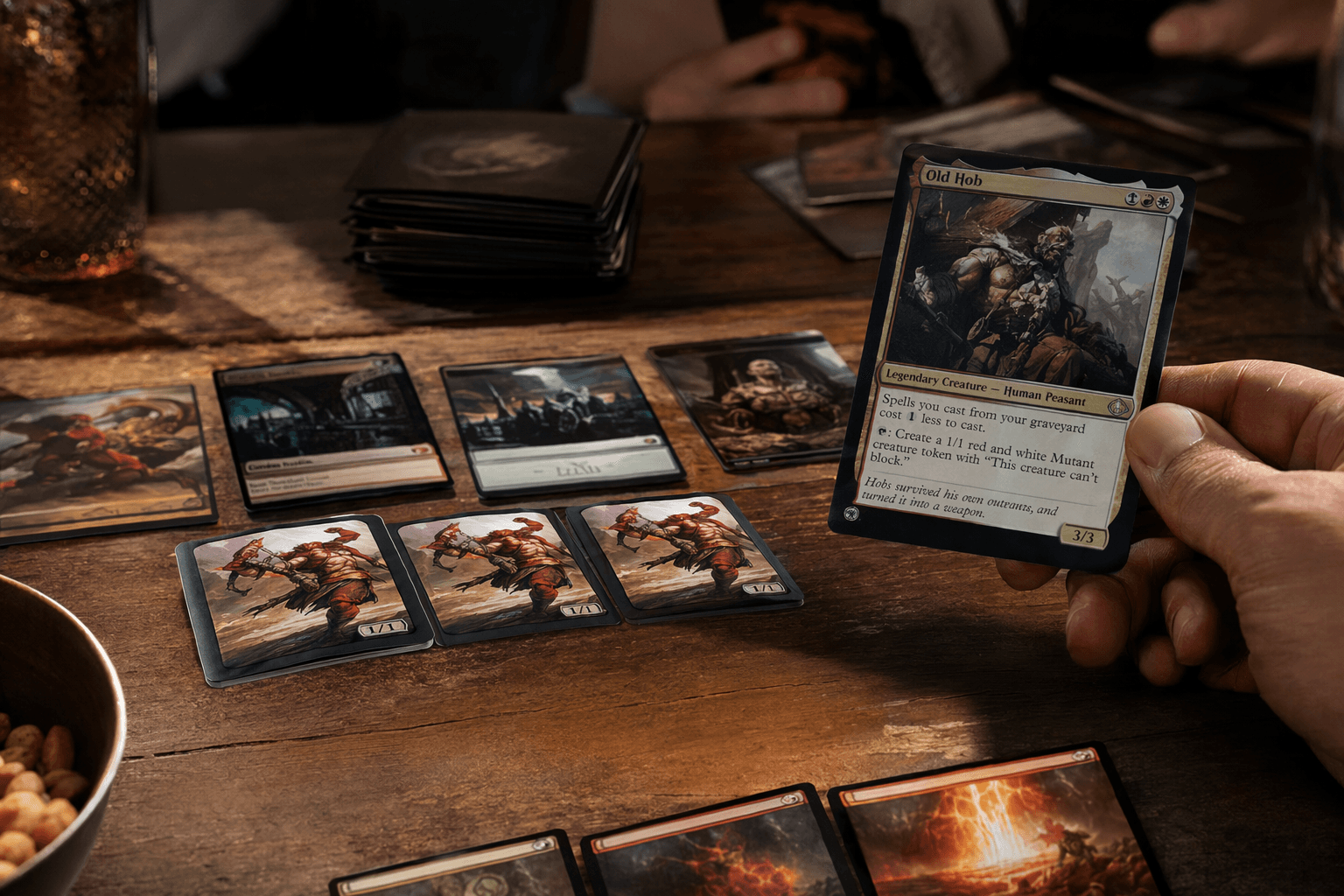
Old Hob turns throwaway tokens into board control
Boros token decks usually live and die by the wipe. They flood the board, swing hard, and hope the table does not reset the whole thing at once. Old Hob, Alleycat Blues changes that script by making the tokens themselves part of the resilience plan: every combat step brings a new Mutant, and 1W turns the right token into one that survives long enough to matter.

How Old Hob actually keeps pressure on the table
Old Hob is a five-mana Legendary Creature - Cat Mutant Rebel, and the important part is not just that he makes a token. At the beginning of combat on your turn, he creates a 2/2 red Mutant creature token with haste, then sets up a delayed trigger to destroy it at the beginning of the next end step. That means the default mode is disposable damage, the sort of body Boros decks are used to cashing in fast.
His activated ability is what makes the card interesting in Commander: for 1W, target attacking creature token gains indestructible until end of turn. On paper, that looks like a neat trick. In practice, it is the line that turns a temporary token into a lasting problem for the table.
The rules note matters here. If that Mutant token avoids being destroyed because it gained indestructible, the delayed triggered ability will not come back later and try again. So once you protect the token, you are not just buying one extra combat step, you are removing the expiration date entirely.
Why that changes the Boros token plan
Boros token lists often hit the same wall: they build wider than they build deeper. If the board survives, they look great. If the board gets swept, they can struggle to rebuild at the same pace as green token shells. Old Hob attacks that weakness directly by giving Boros a recursive engine instead of a one-shot burst.
That is the real draw here. The commander keeps making material every turn, and the deck is built to make that material sticky. Temporary token makers stop being just a source of chump attacks and become a way to stock the battlefield with bodies that can be protected, upgraded, and carried through removal. For Boros deckbuilders, that is the difference between a pile of attackers and a board that keeps coming back.
EDHREC currently tags Old Hob for Tokens, +1/+1 Counters, and Aggro, and the card shows up in only 24 Commander decks. That makes him look less like a solved staple and more like a build-around with room to grow. If you like commanders that reward sequencing and combat math, he is still early enough to feel fresh.
What the support package is trying to do
The list around Old Hob leans into the same idea from multiple angles: make bodies, keep bodies, then make those bodies matter. Cards like Skyclave Relic, Abundant Countryside, Fountainport, and Big Apple, 3 a.m. are there to keep mana flowing and board development moving. That kind of support matters because Old Hob wants to spend mana every turn on pressure, not just on setup.
The protection layer is where the deck earns its reputation. Avacyn, Angel of Hope and Eldrazi Monument push the board toward the kind of staying power Boros usually has to fake with combat tricks and hopes. When your commander is already making fresh tokens, indestructibility and evasion stop being luxury upgrades and start becoming the engine that keeps the deck from stalling out after the first exchange.
The key play pattern is simple enough to remember and strong enough to build around: 1. Make a Mutant token at combat. 2. Attack with it immediately. 3. Use Old Hob’s activated ability on the token you want to keep. 4. Keep the pressure rolling on the next turn.
That sequence is why the deck feels different from a normal go-wide Boros list. You are not just rebuilding after removal. You are converting the commander’s temporary output into persistent board presence.
A TMNT brew that plays like a real Commander deck
This is Abe Sargent’s fifth EDH brew around a TMNT commander, following previous themed builds around Rat King, Mutagen Man, and the Neutrinos. That context matters because it shows Old Hob is not being used as a novelty mascot. He is the capstone of a mini-series of commander experiments, and this one lands because the mechanics do the heavy lifting.
The crossover is the hook, sure, but the gameplay is what sells it. A lot of themed Commander decks rely on flavor and hope the table goes along for the ride. Old Hob is better than that. He gives you a tight loop, an obvious combat plan, and just enough rules leverage to make your tokens feel like threats instead of disposable chaff.
Why Boros token players should care
Boros token strategies have been a long-running Commander archetype, and EDHREC’s dedicated Boros Tokens hub shows how established that lane already is. The problem has never been whether Boros can make creatures. The problem is whether those creatures survive long enough to keep mattering after the first sweep or trade.
That is where Old Hob earns his spot. He does not reinvent Boros token decks so much as fix the part that usually gets them killed. Instead of overextending and praying, you are building a board that can absorb a reset and still keep attacking. Commander Masters, which Wizards announced on July 18, 2023 and said would hit stores worldwide on August 4, 2023, also reinforces how much ongoing support token play continues to get, with four Commander decks and ten double-faced tokens in each deck.
Old Hob is still the interesting version of that story, though, because he makes the token plan feel stubborn. The deck wants to attack every turn, protect the best bodies, and turn temporary Mutants into permanent headaches. That is exactly the kind of Boros engine that stops feeling gimmicky and starts feeling like a real plan.
This article was produced by Prism’s automated news system from verified source data, official records, and press releases, then run through automated quality and moderation checks before publishing. The system is built and supervised by the people who set the standards it runs under. Read our full AI policy.
Did this article answer your question?