Token commanders prove one of Commander’s most durable archetypes
Token commanders keep winning because they can flood the board, cash in on deaths, or turn Treasure into inevitability.
The strongest token decks in Commander are not just trying to make a pile of 1/1s anymore. In a 100-card singleton format built for four-player games, repeatable token production can control combat, fuel mana, and set up finishes that look nothing like the old “go wide and attack” script. That flexibility is why token commanders keep showing up as one of the format’s most durable archetypes.
Why token commanders still feel so alive
Commander’s structure does a lot of work for token strategies. A single legendary creature leads the deck, but the games usually go long enough for board presence to matter more than raw speed, and every extra body or artifact token scales across multiple opponents. Wizards has leaned into that reality in product design too: Commander Masters included 81 full-art tokens, 8 emblems, and 2 helper cards, while each Tarkir: Dragonstorm Commander deck comes with 10 double-sided tokens.
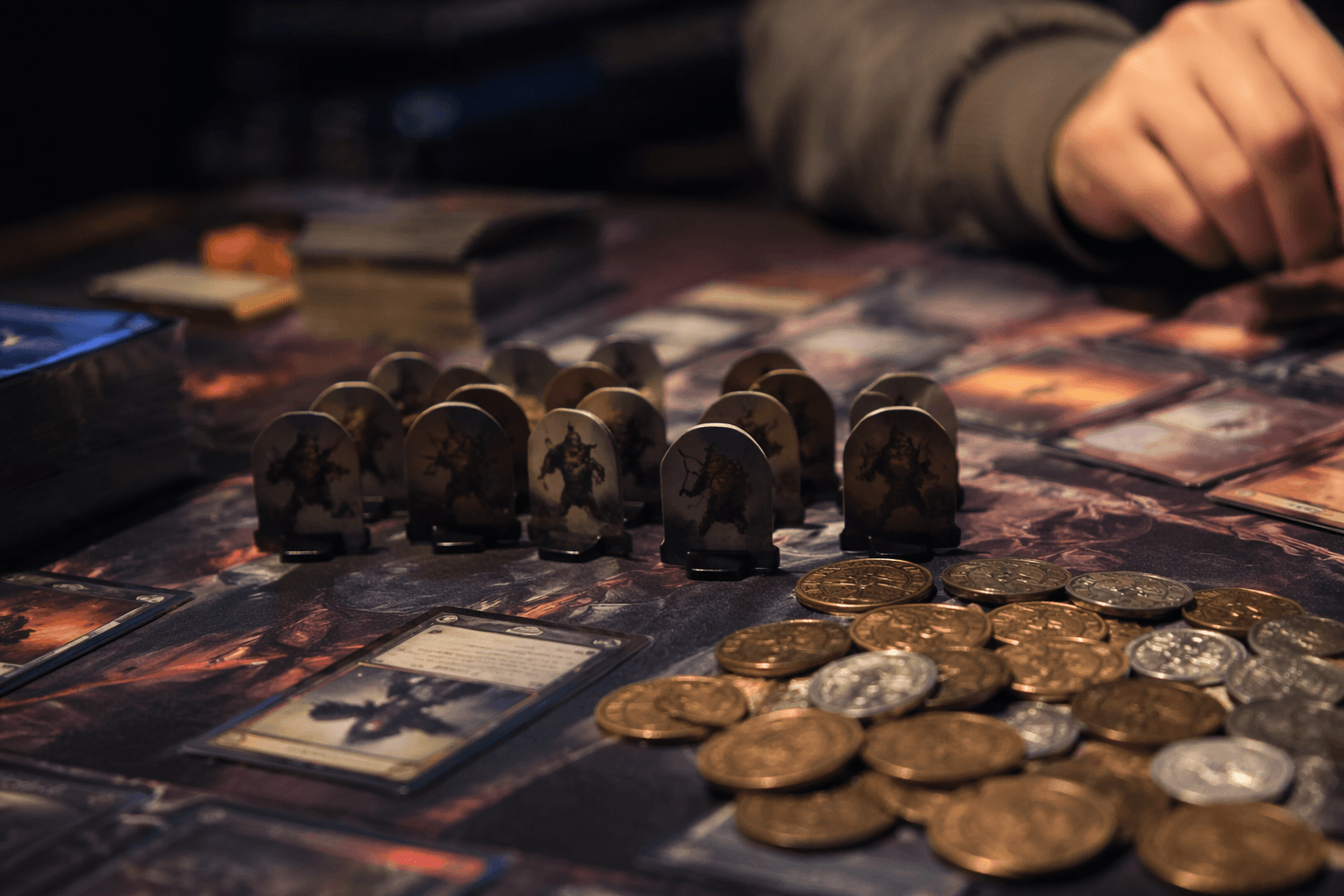
That support matters because token decks have expanded far beyond creature swarms. Treasure, Food, Clue, and Blood all sit inside the same family now, and EDHREC counts more than 300 cards that mention Treasure in their rules text. The result is a token umbrella that covers combat decks, value engines, sacrifice shells, and combo lists without losing its core identity.
Go-wide aggro: the classic plan that still closes games
If you want token decks to feel direct, go-wide aggro is still the cleanest entry point. These lists care most about making bodies early, turning them sideways, and using combat math to overwhelm a table that can only block so much. In Commander, that kind of pressure is deceptively hard to answer because a single token-maker can keep rebuilding after a sweeper if the commander or engine survives.
Modern designs have made that plan sharper. Zurgo Stormrender from Tarkir: Dragonstorm Commander is a good example of a token card that also plays like a pressure valve for combat: it has mobilize 1, creates tapped and attacking 1/1 red Warrior tokens, and its rules note says if Zurgo leaves the battlefield at the same time as one or more creature tokens you control, its last ability triggers once for each of those tokens. It also lets you choose the player, planeswalker, or battle each Warrior attacks, which means the deck is not just going wide, it is directing damage with precision.
Aristocrats: tokens as fuel, not just attackers
The aristocrats version of token Commander changes the question from “how many bodies can I make?” to “how many bodies can I cash in?” Here, creature tokens become resources for death triggers, sacrifice outlets, and damage engines that keep working even when combat stalls. That style is especially strong in multiplayer because one player’s removal spell can become another player’s trigger chain.
Zurgo Stormrender shows how blurred the line has become between token maker and payoff card. It does not merely produce attackers; it also turns token deaths into a cascading trigger pattern, so the deck can punish the table whether the tokens survive or disappear. That design philosophy has become common in recent Commander cards, where the commander itself often carries both the engine and the payoff instead of asking the deck to stitch them together from separate pieces.
Treasure and value: the most flexible token economy
Treasure changed token decks by making them feel less like board decks and more like miniature economies. Once your commander starts making Treasures, every combat step, sacrifice trigger, or landfall trigger can turn into mana, which lets token decks rebuild faster, hold up interaction, or jump into a payoff turn. That is a big reason treasure-based token lists often feel like they are always one turn away from doing something unfair.
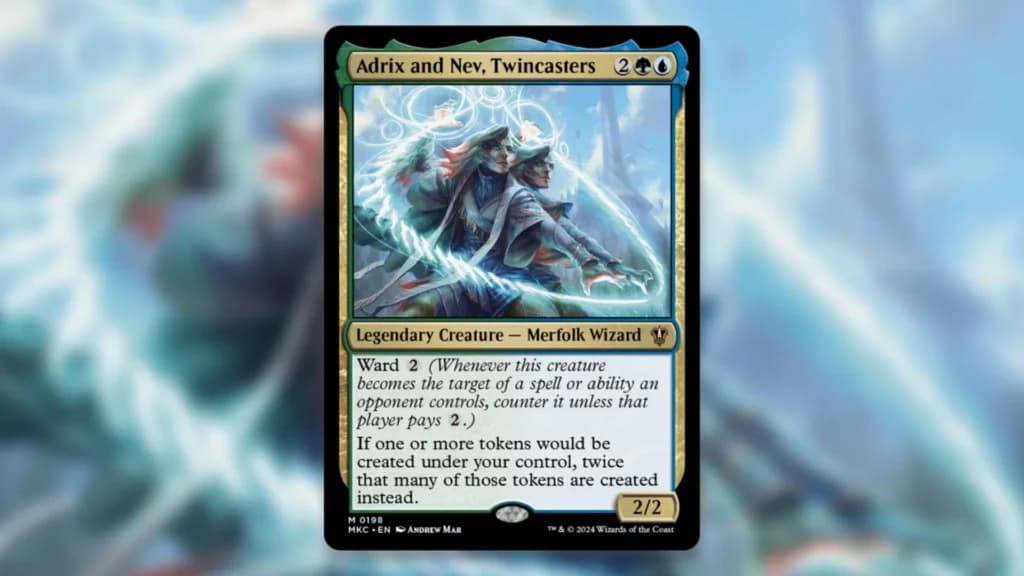
Adrix and Nev, Twincasters sits near the center of that discussion because it doubles every token you create under your control. The card is a 2/2 blue-green legendary Merfolk Wizard with ward {2}, printed in Commander 2021 and later reprinted as a Special Guests card, and its rules text is brutally simple: if one or more tokens would be created under your control, twice that many are created instead. That means Treasures, Food, Clues, and creature tokens all get bigger at once, and the deck can scale from honest value to explosive engines very quickly.
Adrix and Nev also makes the token type itself matter less than the engine behind it. Hornet Queen and Reef Worm become much more threatening when every token is doubled. Tireless Provisioner and The Cabbage Merchant turn into much stronger resource cards. Even token-plus-counter cards like Fractal makers gain extra texture because the doubled token carries the same growth plan, only faster.
Spell-driven swarms: when the army comes from casting, copying, or looping
The spell-driven token deck is for the player who wants their swarm to feel more like a storm turn than a battlefield buildup. These lists often turn instants, sorceries, copies, or blink effects into a flood of bodies, then convert that flood into a win through combat, sacrifice, or combo. They are less concerned with one perfect board state and more interested in stacking triggers until the table can no longer keep up.
Adrix and Nev is especially dangerous here because it does not care what kind of token spell you cast, only that tokens would be created. That opens up lines involving Deadeye Navigator for infinite token loops, and even instant-win setups involving Biovisionary. Once your token maker is also your multiplier, every spell that promises “a few tokens” starts reading like a threat.
What the product design says about the archetype
The recent Commander support around tokens makes the archetype feel baked into the format rather than tacked on. Tarkir: Dragonstorm Commander decks each ship with 100 cards, a foil face commander, a foil featured commander, 10 double-sided tokens, and a Collector Booster Sample Pack, which tells you exactly how much room Wizards expects token play to occupy. That is the same story Commander Masters told with its 81 full-art tokens, emblems, and helper cards: tokens are no longer an add-on, they are part of the play experience.
The same is true for the format itself. Commander is still a 100-card deck with one legendary creature, and the game is still usually played with four players, which is exactly the environment where repeatable token generation shines. Long games reward decks that can keep making material, and token commanders are built to do that in several different ways.
Why the format’s stewardship matters
Commander is also changing at the governance level. In October 2024, Wizards announced that the Commander Rules Committee handed management of the format to Wizards of the Coast, and the company formed the Commander Format Panel as part of the new structure. That matters for token decks because Commander is being actively stewarded through bracket discussions, matchmaking questions, and format-health updates rather than left to drift on inertia alone.
For token players, the practical effect is simple: the archetype is thriving in a format that keeps making room for it. Whether you want the clean board-flood of go-wide aggro, the grind of aristocrats, the mana-heavy swing of Treasure value, or the spell-chain chaos of a swarm built from casting, token commanders still offer the widest range of play patterns without losing their identity. The old pile of 1/1s has become something much larger, and Commander keeps giving it more tools to grow.
This article was produced by Prism’s automated news system from verified source data, official records, and press releases, then run through automated quality and moderation checks before publishing. The system is built and supervised by the people who set the standards it runs under. Read our full AI policy.
Did this article answer your question?