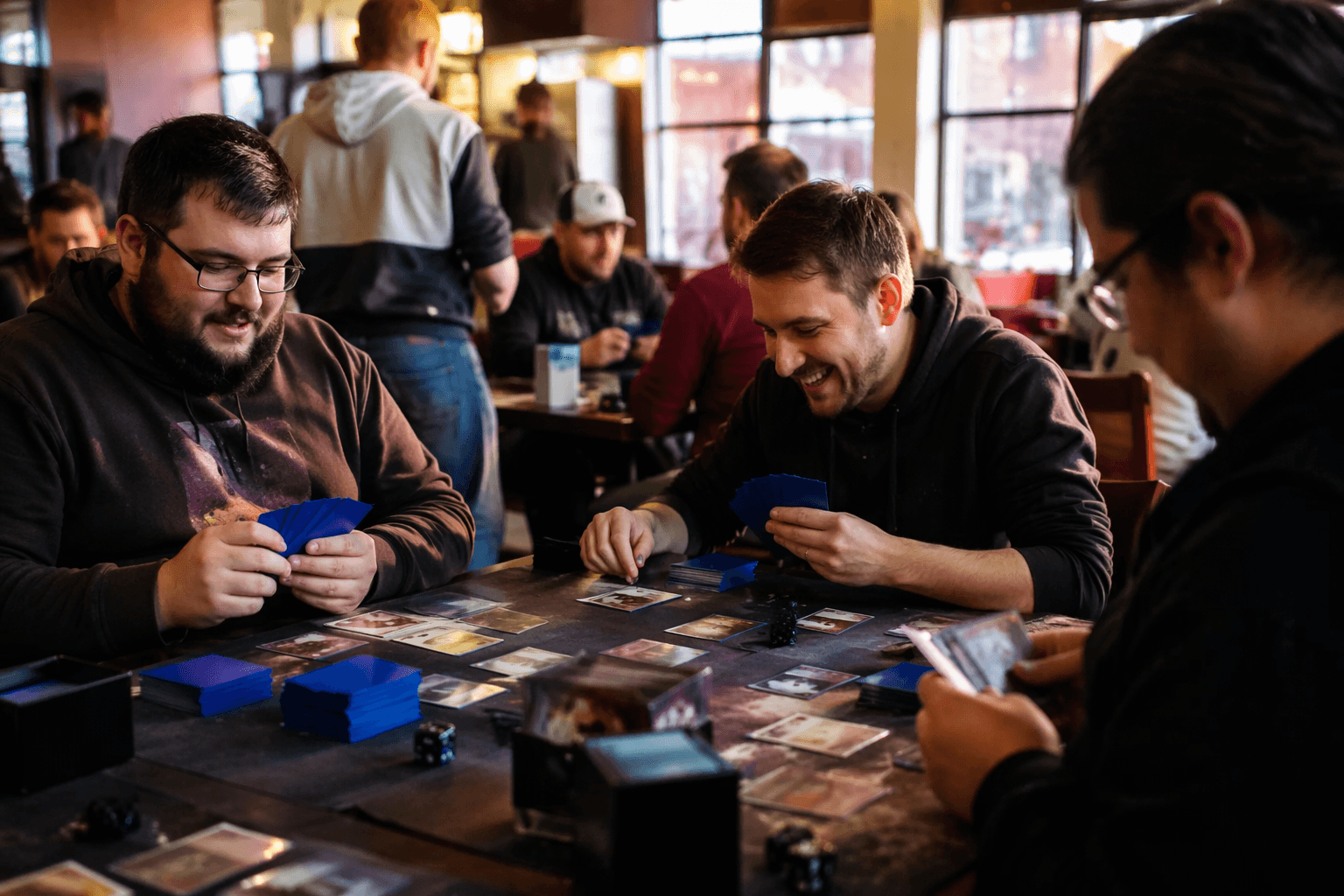
When a Commander game drags on, is scooping the polite move?
When a pod has already burned past Commander’s expected pace, scooping can be the cleanest way to save the night. The real skill is knowing when that reset respects the table and when it steals a live finish.
The stall that changes the conversation
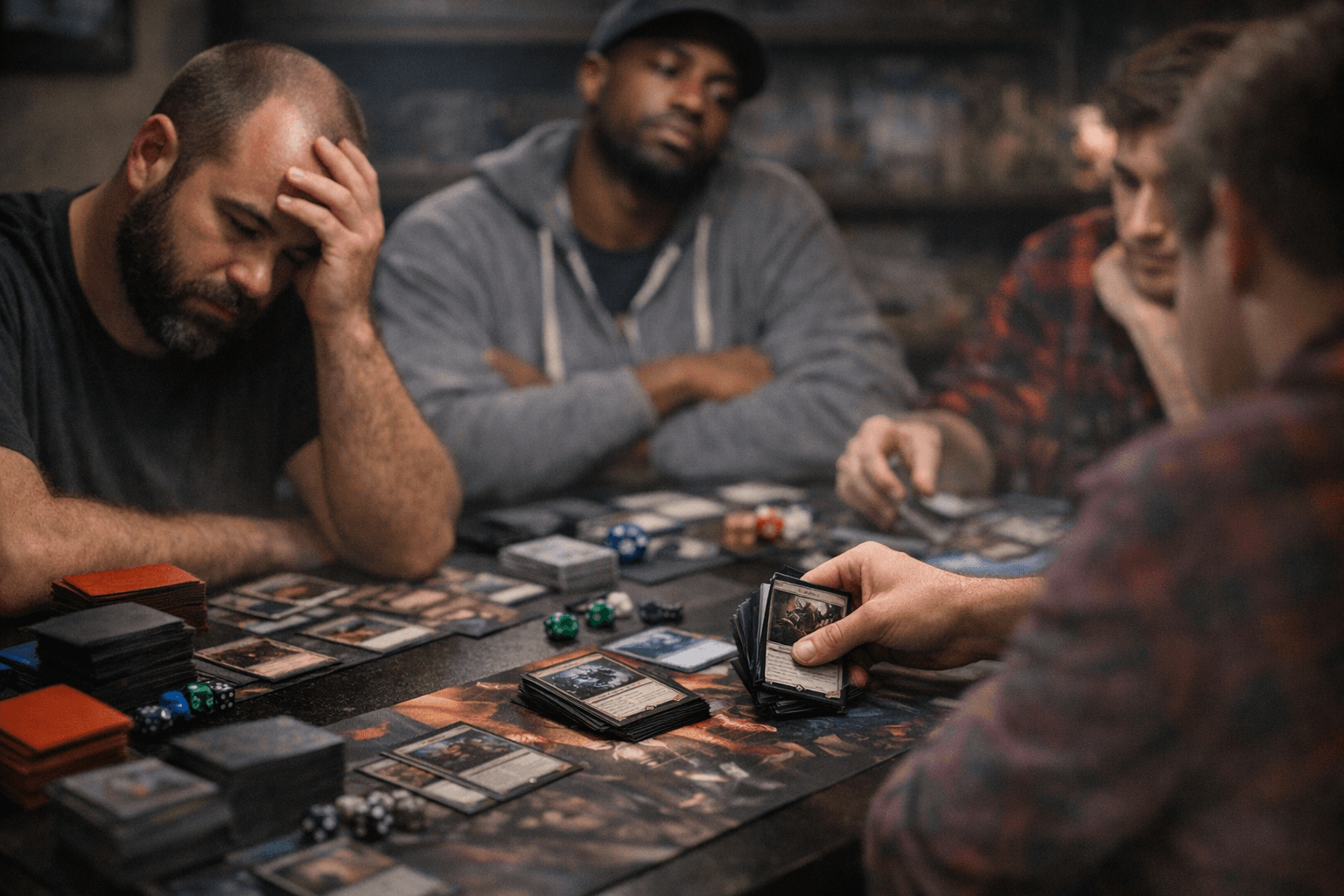
A Commander game can cross the line from tense to exhausting without ever producing a clear winner, and that is exactly where Mike Carrozza’s latest Am I the Bolas? column plants its flag. The setup is pure table chaos: The Mindskinner piloting into Esper Sphinxes, Naya Cats/Dogs, and Temur Storm, Force of Nature, with a Cats/Dogs deck building a huge token army and a very high life total before Mindcrank helps mill that player out early. From there, the game does not end cleanly. Volrath’s Stronghold keeps the Esper player alive by recycling creatures from the graveyard, and the table keeps looping through removal, recursion, and draw-go turns while nobody can quite close.
That is what makes the question worth more than a hand-wave about etiquette. The problem is not simply that the game is long. It is that one opponent starts taking upwards of 20 minutes per turn while the other defeated players have already been sitting there for more than half an hour. At that point, scooping stops looking like a personal collapse and starts looking like a time-management decision for the whole pod.
Commander’s own rules point toward the same pressure point
Commander is built as a four-player casual multiplayer format with 99 cards plus one commander, and Wizards of the Coast says the expected game duration is about 20 minutes per player. That matters here because a half-hour stall is not just annoying, it is already beyond the format’s own pacing guidance. Commander also starts at 40 life, and commanders can be cast from the command zone, with each previous cast adding an extra {mana}2{/mana} to the cost, which is one reason the format naturally produces high life totals, repeated recasts, and sprawling board states.
Those numbers explain why long games happen, but they also show why a table can get trapped. A commander recast tax, a big life cushion, and a graveyard engine like Volrath’s Stronghold can keep a game technically alive long after the social energy has drained out of it. The right question is not whether the game is still mathematically winnable. The real question is whether the pod still has a reasonable path to a satisfying finish before the night is gone.
Use a simple decision framework before asking the table to end it
The cleanest way to think about conceding is to weigh three things at once: board state, time left, and pod expectations. If the board has turned into a recursion loop, a near-lock, or a series of turns where one player is rebuilding while everyone else is just watching, the game is already functionally stalled. If the remaining clock is thin and one player is consuming huge chunks of it, the chance of a satisfying finish drops fast.
A practical framework looks like this:
- If the table still has multiple live lines to a finish and turns are moving, keep playing.
- If one player is taking 20-minute turns and the rest of the pod has already been waiting 30 minutes or more, it is reasonable to reopen the conversation.
- If the current line depends on repeated graveyard recursion, incremental milling, and removal spells that merely reset the same board, the game may be technically active but emotionally finished.
- If nobody is having fun anymore, the social contract is already under strain, even if life totals are still on the page.
That last point is exactly where Commander’s philosophy matters. The Commander Rules Committee describes the format as social, with each game treated as a journey the players share, and says every player should be considerate of everyone involved. That is not a call to never scoop. It is a reminder that the pod is supposed to protect the shared experience, not just the most stubborn line to victory.
What to say when you want to end the game without making it personal
The hardest part is often not the decision, but the wording. If the goal is to preserve goodwill, the language should be about pacing and table energy, not blame. Keep it direct, calm, and centered on the group.
Try phrasing it like this:
- I think this game has run its course for tonight, and I’d rather reset than drag it out.
- If everyone is okay with it, I’d like to scoop so we can get a fresh game started.
- This board state has become a grind, and I don’t think the next hour adds much for the table.
- I’m still willing to play it out if the pod wants to, but I think a restart would be better for everyone.
Those lines work because they do not accuse anyone of stalling on purpose. They frame the issue as a group judgment about time and enjoyment, which is the same lens the format itself uses. The Commander FAQ’s blunt summary captures that idea perfectly: “Don’t play games that you don’t want to.”
Expectation-setting is the best defense against a bad ending
The official Commander rules site says players should discuss expectations before the game starts, and groups can modify rules by agreement. That advice matters even more in pods where one deck leans on graveyard recursion, another on huge token production, and a third on spell-heavy storm turns. If your group wants battles that can stretch, say so before shuffling. If your group wants a cleaner finish and fewer marathon turns, say that too.
This is also where Mike Carrozza’s recurring Am I the Bolas? column lands so well. As EDHREC identifies him, he is a Montreal stand-up comedian and avid EDH player, and that background fits a format where humor, timing, and table feel matter as much as the last line of text on a card. The column, and the Am I the Bolcast? podcast that grew from it, keep circling the same truth: Commander etiquette is not just about being nice. It is about knowing when a game has stopped being a contest and started becoming a drain.
In a pod like this one, scooping is not automatically a surrender. Sometimes it is the cleanest way to respect the table’s time, preserve the night, and get everyone back to what Commander does best, which is actually playing a game instead of waiting for one to end.
This article was produced by Prism’s automated news system from verified source data, official records, and press releases, then run through automated quality and moderation checks before publishing. The system is built and supervised by the people who set the standards it runs under. Read our full AI policy.
Did this article answer your question?