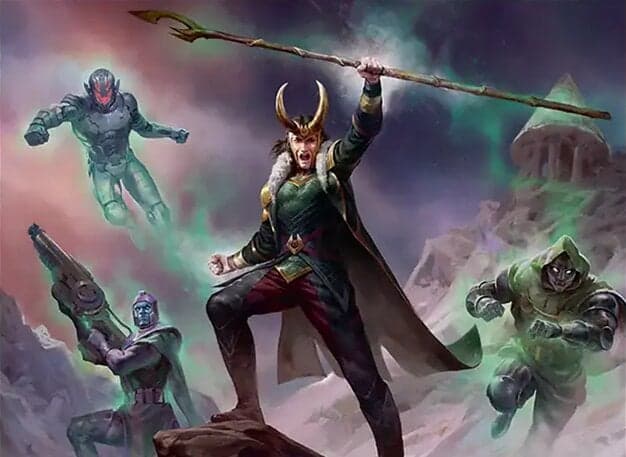
Winota data shows Raph & Leo powering extra combat triggers
Raph & Leo give Winota another way to snowball, and every extra combat makes the pod much harder to survive.

Winota lives where Commander gets sharpest, and the data shows exactly why. EDHREC’s Fire and Ice column says Winota, Joiner of Forces mostly shows up in Bracket 5, with some Bracket 4 overlap, which puts her right in the lane of high-power and cEDH-adjacent games rather than casual table padding. On EDHREC’s commander page she sits around rank #148 with 12,751 decks, and the archetype tags tell the story fast: Hatebears, Aggro, Stax, and Humans.
What Winota actually asks of a deck is brutally simple. You attack with non-Humans, look at the top six cards, and drop Humans onto the battlefield tapped and attacking, so the best builds front-load cheap non-Human bodies and then convert that first swing into immediate pressure. That is why the archetype rewards low-curve enablers, disruptive Humans, and cards that either add combat steps or make the table fail to stabilize before the next attack.
**Raph & Leo, Sibling Rivals is the kind of card that changes the clock, not just the curve.** On EDHREC’s extra-combats view for Winota, the card already appears as a tracked inclusion, and the category itself is small enough to matter: 158 Winota decks are tagged for extra combats. In practice, every extra combat is another Winota trigger, which means another chance to flip a Human into play tapped and attacking before anyone has rebuilt.
That is why the extra-combat package is so dangerous in this shell. EDHREC’s Raph & Leo extra-combats page shows the same kind of acceleration cards that define the most punishing Winota turns, including Aggravated Assault, Aurelia, the Warleader, Combat Celebrant, Relentless Assault, Waves of Aggression, Great Train Heist, Karlach, Fury of Avernus, Moraug, Fury of Akoum, and Helm of the Host. When a deck can chain one combat into the next, Winota stops being a value commander and starts feeling like a lockout engine.
This is the Fire side of the guide: the cards that push Winota from strong into miserable. Cheap evasive non-Humans are the first pressure point, because they turn every early attack into a trigger. Stax pieces and hatebears are the second, because they buy the Winota pilot the one thing the deck needs most: time to attack again before the table can set up. Extra combats are the cleanest finisher, because they multiply triggers without asking Winota to draw into anything fancy.

If you want to tune Winota up or down, the bracket language finally gives you a clean way to do it. Wizards now says Commander is managed by Wizards of the Coast after the 2024 handoff from the Commander Rules Committee, and the current bracket system is meant to help players match the kind of game they actually want to play. Brackets 4 and 5 are the high-power and competitive lanes, while Bracket 5 is the cEDH experience, so Winota naturally belongs in the conversation there first.
- For cEDH pressure, keep the cheap non-Human accelerants, the disruptive Humans, and the extra-combat finishers. That is the version that most closely matches Winota’s Bracket 5 identity and the deck’s current cEDH footprint.
- For high-power casual, trim back the hardest prison elements and some of the repeat-combat density, but keep the explosive combat core. You still get the Winota snowball without forcing every game into a fight over who can function under the least interaction.
- For a table that wants to welcome the deck, cut the most punishing stax pieces first and lean harder on fair combat pressure and a smaller Human package. Winota can still be frightening without making every pod feel like it is playing against a metagame puzzle.
Winota’s long ban history explains why every new extra-combat card gets watched so closely. Wizards banned her in Brawl on May 18, 2020, then banned her in Historic on July 13, 2020 after it had already been suspended there, and later banned her in Pioneer on June 7, 2022 because Naya Winota was suppressing diversity and creating unassailable battlefield states as early as turn three. The set that introduced her, Ikoria: Lair of Behemoths, released on May 15, 2020, so this is a commander that has been under the microscope since the day it arrived.
That history is exactly why the current data matters. Winota is still a benchmark for the strongest brackets, and the Fire and Ice read is useful because it does not treat the archetype as solved. It shows a commander whose core plan is stable, but whose best support cards keep shifting, with Raph & Leo, Sibling Rivals standing out because extra combat is never just extra damage in Winota, it is another full trigger cycle.
Winota has always been the kind of commander that turns one attack step into a table-wide problem, and the latest data says Raph & Leo only intensifies that reality. If the goal is a fairer pod, the safest place to start is trimming the extra-combat stack, because once Winota gets a second swing, the game often stops being a game at all.
This article was produced by Prism’s automated news system from verified source data, official records, and press releases, then run through automated quality and moderation checks before publishing. The system is built and supervised by the people who set the standards it runs under. Read our full AI policy.
Did this article answer your question?