Winter Soldier deck tech turns Marvel spoiler into Equipment Voltron
Winter Soldier’s spoiler lane is simple: suit him up, recur him at instant speed, and force commander-damage math fast.
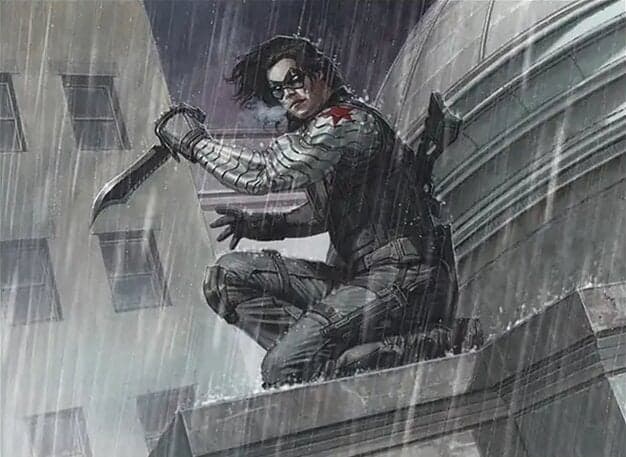
Winter Soldier does not need a pile of cute Marvel cards to make sense. He needs an Equipment, a little protection, and enough mana to keep coming back as a problem, which is exactly why he reads like such a clean Commander build. In a spoiler season full of splashy possibilities, he stands out as a commander who turns immediately into a table threat without asking you to reinvent the format around him.
A commander built for one clear plan
The appeal starts with the body itself. Winter Soldier, Icy Assassin is a 2/2 with vigilance and menace, and he gets +2/+0 for each Equipment attached to him. That alone points straight at Voltron, but the real push comes from his graveyard ability: he can return from the graveyard to the battlefield with a finality counter while attaching an Equipment to himself. That means removal is not the clean answer it looks like, because he is built to re-enter the fight and keep whatever weapon you set aside for him.
The most important detail for Commander players is that this reanimation ability is not limited to sorcery speed. Timed correctly, Winter Soldier can effectively come back at instant speed and arrive with almost-haste, which makes him both easier to protect and much harder for opponents to fully answer. That combination is what turns him from a spoiler novelty into a legitimate early commander concept: he pressures life totals, survives sweepers better than most Equipment commanders, and punishes the table for thinking they have bought enough time.
Why Equipment Voltron is the cleanest lane
Winter Soldier looks especially appealing if you do not want another Boros Equipment deck with the same package of evasive support creatures, combat tricks, and pile-on value pieces. He gives you a more focused route: one commander, a compact artifact package, and a simple damage equation that scales quickly. Because his power increases by +2/+0 for each Equipment attached, every artifact you suit him with pushes him closer to the commander-damage threshold without requiring extra setup from other permanents.
That is the real accessibility here. You do not have to assemble a sprawling engine before your deck starts doing its thing. You cast Winter Soldier, attach something relevant, and start threatening real damage while your commander naturally resists conventional removal lines. In practice, that makes the deck feel cleaner than many traditional Equipment shells, which often need a critical mass of support cards before they stop feeling like a pile of gear.
The cards that actually turn the deck on
The deck tech leans on Equipment that do more than just look appropriate on a Marvel character. Colossus Hammer is the blunt-force example, turning Winter Soldier into a serious one-hit threat when the rest of the board is not ready. Adaptive Omnitool and Sword of Feast and Famine both fit the plan as efficient, high-impact weapons, with the sword adding the kind of combat pressure that snowballs turns once the attacker is connected.
The boosters singled out for the build tell you exactly where the power comes from:
- Nettlecyst adds a fast scaling body for Winter Soldier to wear.
- Cranial Plating makes artifact-heavy turns into explosive damage swings.
- Thran Power Suit reinforces the “one commander, one threat” plan by multiplying the value of every attachment.
Together, those cards do the work of getting Winter Soldier to the 21-damage threshold commander decks care about. The important thing is that none of them need a complicated board to matter. They are strong because they stack on top of a commander who already wants to attack, already wants to be armored, and already has the kind of resilience that makes investing in him feel safe.
Flavor that still plays to win
Part of the fun here is that the deck does not bother pretending the flavor has to stay neat. The article calls out the delightfully messy sight of a Marvel character carrying the Buster Sword, Pip-Boy 3000, and Bilbo’s Ring, and that cross-franchise jumble says a lot about how Commander players actually build these decks. The point is not perfect lore alignment. The point is making one character carry enough efficient damage output to end games.
That flavor mashup matters because it keeps the deck memorable without weakening it. Winter Soldier is not a novelty commander that only works if you lean all the way into theme. He is a functional Voltron leader first, and the playful gear choices are what make him feel like a real deck instead of a one-card gag.
What he offers that older Equipment commanders do not
The reason Winter Soldier deserves attention is not just that he can wear Equipment. Lots of commanders can do that. What separates him is the combination of cheap casting cost, built-in evasion through vigilance and menace, self-recursion, and the ability to return with an Equipment already attached. That means he does not ask you to rebuild from zero every time he dies.
That resilience is what gives him an edge over more familiar Equipment commanders. Instead of relying entirely on a stable board or a long setup of enablers, Winter Soldier turns your investment into something that can come back, re-arm, and attack again. He is a low-curve Voltron commander in the clearest sense: efficient, resilient, synergistic with the best artifacts in the archetype, and flexible enough to keep coming after removal.
That is why this spoiler landed so cleanly. Winter Soldier does not just suggest a deck, he points to one, and it is the rare kind of Equipment commander that makes the plan obvious from the first read. Suit him up, keep the weapons flowing, and let the commander do the rest.
This article was produced by Prism’s automated news system from verified source data, official records, and press releases, then run through automated quality and moderation checks before publishing. The system is built and supervised by the people who set the standards it runs under. Read our full AI policy.
Did this article answer your question?