Xyris Hot and Cold: The Cards Rising and Falling in Snake Decks
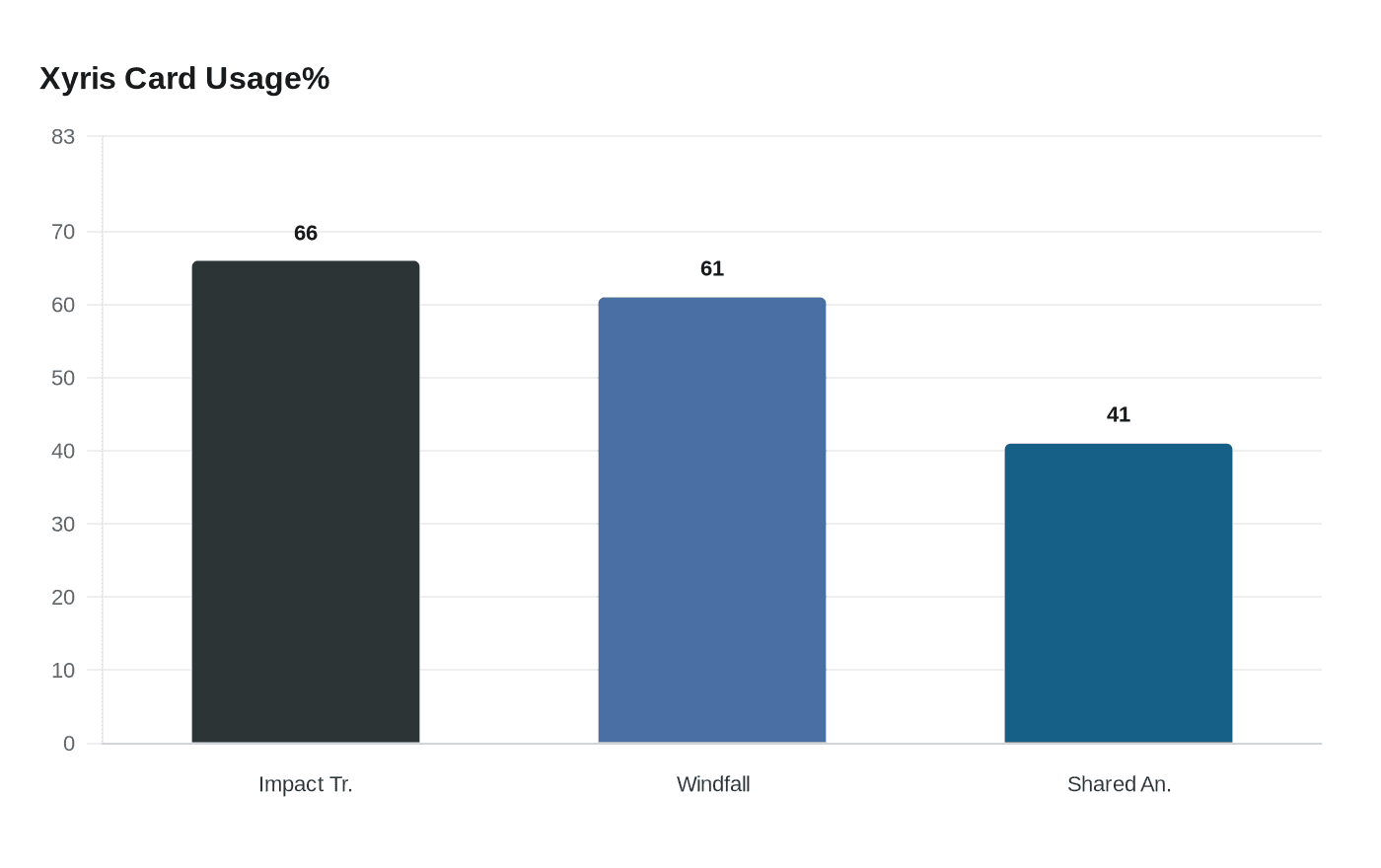
Impact Tremors shows up in 66% of Xyris decks, but Rampant Growth is quietly dragging lists down. Here's what the data says to cut and keep.

Xyris, the Writhing Storm is the kind of commander that makes the whole table nervous the moment it hits the battlefield. As a 3/5 flier with "drawlink," Xyris forces both you and your opponents to draw cards equal to the combat damage it deals, and every card an opponent draws beyond their first in a draw step creates a 1/1 Snake token for you. That combination of forced card draw and token production escalates fast, and Julia Maddalena's recent EDHREC "Fire and Ice" column puts hard numbers behind what's actually making that engine hum and what's quietly clogging it up.
The "Fire and Ice" series uses EDHREC usage metrics to determine which cards are overperforming or underperforming in a given commander's decks. The result is a practical framework for deckbuilders: cards are sorted into "Fiery" (trending up, pulling their weight) and "Icy" (trending down, costing you slots that could do more work). Maddalena applied that framework to Xyris and built a complete decklist using all the Fiery cards and none of the Icy ones, a 100-card build that breaks down to 18 creatures, 17 instants, 10 artifacts, 10 enchantments, 9 sorceries, and 35 lands.
What the data says is hot
The most popular cards in Xyris decks aren't surprising once you think through the commander's game plan. Impact Tremors sits in 66% of Xyris lists, and the reason is straightforward: every Snake token that enters the battlefield pings each opponent for one damage. When Windfall resolves and every opponent draws seven cards, you're not just refilling your hand and generating a pile of Snakes, you're converting that token flood into direct damage across the table. Windfall appears in 61% of Xyris decks, and it's one of the cleanest two-card combo pieces in the format: cast the wheel, watch the Snakes enter, watch the life totals drop.
Shared Animosity rounds out the top three at 41% inclusion. Where Impact Tremors rewards you for the quantity of tokens entering, Shared Animosity rewards you for attacking with them. A wide board of Snakes all sharing creature type means each one gets a +1/+1 buff for every other attacking Snake, and a deck that produces tokens by the dozen can close games out of nowhere. The three cards together illustrate the core loop Xyris wants to operate: draw spells trigger tokens, tokens deal damage directly through Impact Tremors, and when you want to end the game in combat, Shared Animosity makes the math terrifying.
The creature suite in the Fiery-only list gives you a sense of how the 18-slot roster is built around feeding and protecting that loop. The list includes Jace's Archivist, which acts as a repeatable Windfall on a stick, and Adrix and Nev, Twincasters, who double every token you create. Razorkin Needlehead forces opponents to draw extra cards on their upkeep, which means more Snake triggers without you spending mana. Kami of the Crescent Moon does similar work, acting as a passive engine that keeps opponent draw ticking upward. Goblin Bombardment gives you a sacrifice outlet that converts tokens into direct damage, which matters both for going wide and for dodging board wipes by converting your board into burn before it's wiped.
What the data says is cold
The Icy section is where the analysis gets most useful for anyone sitting down to tune a Xyris list they've been running for a while. Rampant Growth carries an Ice Score of -2.29, the lowest on the list. The explanation in the article is worth taking seriously: two-mana land-tutor ramp is generically strong in Commander, but Xyris lists are so packed with impactful two-mana plays that Rampant Growth ends up competing for spots it can't win. When your alternatives at that point on the curve include Razorkin Needlehead, Kami of the Crescent Moon, and Goblin Bombardment, a spell that just finds a basic land is doing significantly less for your specific game plan. It isn't a bad card in isolation; it's a bad card in this context.
That framing is the sharpest thing about the "Fire and Ice" methodology: the Ice Score isn't measuring absolute power, it's measuring fit. Rampant Growth would be great in an Aesi or Kodama list. In Xyris, the two-mana slot is premium real estate for pieces that directly advance the draw-and-token engine, and generic ramp doesn't clear that bar.
Temur Battle Rage earned an Ice Score of -2.27, placing it just above Rampant Growth on the cold list. The full commentary on that entry is incomplete in the available data, but the score tells you what you need to know: a pump-and-double-strike spell for a single creature is awkward in a deck whose primary threat is a board of many small tokens rather than one large attacker. Xyris itself can swing in the air for relevant damage, but the deck's win conditions lean more toward token swarms and damage triggers than Voltron-style kills.
Why Xyris stands apart from the Temur field
It's worth addressing why any of this matters for how you build the deck. The conclusion of Maddalena's column makes the point directly: Temur commanders have a tendency to blur together. Animar, Soul of Elements and Eshki, Temur's Roar are both creature-focused in ways that make them feel like variations on the same theme. Xyris does something structurally different. The draw triggers, the Snake generation, the synergy between wheel effects and token-damage enchantments, those are mechanics that reward a completely different card selection than a typical creature-ramp-and-stomp Temur build. The Icy cards being cut here, Rampant Growth and Temur Battle Rage, are both cards that belong in that more conventional Temur shell. Their presence in Xyris lists suggests some builders are defaulting to generic Temur picks rather than committing to what makes Xyris actually tick.
If you've been running either of those cards and wondering why your Xyris build feels sluggish, the EDHREC data is pointing at a real cause. The deck wants density at the two-mana slot for cards that directly interact with the draw engine, and it wants its non-creature spells to be doing things that pair with token production and wheel effects. Anything that doesn't feed those two axes is costing you efficiency every game it sits in your opening hand.
The Fiery-only list Maddalena assembled is a useful reference point: 18 creatures supporting the engine, 17 instants for interaction and mid-combat card draw, 10 artifacts and 10 enchantments providing persistent value, and a land count (35) that reflects a deck leaning on efficient spells rather than ramp-to-overload. Whether you're building Xyris from scratch or auditing a list you've already put together, the numbers in this column give you a concrete starting point for which slots are earning their place and which ones are filling space that something better could occupy.
Know something we missed? Have a correction or additional information?
Submit a Tip