How magnet fishing grew from ancient magnetite to internet hobby
Ancient magnetite, stronger neodymium magnets, and online find-sharing turned a niche recovery trick into a global magnet fishing culture.

Ancient magnetite did not just point compasses and move science forward. It also set the stage for a modern hobby that now looks as much like a social feed as a recovery tool, with people dragging lost metal out of canals, harbors, and foreshore sites for the thrill of the pull and the surprise of the haul.
From lodestone to a usable pull
The story starts long before anyone called it magnet fishing. Great White Magnetics traces the first documented uses of natural magnetite, or lodestone, back to ancient China and the Han Dynasty, where people were already working with magnetic materials in practical ways. That early relationship between humans and magnetism matters because it shows the hobby did not emerge from nowhere. It grew out of a very old fascination with a force that can move, hold, and recover objects hidden from sight.
The next leap came in the 19th century, when Michael Faraday and Joseph Henry helped unlock electromagnetism. Their work mattered far beyond the lab, because it made stronger and more practical magnetic recovery possible. By the early 20th century, magnet use was still mostly utilitarian, with industrial workers and engineers relying on stronger permanent magnets to retrieve lost tools, equipment, and debris from water. That is the real bridge between science and pastime: magnet fishing inherited an old recovery instinct and then turned it into something personal, repeatable, and fun.
The modern boom came from stronger magnets and a connected internet
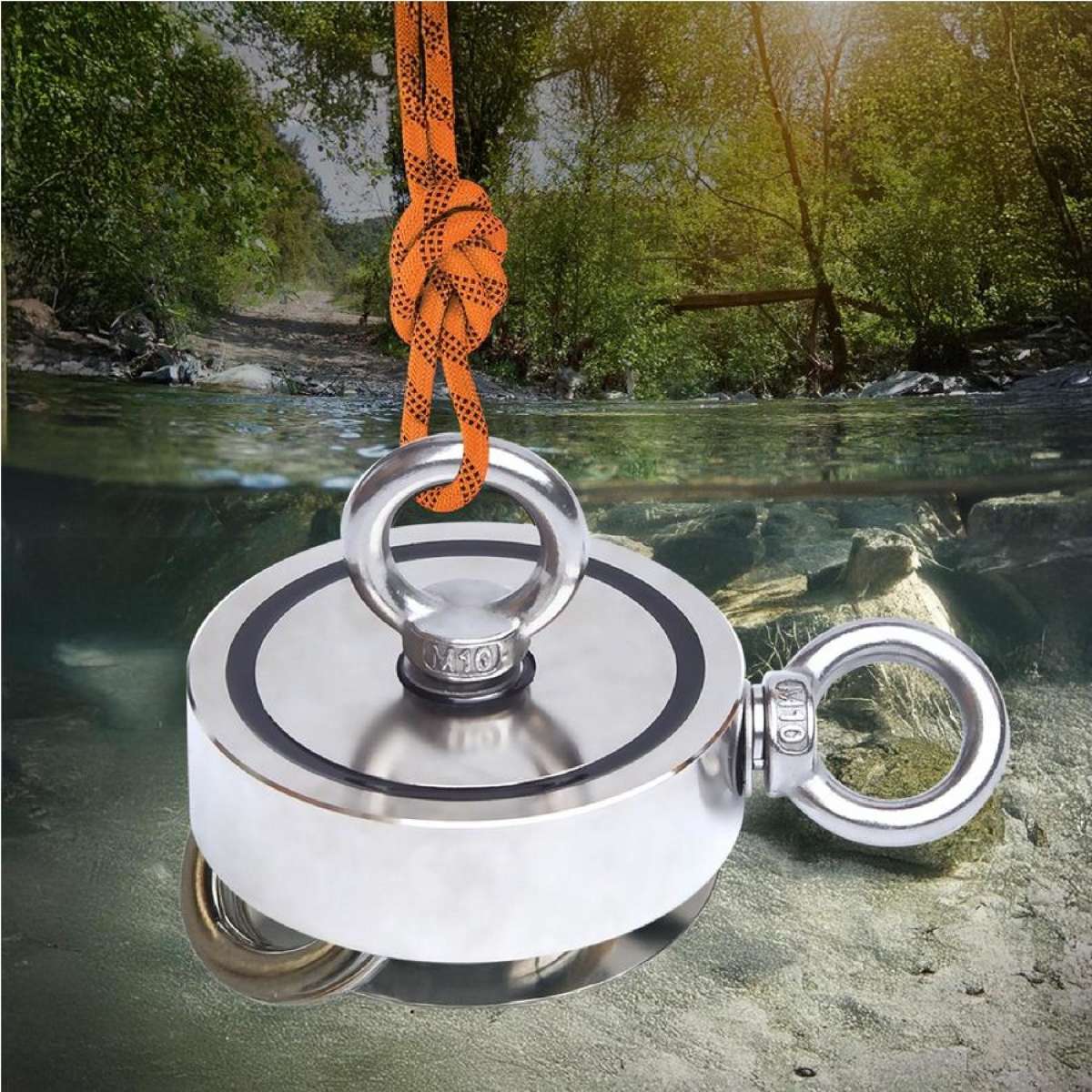
The hobby’s leap from occasional utility to community culture came much later, when high-strength neodymium magnets became widely available. Once those magnets were strong enough for hobby use, the barrier to entry dropped fast. You no longer needed industrial gear or specialist access to get started, just a rope, a magnet, and a safe place to cast.
That hardware shift alone did not create magnet fishing culture. Online forums, social platforms, and video-sharing habits did the rest. As magnet fishers began posting their pulls, the hobby gained a public language of its own: the mystery find, the muddy rescue, the weird score, the day’s cleanup. YouTube and TikTok made the experience visible, and visibility made the pastime easier to copy. In practice, the internet did for magnet fishing what stronger magnets did for the gear: it made the hobby accessible.
Great White Magnetics frames the result clearly: magnet fishing is now a global pastime. That global reach comes from the combination of old magnetic science, modern magnet strength, and a culture of showing finds in real time. The hobby is no longer just about what comes up from the water. It is also about how fast a clip can travel once it does.
Why magnet fishing sits between hobby, cleanup, and recovery
Part of magnet fishing’s appeal is that it overlaps with work people already understand. The UK government draws a line between the amateur market, where individuals take part in magnet fishing as a pastime or hobby, and the professional market, which includes law enforcement and specialist construction teams retrieving ferromagnetic objects from water. That distinction matters because it shows magnet fishing is not simply a casual version of a commercial service. It sits beside formal recovery work while remaining its own public-facing hobby.
That overlap explains why the pastime can look like cleanup one day and treasure hunting the next. A good pull can be a lost tool, a piece of industrial scrap, or something far more serious. The modern hobby lives in that tension, where the same magnet that retrieves a forgotten bolt can also bring up objects that raise safety, legal, or heritage questions.
Safety is part of the hobby, not an afterthought
Official waterways bodies treat magnet fishing as more than a harmless pastime. The Canal & River Trust warns that removing items from canals can be dangerous without the appropriate support, pointing to risks at the water’s edge, trip hazards, sharp or rusty objects, disease risk, and the possibility of retrieving weapons or ordnance. The Broads Authority gives similar advice and specifically recommends life jackets, while also flagging weapons or ordnance and cuts or infection from rusty finds.
That guidance reflects the reality of the hobby as many magnet fishers know it: the water does not sort the safe from the unsafe before you haul. A tangled line, a sharp edge, or an unexpected object can turn a casual session into an emergency. Protective kit and careful site choice are not extras in this world. They are part of doing it properly.
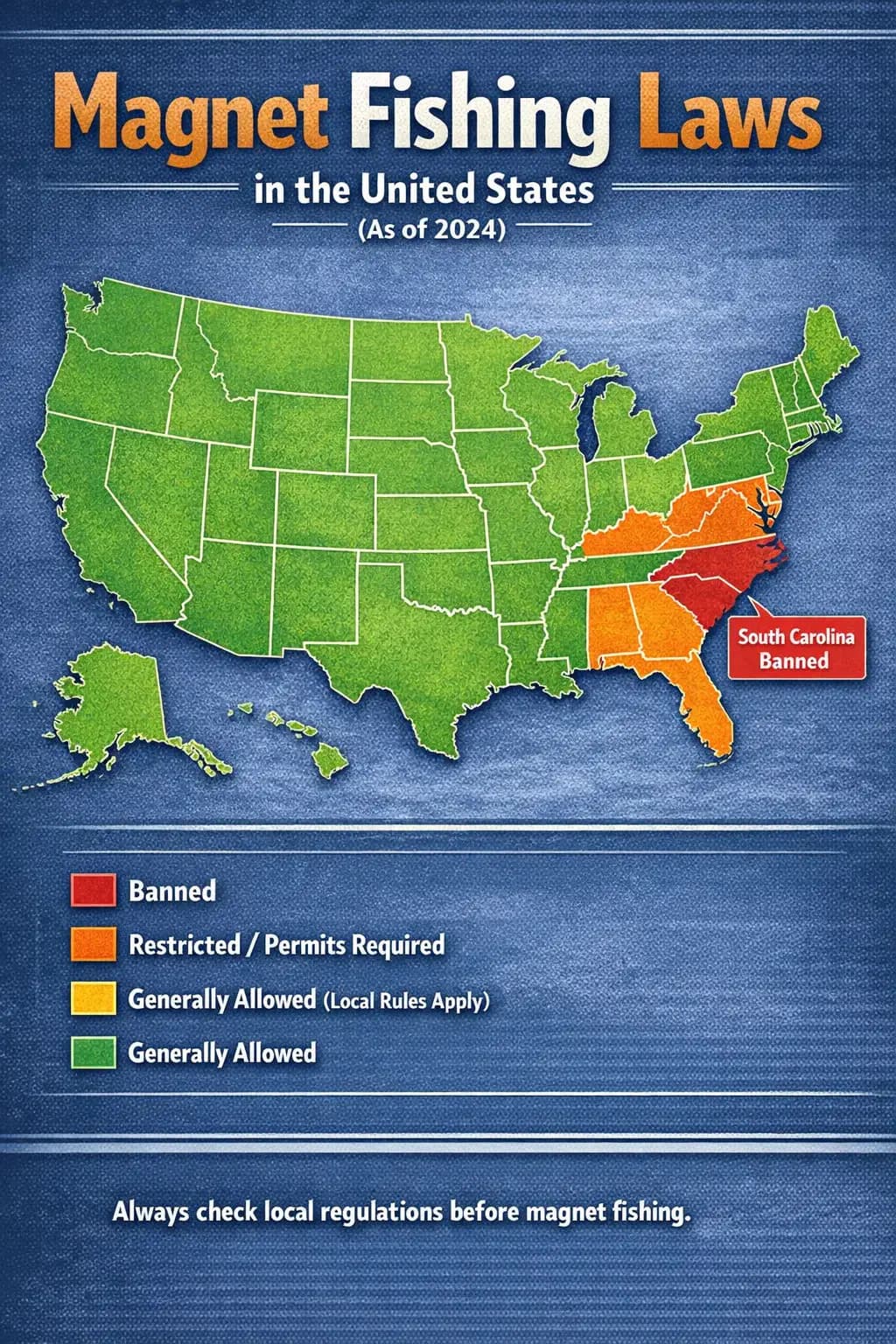
Heritage rules can matter as much as the magnet
Magnet fishing can also cross into archaeology and monument protection. Historic England says a scheduled monument is protected against ground disturbance or unlicensed metal detecting, and that written consent must be obtained before work begins on a scheduled monument. It also says using a metal detector in a protected place without written consent is a criminal offence. That places magnet fishing squarely inside a bigger public-interest conversation about who can disturb protected land and what counts as an unauthorized search.
Portsmouth’s policy adds another layer. Requests to magnet fish on the foreshore are to be directed to the Crown Estate first, and scheduled monuments are protected against unlicensed magnet fishing under the Ancient Monuments and Archaeological Areas Act 1979. That means location matters as much as gear. A legal session on one stretch of water can become a prohibited one a short distance away if the site has heritage protections.
How the hobby should be understood now
Magnet fishing is easy to misread as a novelty because the videos are entertaining and the pulls can be strange. But the hobby makes more sense when you see the whole arc: ancient magnetite in China, 19th-century breakthroughs from Faraday and Henry, early industrial retrieval work, then the neodymium magnet era and the explosion of online sharing. Each stage opened the door a little wider until the practice became something any person with a magnet and a rope could try.
That is why magnet fishing feels so modern even though its roots are old. It is a hobby built from ancient material science, sharpened by stronger magnets, and made social by the internet. The pull may start in the water, but the culture around it now lives online, where every find keeps proving the same point: this old force still has a very modern grip.
This article was produced by Prism’s automated news system from verified source data, official records, and press releases, then run through automated quality and moderation checks before publishing. The system is built and supervised by the people who set the standards it runs under. Read our full AI policy.
Did this article answer your question?