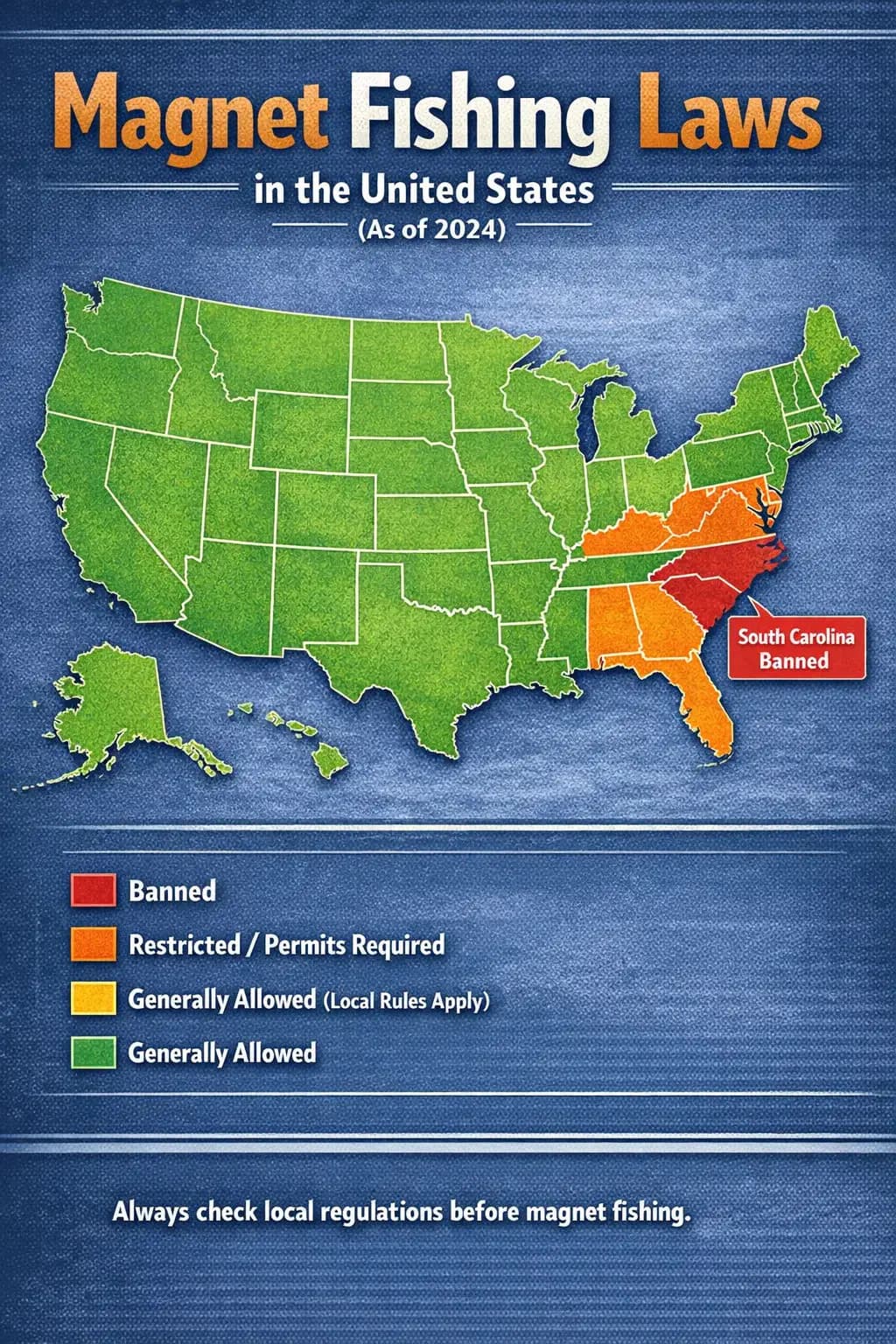
How to remove rust from magnet fishing finds safely
Rust is the clue, not the conclusion. The right triage can turn a canal pull into a preserved find, and keep you from scrubbing away the history.

A corroded hinge, coin, tire rim, or lock can be scrap, a display piece, or something worth saving, but only if you decide what you are holding before you start scrubbing.
Start with triage, not a wire brush
Magnet fishing took off in Europe in the early 2000s, and the range of finds explains why rust removal is part of the hobby itself. One outing can turn up discarded bicycles, guns, safes, bombs, grenades, coins, or tire rims, so corrosion is never just a cosmetic issue. It can hide shape, markings, damage, and danger all at once.
The Canadian Conservation Institute’s first step for iron is simple: decide whether the object is stable or actively corroding. That is the right starting point for a magnet-fishing find too. If the piece is fragile, has internal parts locked up by rust, or still carries dirt and salts from the water, do not rush straight to aggressive cleaning.
A useful rule is to ask three questions before you touch a rusted object in earnest:
- Is it safe to handle without breaking or cutting yourself?
- Does it still have delicate parts, wood handles, or a closed mechanism?
- Does it look like scrap, or does it carry marks, shape, or history worth keeping?
If the answer to the first two questions is no, pause. If the answer to the third is yes, preservation matters more than brightness.
Choose the mildest treatment that can still work
For light to moderate rust, the easiest place to start is with a soak. White vinegar is the beginner-friendly option for small to medium items: submerge the find in a bowl, leave it overnight if needed, then wash the loosened rust away.
Other low-cost methods sit in the same category. Black tea, potato with baking soda or salt, lemon or lime juice with salt, cream of tartar mixed with hydrogen peroxide, and molasses solution all appear on the same menu of softer approaches. Molasses is slower, but it can be kinder to heavily rusted pieces that deserve a patient clean rather than a hard one.
This is where over-scrubbing does the most damage. Once you start grinding away at the surface, you can erase tool marks, stamps, and the rough evidence that tells you what the object was.
When corrosion is heavier, switch to controlled methods
For stubborn rust, more advanced tools come into play. Evapo-Rust, naval jelly, ultrasonic cleaning, and electrolysis are all in the restoration toolbox, but they are not equal in risk or complexity. Evapo-Rust is the most approachable of the group for many finds because its maker says it works at room temperature and is non-toxic, non-corrosive, non-flammable, biodegradable, and reusable.
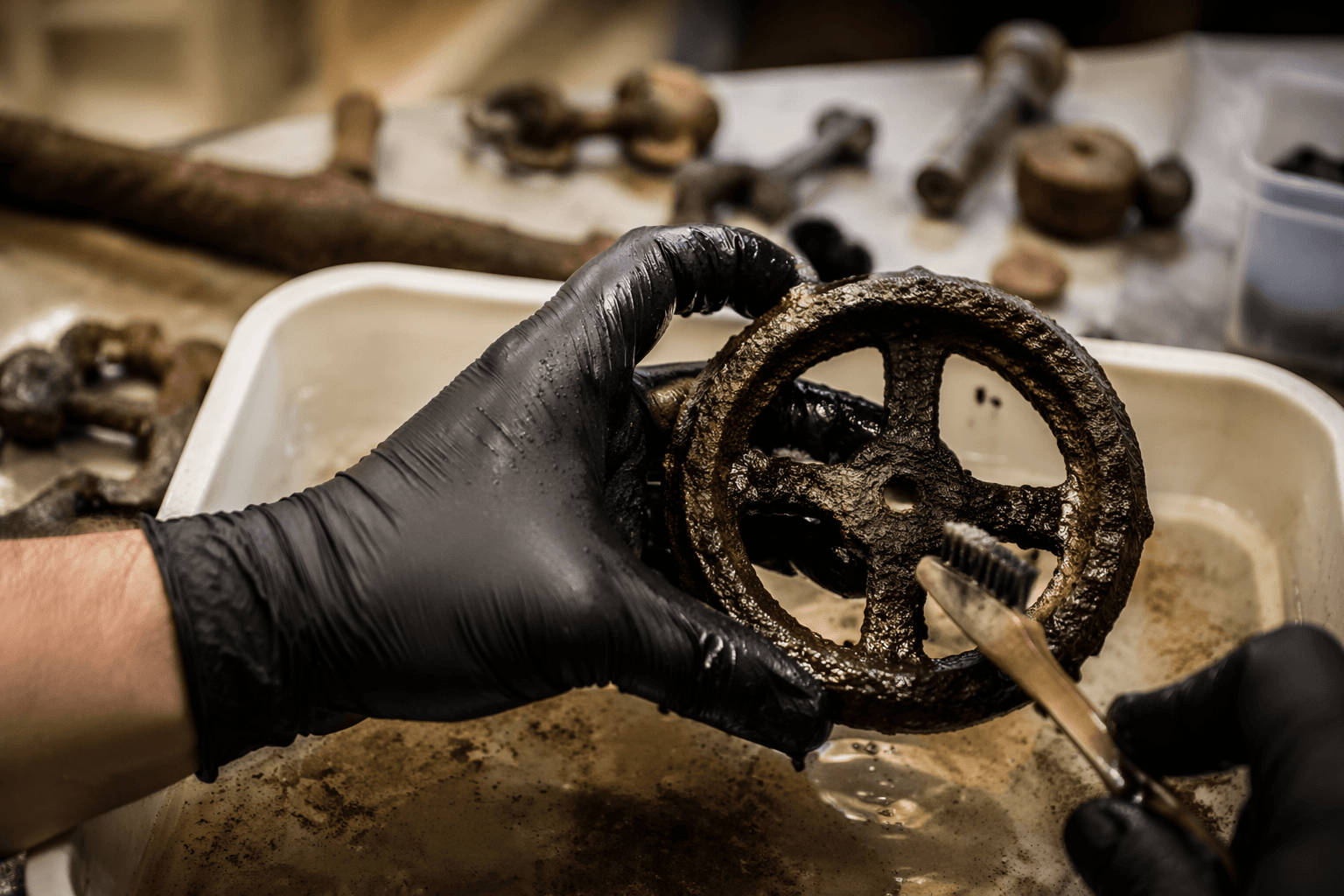
Its technical sheet lists it as safe on copper, brass, aluminum, plastic, rubber, and vinyl, which matters when a magnet-fishing recovery comes with mixed materials still attached. The process is straightforward: pre-clean the item, immerse it, check progress periodically, then rinse.
Electrolysis goes further and can be very effective, but it demands proper setup and ventilation. It uses electricity and sodium bicarbonate, and it works best when you understand the whole system before you switch it on.
Preserve the iron, not just the surface
Museum conservation guidance for iron follows the same logic as the best magnet-fishing workflow. The Smithsonian’s conservation approach includes selective rust removal, washing out salts and residues, drying the object, and then adding a protective barrier such as wax or lacquer. That sequence matters because waterborne rust can hold salts that keep reactivating the metal long after the surface looks clean.
Fully stripping corrosion is not always the right answer. The more vulnerable the iron remains, the more likely it is to re-rust. In conservation work, even a severely corroded iron rim lock can still be worth studying and conserving. A magnet-fishing find with a maker’s mark, unusual form, or clear historical context belongs in the same category.
If the object is stable, identifiable, and interesting, preserve it. If it is structurally sound enough to display, stabilize it and keep the surface honest. If it is only a collapsed shell with no useful form, no markings, and no historical value, let it go.
Do not ignore contamination and safety risks
Rust removal is only part of the cleanup. Waterlogged metal can carry grime, residues, and sharp edges, and magnet fishing regularly turns up objects that are not just old but dangerous. Cambridgeshire Constabulary recorded 29 magnet-fishing-related incidents between 2022 and September 2025, and recoveries in Peterborough have included bombs and firearms.
The Broads Authority warns that sharp metal left on riverbanks can endanger dogs and other visitors, so clear the area as carefully as you handle the find. Canal & River Trust requires permission for its waterways, and magnet fishing is not allowed without it.
Finish the find, and the gear, the right way
Dry the object thoroughly, inspect it again for active corrosion, and store it somewhere that will not bring the rust back. Then turn to the gear itself: pull iron filings off the magnet with clear packing tape, dry the setup completely, and add a protective coating such as Plastidip so the next session starts clean.
This article was produced by Prism’s automated news system from verified source data, official records, and press releases, then run through automated quality and moderation checks before publishing. The system is built and supervised by the people who set the standards it runs under. Read our full AI policy.
Did this article answer your question?