Magnet fishers haul up chainsaw from river with powerful magnet
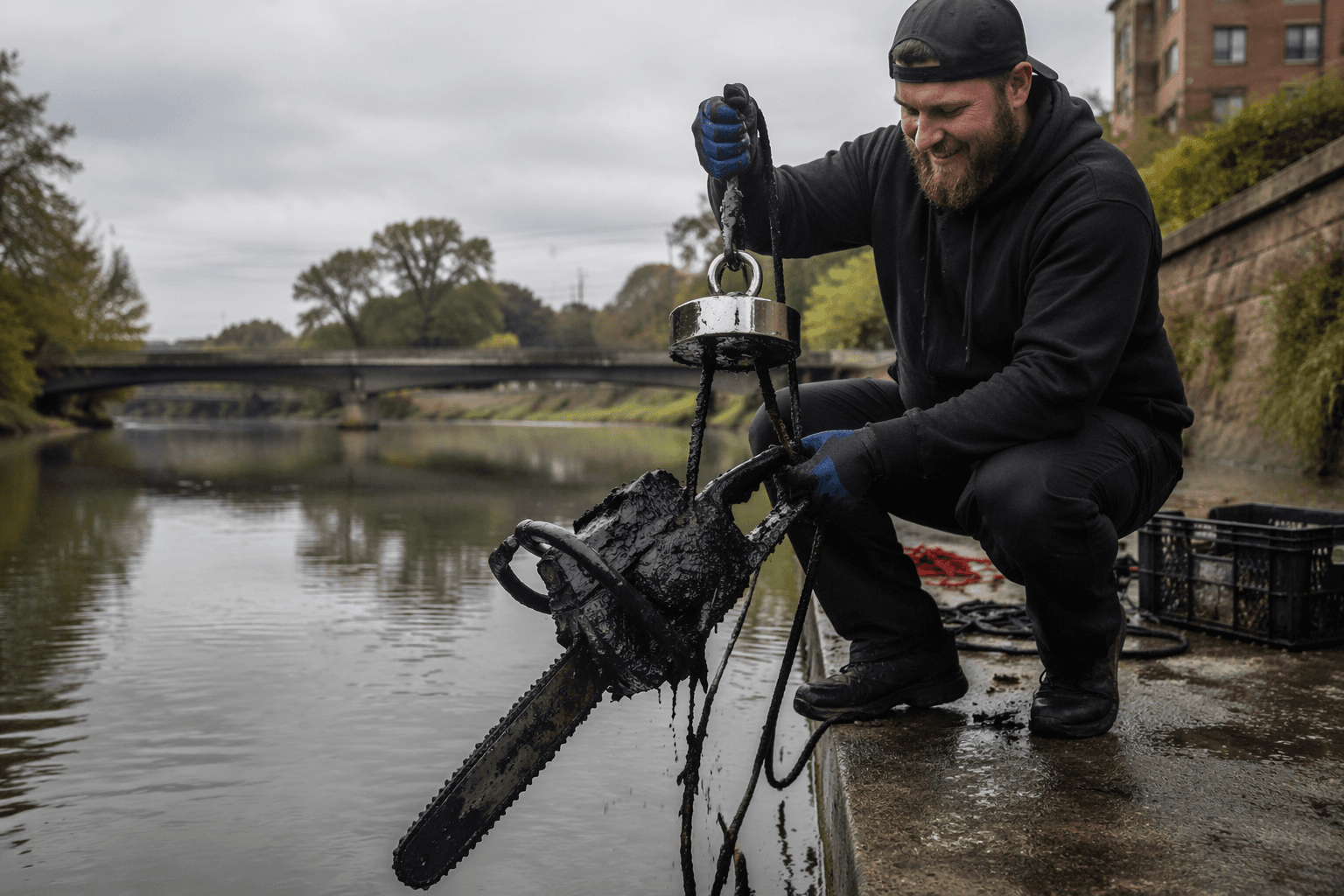
A crew hauling with the “world’s strongest magnet” dragged up a chainsaw from a river, turning a routine pull into one of its wildest recoveries.

A magnet-fishing crew returned to the river with what the clip described as the world’s strongest magnet and hauled up a chainsaw from underwater. The pull turned a routine hunt for hidden metal into a rare, high-drama recovery, the kind that makes magnet fishing feel less like a pastime and more like a salvage job.
That is the attraction at the center of the hobby. Magnet fishing usually means a strong neodymium magnet tied to a rope, cast into rivers, lakes, canals, and similar waterways to grab ferromagnetic objects. The payoff is often far less glamorous than the video-cut high points suggest. Most grabs are scrap metal, old tools, bikes, coins, and other discarded items that have sat long enough to corrode, sink, and gather debris.
A chainsaw is exactly the sort of object that shows how powerful setups change the game. It is bulky, awkward, and easy to imagine catching on silt, roots, or other underwater junk before the magnet fully frees it. It also carries a sharper practical edge than a loose bolt or bottle cap. Tools like that can be filthy, heavy, and difficult to lift cleanly, and they can hint at dumping, long-term loss, or simple neglect in busy river corridors.
That risk is part of why magnet fishing draws both cleanup interest and caution. Public-interest coverage of the hobby has documented recoveries that go far beyond scrap, including knives, live explosives, and other hazardous metal objects. Environmental writeups also frame the activity as a way to pull metal debris out of waterways that can affect wildlife and water quality, which is why groups tied to river stewardship have embraced the cleanup angle alongside the thrill of the find.
The legal side is just as uneven as the haul itself. Magnet fishing guides and legal overviews say there is no single nationwide U.S. ban, but access rules, state law, property boundaries, and artifact protections can change what is allowed from one stretch of water to the next. That makes a strong magnet only part of the equation; knowing where it lands matters just as much.
The chainsaw recovery is memorable because it delivers both sides of the hobby in one shot: the surprise of the pull and the reminder that rivers hold more than treasure. With a powerful magnet on the line, a normal cast can still come back with something that looks less like a collectible and more like a piece of someone else’s unfinished business.
This article was produced by Prism’s automated news system from verified source data, official records, and press releases, then run through automated quality and moderation checks before publishing. The system is built and supervised by the people who set the standards it runs under. Read our full AI policy.
Did this article answer your question?


