TopChoice updates magnet fishing kit rankings for beginners and heavy-duty buyers
TopChoice’s refreshed June rankings push magnet fishing kits from starter pulls to 1,600 lb brute force, but the best pick still depends on water, current and retrieval style.

TopChoice’s June 29 magnet fishing kit refresh reads like a buyer’s map, not a lab verdict. The rankings are built from customer reviews, merchant service levels, popularity trends and related product signals, while the wider June rollout also shows related comparison pages updated on June 12, June 17 and June 25 before the main kit page landed on June 29. That matters because the list now stretches from 220 lb starter gear to 1,600 lb heavy-duty double-sided setups, with ropes, carabiners, gloves and threadlocker appearing in the more complete bundles.
1. 220 lb starter kit for canals and first drops
This is the right place to begin if the first outing is more about learning the pull than chasing big submerged metal. A 220 lb kit suits quiet canals, shallow creeks and low-risk towpaths, where the key question is whether the rope, knot and drop angle all work together cleanly. It is the least intimidating way to get a first feel for retrieval style before current and weight start to complicate the session.
2. 353 lb kit for a first upgrade from starter gear
The 353 lb bracket is where a beginner starts moving beyond guesswork and into a kit that can cope with silted riverbeds and awkward bank-side snags. It gives more usable force for mixed UK waterways, where still water can turn into a harder pull once the line runs across flow or debris, and it makes more sense for someone who has already outgrown the lightest magnet. At this level, the quality of the rope and hardware begins to matter just as much as the headline pull force.

3. 500 lb kit for all-round river work
The 500 lb kits are the clearest all-rounders in the June comparison because they sit in the middle of the market without jumping straight to the aggressive end. That makes them a strong fit for longer searches on rivers, general retrieval and weekend sessions where the same setup has to handle different banks, mixed debris and the occasional heavier find. For many buyers, this is the point where a magnet fishing kit starts to feel properly versatile rather than merely experimental.
4. 700 lb double-sided kit for bridge drops and heavier salvage
Once a kit reaches 700 lb, the comparison starts speaking to people who are working bridge drops, deeper water and larger submerged metal rather than just casual surface pulls. TopChoice’s separate double-sided comparison shows how this part of the market is increasingly built around retrieval style as much as raw force, which matters when a magnet has to make contact from awkward angles or cope with a stronger current. A complete bundle with rope, gloves, carabiner and threadlocker is especially useful here, because the hardware has to stay dependable when the pull gets serious.
5. 1,600 lb double-sided heavy-duty kit for big finds and salvage
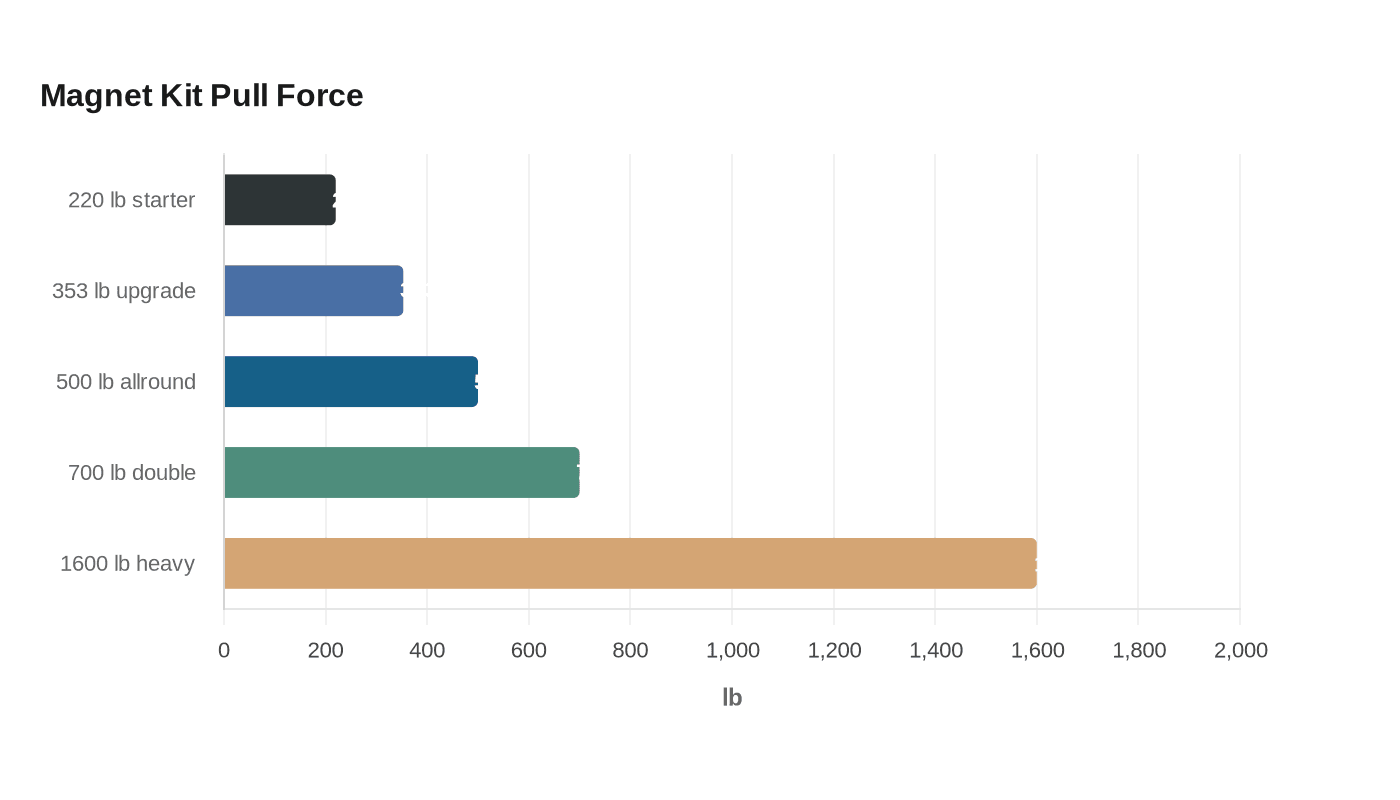
The top end of the June refresh, including the 1,600 lb class, is aimed squarely at heavy-duty buyers who want maximum pull force for larger submerged metal and salvage-style work. GOV.UK’s ferromagnetic retrieval note makes the appeal and the risk clear: strong neodymium magnets can drag up bicycles, guns, safes, bombs, coins and car tire rims, and they can also latch onto large immovable objects that are difficult or impossible to detach. In tight water or tricky access points, that kind of strength is an advantage and a liability at the same time.
TopChoice’s rankings make more sense when read alongside the rules and realities around the hobby. The Broads Authority says magnet fishing uses high-powered magnets attached to a rope to retrieve metal objects from waterways, warns that sharp metal left on banks can endanger visitors and dogs, says private land requires the landowner’s permission, and advises life jackets because the size, weight and power of a magnet can pull someone into the water. It also says people should take home and safely dispose of what they recover, and report dangerous finds such as weapons or unexploded ordnance to police on 101 or 999 in an emergency.
The legal side is just as important. Cambridgeshire County Council says finds that meet Treasure Act criteria should be reported as potential Treasure and passed to the coroner within 14 days, with help available from a Finds Liaison Officer through the Portable Antiquities Scheme. City of York Council says magnet fishing in watercourses within an Area of Archaeological Importance is illegal, and it says gold or silver objects, or groups of coins over 300 years old, count as treasure under the Treasure Act 1996. That Act came into force in England and Wales in 1997, and the Treasure (Designation) (Amendment) Order 2023 updated the Treasure (Designation) Order 2002.
That is the real lesson in the June update: the strongest magnet is not automatically the smartest buy. The best kit is the one that matches the water, the current and the job, whether the session starts in a canal, shifts to a river or ends under a bridge drop.
This article was produced by Prism’s automated news system from verified source data, official records, and press releases, then run through automated quality and moderation checks before publishing. The system is built and supervised by the people who set the standards it runs under. Read our full AI policy.
Did this article answer your question?


