Magnet fishers push back as UK authorities warn of dangers
A Chippenham grenade pull, a Salisbury Mills bomb and seven suspected grenades in Hopwood have sharpened the fight over how risky magnet fishing really is.

A magnet fisher in Chippenham hauled a grenade from the River Avon at Monkton Park, and police cordoned off the area before a bomb squad later identified it as a practice grenade. For magnet fishers who treat the hobby as cleanup work, the episode captured the tension at the center of the current backlash: one bad pull can turn a routine session into a full emergency.
Wiltshire Council’s warning followed that June 6 incident and drew strength from an earlier Salisbury case, where a man magnet fishing with his children pulled a Second World War Mills bomb from the River Avon and had to hand it over for destruction by bomb disposal experts. The council said it supports people walking, picnicking and helping keep rivers clean, but warned against magnet fishing because it can be dangerous. That is the line authorities keep returning to, even as fishers argue the pastime can remove harmful debris from waterways.
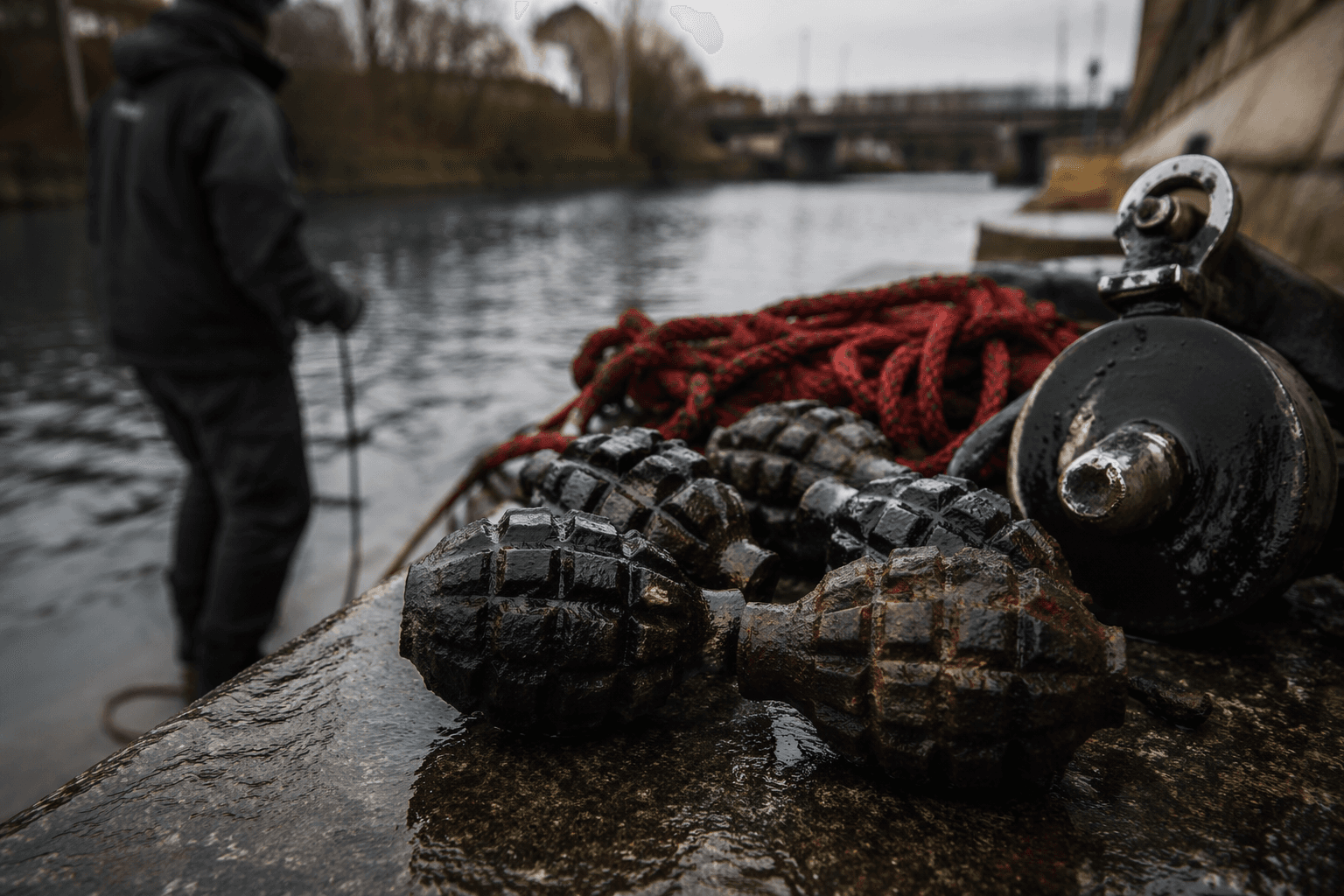
The practical hazards are not abstract. Broads Authority guidance says magnet fishing can make people fall into the water because of the size, weight and power of the magnets, and that ropes can create trip hazards on busy banks. It also warns of weapons or ordnance, along with cuts, infection and disease from rusty objects. In other words, the responsible approach looks less like chasing a trophy and more like knowing when a spot is wrong for the job: a narrow bank, a crowded path, or a stretch with a history of explosive finds is a place to stop, not push through.
That caution has only grown since West Mercia Police issued an urgent safety message after a man magnet fishing on Lea End Lane in Hopwood, Worcestershire, reported seven suspected hand grenades on June 20, 2025. Officers said two devices were left on the bank and were safely detonated after the cordon was lifted. The message was clear enough for anyone working a line near old industrial water or canal edges: once the pull starts to resemble ordnance, the session is over.
Local policy is still uneven. Portsmouth City Council says it does not have a permit scheme for magnet fishing and will consider requests case by case under its policy, which leaves access and enforcement in a gray area from one stretch of water to the next. That uncertainty is part of why the hobby keeps drawing attention beyond its own circles.
James Haskell helped push magnet fishing into the mainstream with a BBC appearance in January 2018, long before the latest safety warnings. The debate now is not whether people will keep casting magnets into rivers and canals, but whether they can read a site well enough to know when not to.
This article was produced by Prism’s automated news system from verified source data, official records, and press releases, then run through automated quality and moderation checks before publishing. The system is built and supervised by the people who set the standards it runs under. Read our full AI policy.
Did this article answer your question?