Altoids tin cyberdeck packs Raspberry Pi, full mechanical keyboard
A Raspberry Pi Zero W, 2-inch IPS LCD, and full mechanical keyboard all fit in an Altoids tin, with passive cooling and a lid that still closes.

The real feat in this Altoids-tin cyberdeck is not that Exercising Ingenuity stuffed a Raspberry Pi into a mint box. It is that the build still behaves like a computer you could actually use, with a full mechanical keyboard, a 2-inch display, and enough internal power to run untethered.
The hardware stack is brutally compact. Inside the tin sit a Raspberry Pi Zero W, a Waveshare UPS HAT, and a 3.7 V LiPo battery. The keyboard is driven by a Waveshare RP2040-Zero microcontroller that scans a diode-matrix layout, with KMK firmware handling the key mapping. That choice matters: once you shrink a keyboard to this scale, the controller and firmware are doing as much work as the switches and plate. The build keeps the mechanical feel that the community likes, but it does so without pretending that a traditional layout can survive untouched inside an Altoids shell.
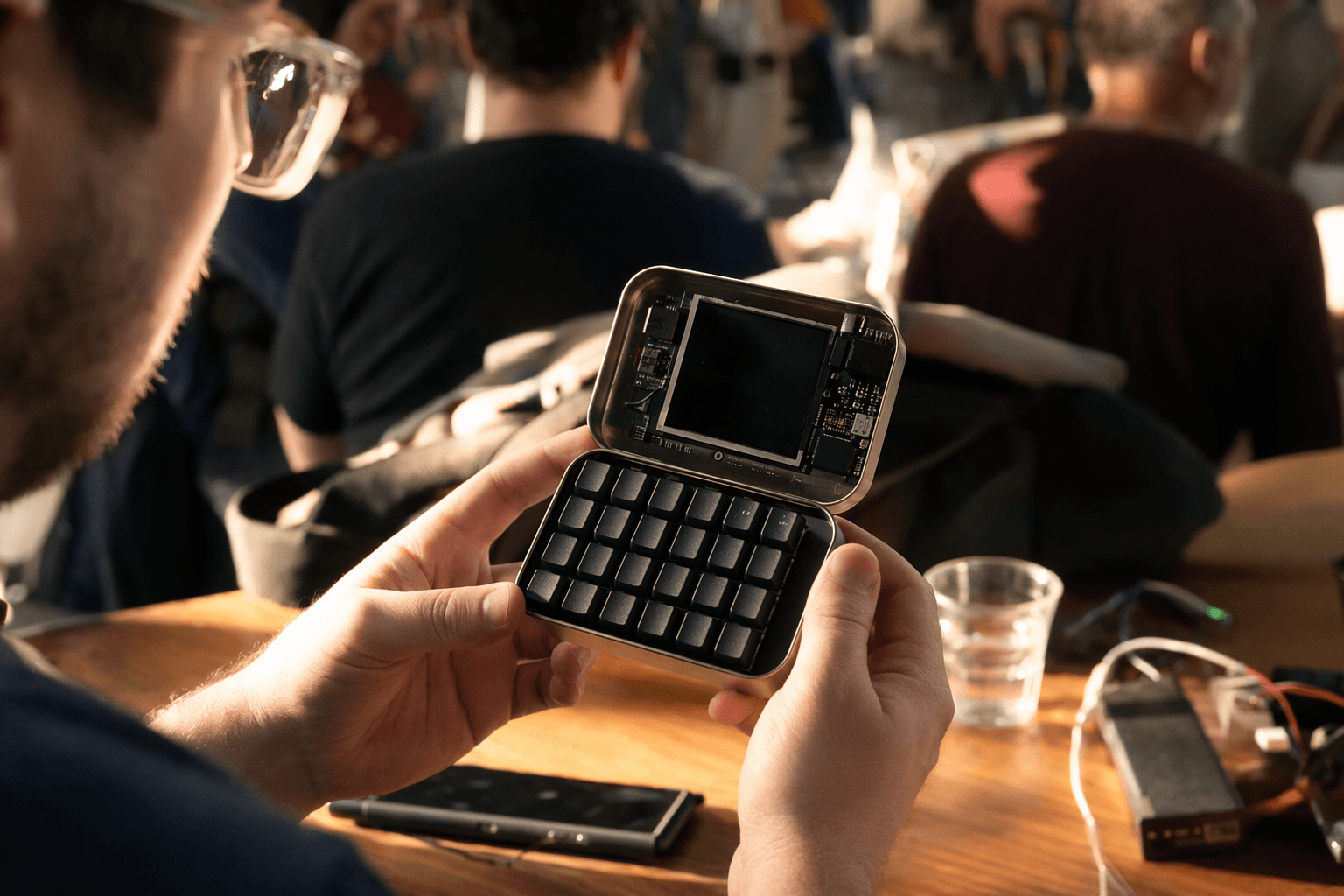
The display and operating system bring their own compromises. The machine uses a 2-inch IPS LCD over SPI, and compatibility issues pushed it onto a legacy version of Raspberry Pi OS. Several configuration tweaks were needed before the screen behaved properly. Physical space was even tighter than software space, so connectors came off some boards, wires were soldered directly to the Pi and UPS board, and a custom 3D-printed internal frame held everything in place. To finish the enclosure, hinge sections from a second Altoids tin were cut and soldered in so the lid could close. A thermal pad moves heat from the Raspberry Pi into the metal case for passive cooling, turning the tin itself into part of the thermal design.
Hackaday noted that the project goes beyond a pure novelty enclosure because it also includes a full-size USB port and a broken-out GPIO header. That is the line this build crosses from joke to design study. The mint tin is still the hook, but the useful ideas are elsewhere: aggressive component selection, direct wiring when headers waste too much volume, and heat management that uses the case instead of fighting it.
The idea also has a lineage. Matthew Wagner’s PiMiniMint traced the Altoids-tin computer concept back to early 2012 and, in its 2017 form, packed in a screen, Wi-Fi, Bluetooth, 32 GB of storage, an infrared camera, and a full-size USB port before a later battery swap forced the camera out. The newer build updates that tradition with a mechanical keyboard and a cleaner cyberdeck finish, which is exactly why it lands. It is still playful hacker theater, but it also shows what extreme miniaturization demands when the keyboard has to stay real.
This article was produced by Prism’s automated news system from verified source data, official records, and press releases, then run through automated quality and moderation checks before publishing. The system is built and supervised by the people who set the standards it runs under. Read our full AI policy.
Did this article answer your question?