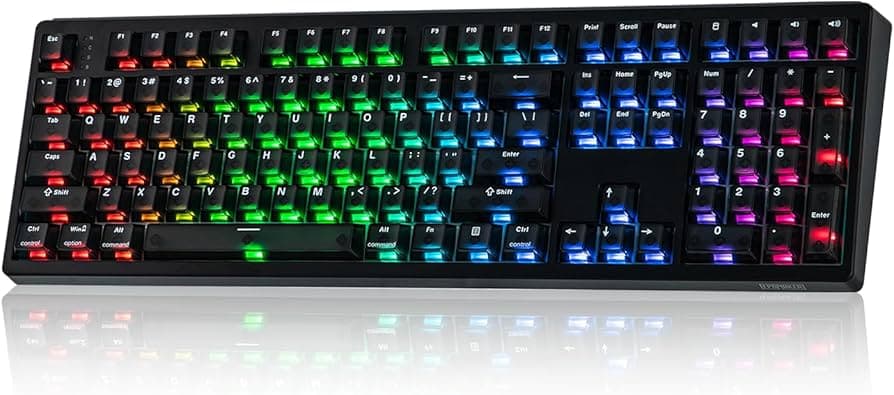
Micro Center launches keyboard 101 guide for mechanical keyboard beginners
Micro Center is treating keyboard shopping like a real hardware decision, and its new guide points to magnetic actuation and in-store testing becoming mainstream.
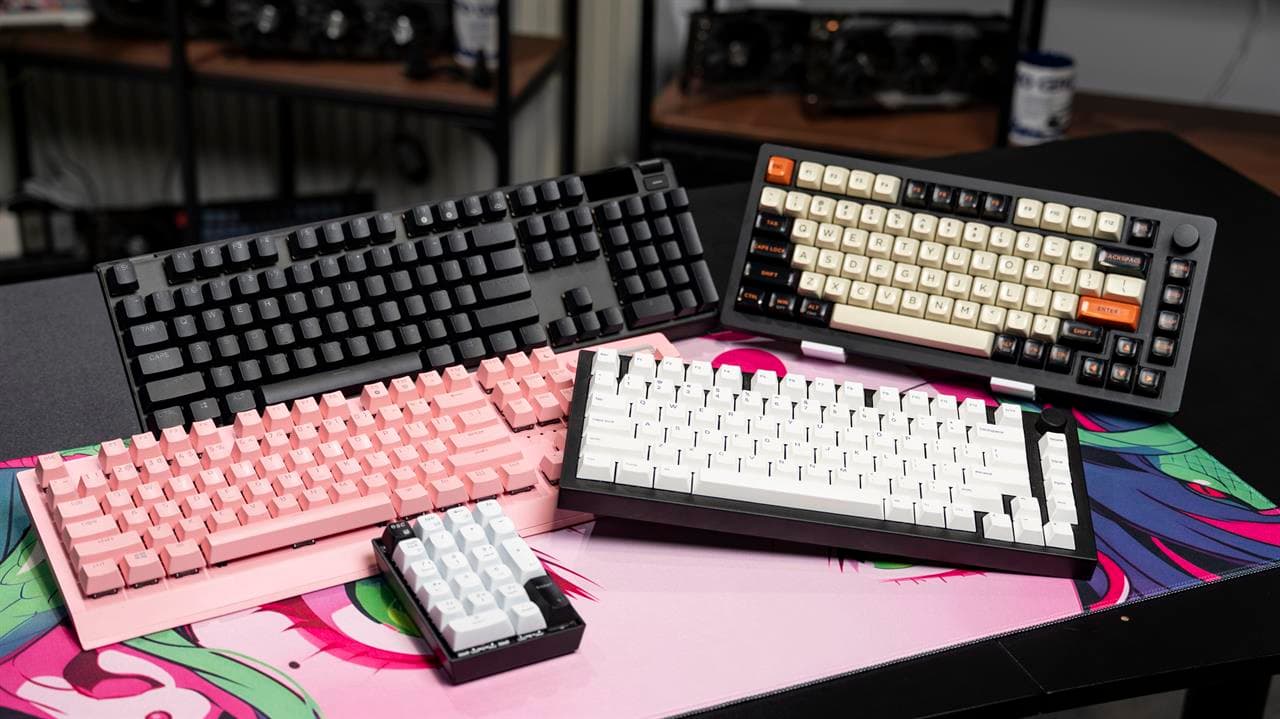
Micro Center is turning keyboard shopping into a hands-on decision
Micro Center is not just explaining keyboards. It is signaling that buying one has become enough of a mainstream choice to warrant a full education series, with keyboards on display in stores so customers can test them in person before they commit. The retailer’s Keyboard 101 lineup is aimed at newcomers and now spans four parts: an intro to keyboards, keyboard sizes, switch types, and building your own keyboard. The latest installment, “What Keyboard Switches are Right for Me?”, is built around the one question that still decides most purchases: what feels right under your fingers.
That is the smart part of the pitch, and it is the part Micro Center gets right. A keyboard is not just a peripheral anymore, especially if you are trying to fix wrist strain, clean up shoulder posture, or stop fighting a layout that no longer fits the way you type. The guide frames switches around feel, sound, and feedback, which is exactly how people actually choose once they move past the word “mechanical” and start comparing real boards.
The first fork is useful, but it is not the whole story
Micro Center’s earlier 2021 buying guide draws the cleanest possible line between membrane and mechanical keyboards. Membrane boards, it says, are common because they are simple and cheap to make. Mechanical boards, by contrast, are valued for greater precision and tactile feedback. For anyone whose old keyboard is no longer cutting it, that is a useful starting point. It gives a beginner a real decision instead of a wall of jargon.
But that split is also where the oversimplification starts. The enthusiast brain does not stop at membrane versus mechanical, because the next round of decisions is where a board becomes comfortable or annoying in daily use. Layout size matters. So does whether you want to keep your muscle memory intact or retrain it on a smaller footprint. Micro Center’s broader Keyboard 101 structure hints at that reality, which is good, because the jump from “I need a new keyboard” to “I need this keyboard” is usually where buyers get lost.
The market is large enough to justify the lesson
This is not a tiny hobby category getting a little retail attention. Grand View Research estimates the global gaming keyboard market at USD 1,105.5 million in 2024 and projects it will reach USD 1,882.6 million by 2030. It also says mechanical keyboards accounted for 65.6% of the gaming keyboard market in 2023, while wired gaming keyboards still held a 75.8% revenue share that same year. North America alone is projected to reach USD 313.5 million by 2030.
There is a second number worth keeping in view: Grand View Research estimates the global mechanical gaming keyboard market at USD 740.5 million in 2024, with a 9.2% CAGR from 2024 to 2030. That is the kind of growth curve that makes a retailer invest in education, displays, and product explanation. If the category were flat, a beginner guide would be a nice extra. In a market this big and still expanding, it becomes part of the sales floor strategy.
Switch education matters because the category has real lineage
The switch conversation also has serious history behind it, and CHERRY is one of the reasons the language around MX switches carries so much weight. The company says it has been developing and producing MX switches since 1983, when it introduced the first MX switch, MX Black. It also says the first keyboard switch was patented in the United States on February 6, 1973, and that its G80-3000, launched in 1988, became one of the most successful keyboard series in the world.
That history matters because it explains why the debate over switches never really goes away. CHERRY says its latest MX switches can reach more than 100 million actuations without loss of quality, up from a previous 50 million. It also continues to iterate with variants like MX Silent and MX Low Profile. That is not just spec-sheet inflation. It is a reminder that the modern keyboard market is still built on older ideas about durability, feel, and typing response, even when the packaging looks new.
Magnetic and hybrid boards are the clearest sign of where the market is going
Micro Center’s newer keyboard coverage is also showing how fast the category is moving beyond old assumptions. In its February 2026 guide to the MonsGeek M1 V5, the retailer described a board that can use either mechanical or magnetic switches. It also highlighted one of the biggest magnetic-switch advantages: the ability to customize how far a key is pressed before the input activates.
That is a meaningful shift in what gets discussed in a mainstream buying guide. Adjustable actuation used to feel like a feature for the far edge of the hobby, the kind of thing people chased after they already owned a half-dozen boards. Now it is part of the conversation for a newcomer picking a first serious keyboard. Once a retailer is explaining actuation distance in a beginner-facing guide, you know the market has moved past “clicky or not” and into more exacting territory.
How to use Micro Center’s advice without flattening the real decision
The best way to read Micro Center’s Keyboard 101 series is as a map, not a verdict. The series gives you the right first questions: do you want membrane or mechanical, what size fits your desk and habits, what kind of switch feel do you want, and are you the sort of person who wants to build your own board later? That is a solid framework, especially because the company is pushing people to test keyboards in person at its stores instead of buying blind.
What it should not do is make the rest of the choice look simple. A mechanical keyboard can be more precise and more satisfying, but the wrong size or switch feel can still be a bad buy. A magnetic board can promise control over actuation, but that only matters if you care enough to notice the difference. The point of Micro Center’s guide is not that every keyboard buyer needs the same answer. It is that the market has reached the stage where first-time buyers need better questions.
That is the real story here. Micro Center is not pretending the keyboard aisle is trivial anymore, and the bigger industry numbers back it up. The first serious keyboard purchase is still a test of layout, feel, and muscle memory, and the smartest part of the retailer’s push is the simplest one: put the boards in front of people, let them type, and let the fingers decide.
This article was produced by Prism’s automated news system from verified source data, official records, and press releases, then run through automated quality and moderation checks before publishing. The system is built and supervised by the people who set the standards it runs under. Read our full AI policy.
Did this article answer your question?