ANSI vs ISO keyboards, why layout standards affect keycaps
Pick the wrong layout and you pay twice, once in keycap compatibility and again when muscle memory meets a different Enter key.

The expensive part of ANSI versus ISO is not the sticker shock on the board itself. It is the second purchase you make when your keycap set does not fit, your left Shift is the wrong size, or you realize your fingers learned a different Enter key than the one under your right hand. Layout choice also affects resale liquidity and how painful it is to switch later, which is why this is a first-build decision, not a cosmetic one.
What ANSI and ISO actually change
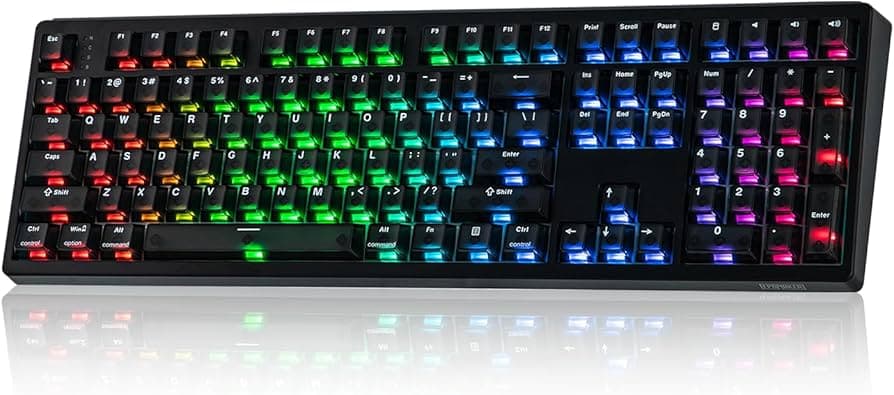
ANSI is the common layout in the United States and Canada, and on a full-size board it typically uses 104 keys. The Enter key is rectangular, the left Shift is longer, and the whole bottom-left corner looks familiar to anyone who has lived on American office boards for years. ISO is the standard family used mainly in Europe, and a full-size board typically has 105 keys, with an L-shaped Enter, a shorter left Shift, and an extra key near that Shift key.
That sounds like a small physical difference until you type on both. On ANSI, the right pinky lands on a long horizontal Enter and the left hand gets a broad Shift. On ISO, the Enter corner is taller and the left side of the board changes shape enough that touch-typing muscle memory has to relearn the geometry. The layout changes the rhythm of the board, not just the legend printed on top.
Why standards matter more than the box says
The International Organization for Standardization treats keyboard layout as a standards problem, not a vibe check. ISO/IEC 9995-1:2026 is the current standard for general keyboard-layout principles, and ISO/IEC 9995-2:2026 defines the alphanumeric section, including zones, key arrangement, and control functions. The ISO 9995 series also specifies requirements for keyboard layouts and the allocation of keycap imprints on alphanumeric and numeric input devices.
That matters because the layout is tied to how keycaps are labeled and where they physically sit. If you are buying a custom set, the standard underneath the board affects whether the legends line up cleanly, whether the modifiers match the plate, and whether the set was designed with your row sizes in mind. ANSI and ISO are not interchangeable the way two black PBT sets might look on a store page.
Keycaps are where the mistake gets expensive
Most keycaps are made for Cherry MX-style switches and standard layouts, but that only gets you part of the way there. Compatibility still depends on layout, key size, and profile, so a set that looks universal on a product page can still miss the mark on an ISO board or leave awkward gaps on a nonstandard build. That is the practical trap: switches may be the same, but the keycap cuts and sizes are not.
The aftermarket split is obvious. UK ISO, German ISO, Nordic ISO, and Japanese JIS collections sit alongside ANSI kits, which is a reminder that the hobby is not just ANSI-versus-ISO in the abstract. Once you move into regional legends and non-US formatting, sourcing parts becomes more specific, and that specificity is exactly why people get burned on their first custom build.
Pick the layout by how you actually type
If you want the broadest pool of off-the-shelf boards and keycap sets, ANSI is the easier path. That is the layout most North American users already know, and it tends to be the simplest route for the first custom build because the market in the U.S. leans heavily that way. When you are buying your first hot-swap board, your first GMK-style set, or your first budget PBT kit, ANSI usually means less hunting.

If your typing needs are regional, ISO is the better fit. European users often need the larger ISO Enter key and language-specific legends, and ISO/JIS boards are built around those regional standards and multilingual workflows. For anyone typing in a European language day to day, the board should serve the language first and the enthusiast setup second.
The use-case test: gaming board, multilingual board, travel board
For a gaming board, ANSI is usually the cleanest bet if your muscle memory is already built around North American layouts. The long left Shift and rectangular Enter keep the modifiers where your hands expect them, and that makes the board easier to live with when you are switching between shooters, work, and general typing. If your game library also doubles as your daily driver, ANSI gives you the broadest keycap and replacement-part pool without making you think about regional legends.
For multilingual use, ISO or JIS can be the better investment because Windows handles multiple keyboard layouts and lets you switch between installed layouts. Windows input profiles tie both the language being entered and the keyboard being used, which is why regional support is not just a software trick layered on top of hardware. If you regularly move between languages, the keyboard should match the way your operating system already thinks about input.
For travel between regions, layout friction shows up fast. A board that feels normal in the United States can become annoying in Europe if you rely on the ANSI geometry, while an ISO user may prefer to stay inside the regional standard rather than relearn a second muscle-memory map every time they cross an ocean. The easiest board to source parts for is still ANSI; the better board for regional typing needs is the standard that matches the region you actually work in.
Software support helps, but it does not erase hardware differences
Windows supports multiple keyboard layouts and lets you switch between them, so software can soften the blow when you need to type in another language. It can also hide some of the pain when you are moving between board layouts on the same machine. But software does not change the physical size of the Enter key, and it does not restore a missing keycap if your set was built for the wrong standard.
That is the part people miss when they think layout is only a software setting. Windows input profiles describe both the input language and the keyboard itself, which is exactly why a keyboard can feel right in one language and awkward in another even before you touch the OS. Hardware and software both matter here, but they solve different problems.
The clean verdict
ANSI is the easier layout for sourcing parts, keycap sets, and replacement bits, especially if you are building inside the U.S. market. ISO is the better choice when your typing needs are regional, your legends need to match your language, or you want the larger Enter and region-specific workflow to feel native from day one. Either one can be the right board, but only one will save you from buying a keycap set twice.
This article was produced by Prism’s automated news system from verified source data, official records, and press releases, then run through automated quality and moderation checks before publishing. The system is built and supervised by the people who set the standards it runs under. Read our full AI policy.
Did this article answer your question?