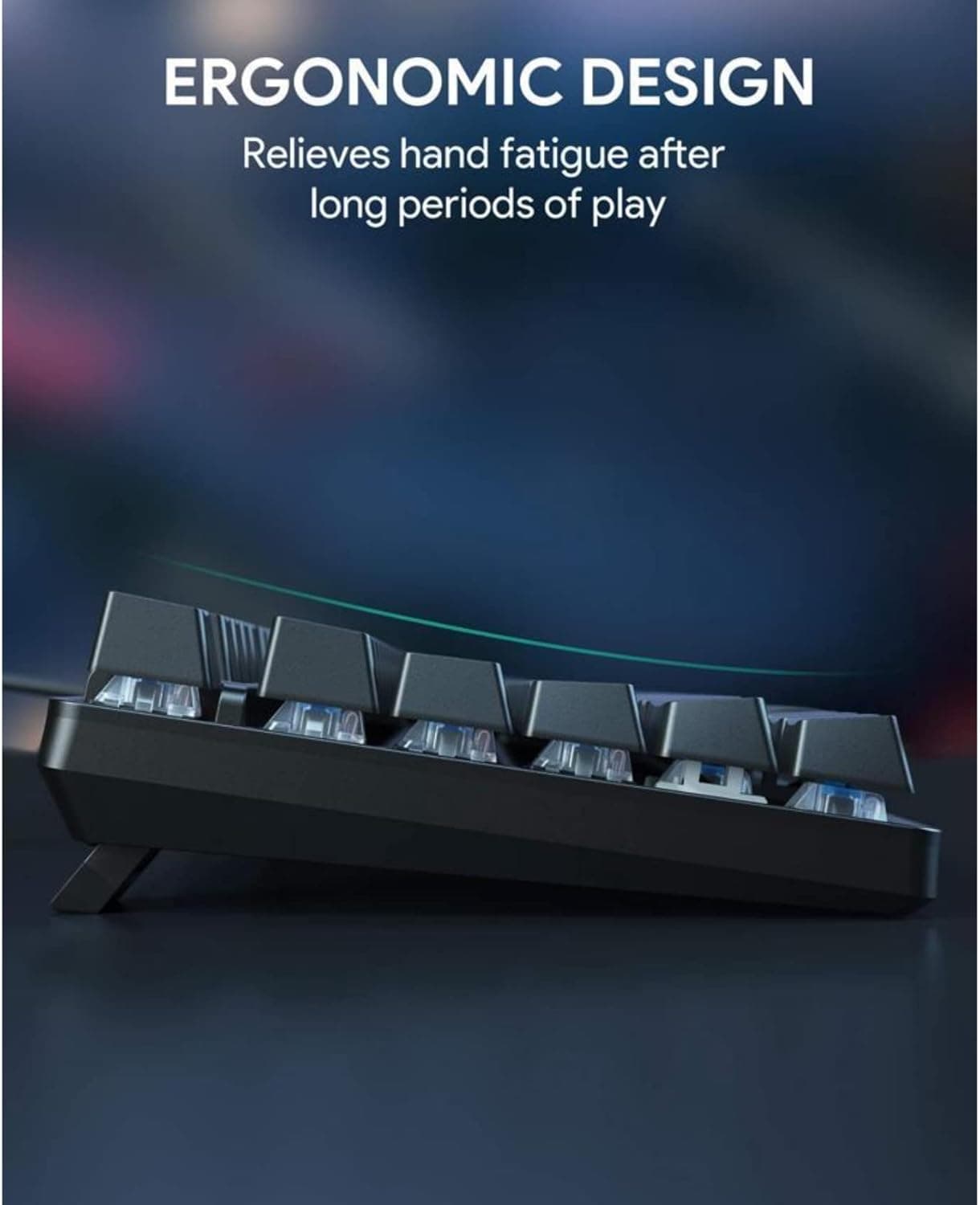
Best Mechanical Keyboards of 2026: Budget Boards Now Rival Premium Options
Budget boards under $65 now ship with gasket mounts and tri-mode wireless that cost $200+ just two years ago; the 2026 refresh proves the spec gap is closing fast.

The Ajazz AK820 Pro costs $60. It ships with a gasket mount that actually flexes the way a gasket mount should, a tri-mode wireless radio including 2.4 GHz, hotswap sockets, a metal volume knob, and double-shot PBT keycaps. Two years ago, that feature checklist would have cost you north of $200 and possibly a group buy waitlist. That a single sub-$100 board now carries it all is the sharpest possible summary of where mechanical keyboards stand in 2026.
The April 6 update from PrimeBuyerLab, part of a wave of early-April roundups consolidating recent releases and shipping updates, reinforces what multiple 2026 guides from RTINGS and others have independently confirmed: feature parity between budget and mid-range boards has accelerated to the point where the old headline checklist ("does it have hotswap?") is no longer enough to make a buying decision. The real question now is how well each feature is implemented, specifically the mount type, firmware support, and acoustic tuning.
What Changed in the April 6 Refresh
The consistent signal across April 2026 coverage is that gasket mounting and tri-mode wireless have become table-stakes features even below $70, and buyer expectations have shifted accordingly. The PrimeBuyerLab guide organizes its picks around practical buyer categories: budget, hotswap value, wireless flexibility, and endgame typing boards. What's notable in the refresh is the emphasis on applied, daily-driver testing rather than spec-sheet comparisons. Practical tradeoffs, like how a gasket mount feels after eight hours of typing versus how it looks on a marketing page, are now the decisive factor separating good picks from great ones.
The mid-range has also leveled up in a specific way. Boards in the $100-$200 range are now expected to arrive with hotswap PCBs, pre-tuned stabilizers, and at least one ergonomic layout option. The competitive pressure from budget boards has pushed mid-range makers to compete on acoustics and firmware depth rather than hardware features alone.
Five Reader Profiles and What to Buy
The best way to use any 2026 roundup, including this one, is as a category filter. Identify which of these profiles fits your situation, narrow to one or two boards, then find a dedicated sound and typing review before you commit.
Quiet Office
If you share a workspace and noise is the first filter, the Keychron K8 Pro hits a practical sweet spot: a plastic case (which actually dampens resonance better than bare aluminum at this price point), QMK/VIA programmability, Bluetooth 5.1, and a hotswap PCB at a price well below the premium Q-series aluminum builds. Pair it with tactile or linear switches in the 35-45g actuation range and you get a board that disappears acoustically into an open-plan office. The Logitech G515 Lightspeed TKL at $140 is worth noting here too, with its carbon fiber positioning plate and adjustable gasket mount covering both the softness and the silence.
Gaming and Latency
Competitive gaming in 2026 demands two specific specs: a 2.4 GHz wireless connection (not Bluetooth, which adds latency) and a polling rate at or above 1000 Hz. The ASUS ROG Strix Scope II 96 Wireless at $159 delivers all of that plus a 96% layout with a numpad-adjacent column, hotswappable ROG NX Snow switches, and a claimed 667-hour battery life. For players pushing into hall effect territory, the Wooting 60HE+ at around $175 brings adjustable actuation from 0.1mm to 4.0mm and rapid trigger functionality, a feature set that professional tournament players on brands like Wooting and Endgame Gear have standardized around. The 60% layout is polarizing, but for pure performance metrics it is currently one of the most measurable edges available at that price.

Budget First Buy
The Redragon K673 PRO in the $49-$64 range is the board that keeps appearing in April 2026 roundups as the recommendation that embarrasses keyboards twice its cost. Gasket-mount construction, tri-mode wireless, and a build quality that requires no apology. Before buying any budget hotswap board, however, check one spec that rarely appears in headlines: whether the hotswap sockets are 3-pin only or 5-pin compatible. Five-pin sockets accept the full range of aftermarket switches; 3-pin sockets lock you out of a significant portion of the switch market, including most boutique linears. The Royal Kludge RK84 Pro at around $65 is another 75% option with wireless and arrow keys intact, useful if you're coming from a full-size and want to keep the function row without going full 60%.
Wireless Travel
Tri-mode wireless, meaning Bluetooth, 2.4 GHz dongle, and USB-C wired, is now standard at the $60+ tier. For travel use, weight and battery life become the secondary filters. The Ajazz AK820 Pro at $60 and the NuPhy Air75 V2 are both compact, light, and multi-device Bluetooth boards that pair cleanly with a laptop and tablet simultaneously. For anyone needing the lowest possible lag at a hotel LAN event, confirm that the board's 2.4 GHz mode is included, not just advertised as a "wireless" feature that only means Bluetooth.
Endgame Typing
The Keychron Q1 Max at around $200 and the Keychron Q3 Pro are the names that recur most often in 2026 endgame discussions. Both use gasket mounts in aluminum cases with QMK/VIA firmware, hotswap PCBs, and pre-lubed Gateron switches. The Q5 Max in a 96% layout is the recommendation from RTINGS as the best Keychron board outright. At the true endgame tier, the conversation shifts entirely to acoustic tuning: foam layers, gasket material, stabilizer lube quality, and switch choice are where the remaining gains live. The hardware is solved; the customization is the hobby.
The Spec Gaps Worth Calling Out
Even with feature parity accelerating, two inconsistencies show up repeatedly in April 2026 guides and are worth flagging. First, polling rate is frequently omitted from budget board spec sheets despite being a critical gaming metric. A board marketed as a gaming keyboard should list whether it does 1000 Hz or is stuck at 125 Hz, and many budget listings still do not. Second, "wireless" in a product title increasingly needs unpacking: Bluetooth-only boards cannot match 2.4 GHz for input latency, and a buyer optimizing for gaming who picks a Bluetooth-only board because it said "wireless" on the box is making a meaningful performance tradeoff without knowing it.
The practical framework from the April roundups holds: start with the category, check the mount implementation and firmware depth, verify 5-pin hotswap compatibility if you plan to swap switches, and confirm 2.4 GHz is present if latency is a concern. The boards are better than ever across every price tier; the differentiators have just gotten more specific.
This article was produced by Prism’s automated news system from verified source data, official records, and press releases, then run through automated quality and moderation checks before publishing. The system is built and supervised by the people who set the standards it runs under. Read our full AI policy.
Did this article answer your question?