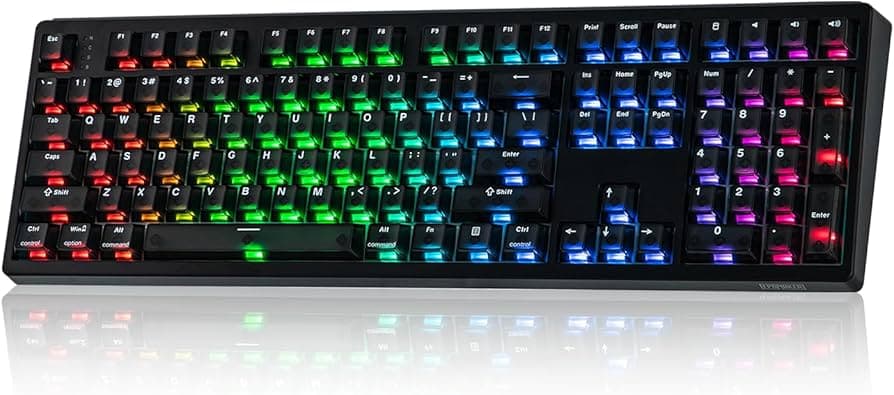
Epomaker Galaxy100 Lite brings 1800 enthusiast features under $120
Epomaker’s Galaxy100 Lite packs the 1800 layout, aluminum case, hot-swap sockets, and VIA/QMK tuning into a board that still lands under $120.

The 1800 sweet spot without the boutique tax
The Galaxy100 Lite is the rare budget board that feels like it understands why enthusiasts keep chasing 1800 layouts in the first place. You get the numpad, arrow cluster, and navigation keys you actually use, but the desk footprint stays sane, and that matters the second a full-size board starts crowding your mouse hand. Epomaker has pushed this one as a value play from the start, and that is exactly where it makes sense: it delivers a lot of the custom-board experience before the compromises become too obvious.
What makes the Lite interesting is not flash, it is the way it packages familiar enthusiast wins into something you can buy without entering custom pricing territory. The board is aimed squarely at people moving up from a basic office board or a cheap gaming keyboard, and it is one of those designs that tries to feel premium the moment you pick it up, not after you have spent another weekend modding it.
What you actually get for the money
Epomaker built the Galaxy100 Lite around a gasket-mounted aluminum alloy case, then layered in five cushioning materials to shape the sound and feel. The stack includes Poron, IXPE, EMDP, and a PET sound enhancement pad, which is exactly the sort of material list that used to live in far pricier customs and group buys. Add hot-swap sockets, south-facing RGB, tri-mode connectivity, and VIA support, and the spec sheet starts looking less like an entry-level compromise and more like a carefully trimmed enthusiast board.
The battery is another point where the Lite refuses to feel stripped down. Epomaker lists an 8,000mAh battery, which is a strong fit for a wireless-capable board of this size, and it helps keep the board squarely in the desk setup lane rather than the constant-charging lane. The official design also includes QMK and VIA customization, so you are not just buying a nice chassis, you are buying a keyboard you can actually remap and tune the way hobby boards should let you.
The sound and feel are the point
The big draw here is the typing experience. The Galaxy100 Lite is being described as creamy and thocky, and that is not marketing fluff, it is the actual lane this board wants to live in. The aluminum body gives it weight and presence, while the gasket mount and damping stack aim for a muted, refined tone instead of a hollow clack that reminds you how much plastic you bought.
That sound profile matters more than the RGB here. If you care about a board that feels substantial before the first keypress, the Lite is built around that sensation: a dense shell, a tuned bottom-out, and enough internal damping to keep the acoustics polite without killing the character. In practice, that is the difference between a board that looks like an enthusiast board and one that behaves like one.
Why the 1800 layout keeps winning
The reason the 1800 format keeps showing up in keyboard conversations is simple: it solves a real desk problem. A 96 percent or 1800-style layout keeps nearly full-size utility while trimming the wasted space, so you still have the numpad for spreadsheets, the arrows for editing, and the navigation keys for daily work, but your mouse does not get exiled to the edge of the desk. That makes it one of the most practical compromises in the hobby, especially if you split your time between work and play.
Scribbling Geek also described the Galaxy100 Lite as a 96 percent, 1800-style board with a knob, and that lines up with the appeal here. You are not losing the controls that make a productivity board useful, but you are getting a cleaner footprint and a more deliberate feel than a standard office slab. For people who have never wanted to jump all the way to a compact board, this is the form factor that quietly makes sense.

Who should buy it
If you are custom-curious and want your first real taste of gasket mounting, hot-swap sockets, and firmware-level remapping, this is an easy board to understand. You get enough of the enthusiast experience to learn what actually matters to you, without having to source stabilizers, foam kits, and a case separately. That makes the Galaxy100 Lite a smart first stop for anyone testing whether the hobby is a one-off curiosity or a permanent habit.
It also makes sense for office upgraders who want something better than the usual corporate membrane-adjacent fare. The 1800 layout keeps the productivity keys intact, the aluminum case adds a genuinely premium desk presence, and the battery and tri-mode setup give it enough flexibility for mixed use. Budget builders should care too, because this is one of those rare boards that gives you a solid base before you start thinking about future swaps and mods.
The price is the real weapon
Epomaker’s own pricing puts some configurations at $109.99 and others at $119.99, which is already aggressive for a gasket-mounted aluminum keyboard with QMK/VIA support. During the launch window, TechPowerUp’s coverage said the official website price dropped to $93.49 with a 15 percent discount, and that is the kind of number that changes the conversation completely. At that level, the Galaxy100 Lite stops looking like a niche indulgence and starts looking like a very real alternative to mass-market keyboards that cost nearly as much and give you far less control.
The hardware story backs that pricing up. Epomaker says the Lite is a 20 percent lighter version of the Galaxy100, landing at about 1.6 kg, while Scribbling Geek measured it at roughly 1.66 kg. That is still a hefty board, and that heft is part of why it feels more expensive than it is. The weight, the aluminum, and the damping stack work together to sell the illusion of a pricier build, which is exactly what a value enthusiast board should do.
Configurations, colors, and the little details that matter
Epomaker is offering the Galaxy100 Lite in ANSI and RU layouts, with black and creamy-white colorways and switch options that include Feker Marble White Switch and Epomaker Wisteria Linear V2 Switch. Those details are important because they tell you the board is not being treated as a one-size-fits-all afterthought. It is being positioned as a preorder keyboard with enough regional and aesthetic variation to fit into real setups, not just spec sheets.
That is also why the premium touches that matter most here are not the decorative ones. The aluminum case, gasket mount, sound-dampening layers, hot-swap sockets, and VIA support are the features worth paying for, because they change how the board feels, sounds, and evolves over time. South-facing RGB and a nice colorway are welcome, but they are not what makes the Galaxy100 Lite compelling.
The Galaxy100 Lite lands in a sweet spot the hobby has been inching toward for a while: real enthusiast behavior, real desk-friendly utility, and a price that does not make the whole idea feel ridiculous. If you have been waiting for an 1800 board that gives you the premium stuff first and asks questions later, this is exactly the kind of compromise that makes sense.
This article was produced by Prism’s automated news system from verified source data, official records, and press releases, then run through automated quality and moderation checks before publishing. The system is built and supervised by the people who set the standards it runs under. Read our full AI policy.
Did this article answer your question?