Framer launches $439 F1 keyboard with display and programmable knobs
Framer’s $439 F1 pairs a 75% low-profile layout with a color LCD and two knobs. It looks built for shortcut-heavy creative work, not plain typing.
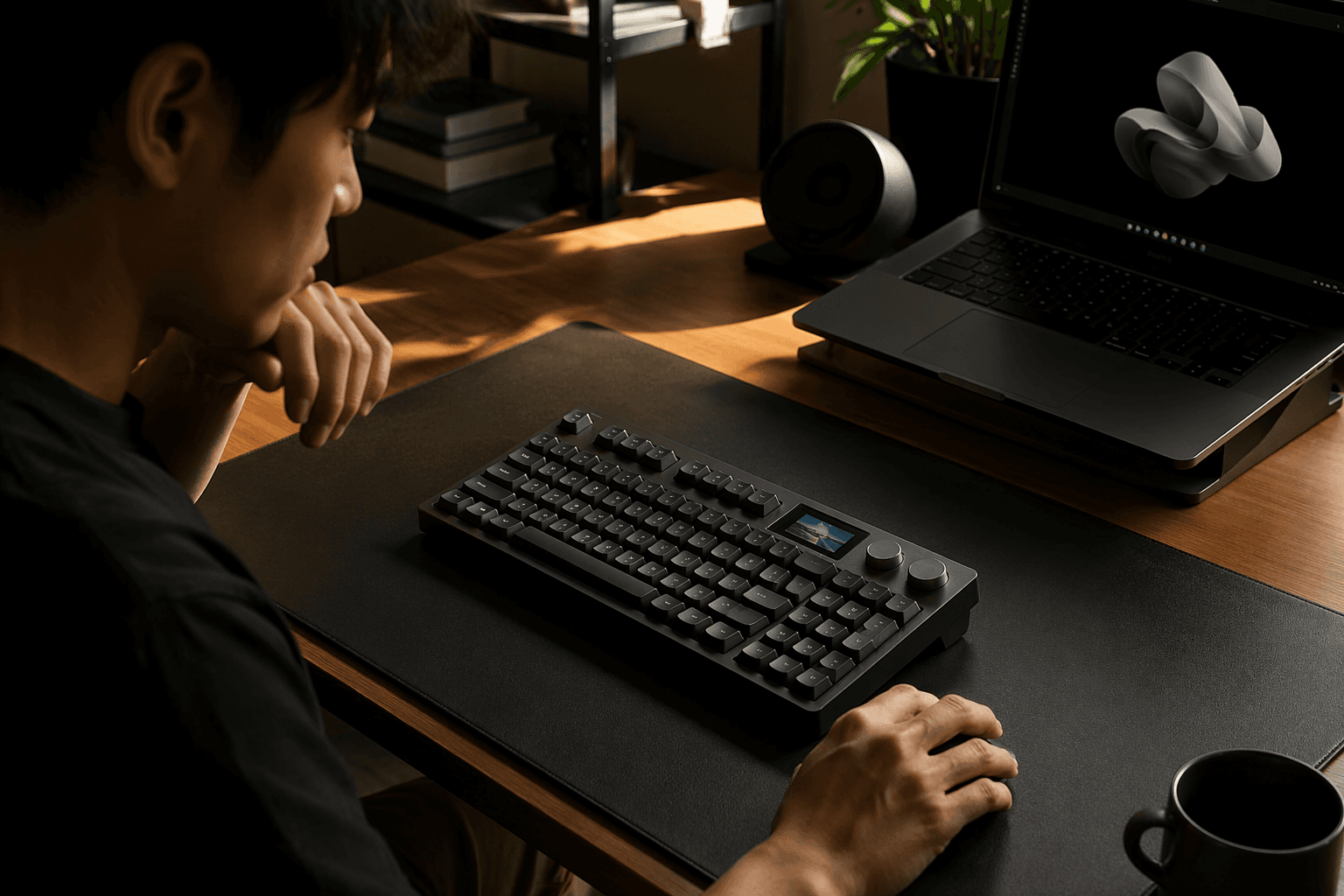
Framer is trying to do something harder than launching another flashy keyboard. The F1 is a $439 low-profile mechanical board with a built-in display and programmable knobs, and the real question is whether those extras make it feel like serious workflow hardware instead of a software company dabbling in desk candy.
On paper, the spec is unapologetically creator-first. The F1 is a 75% low-profile mechanical keyboard with two programmable knobs, a 310×100 px color LCD, and a full CNC aluminum enclosure. It uses hot-swappable tactile switches, supports Bluetooth with up to three saved connections, and packs a 3000mAh battery. Work Louder says it will ship worldwide, includes a 2-year warranty and 14-day returns, and is set to ship in June 2026. Framer’s own site frames it as arriving in Q2 2026.
That matters because the F1 is not coming out of nowhere. Framer and Work Louder already worked together on the CM-2, also called the Creator Micro 2, a compact keyboard built around creative workflow. Framer’s CM-2 page makes the positioning plain enough: it uses Work Louder’s Input configurator instead of VIA or QMK, and it is meant to work with apps beyond Framer. Figma and Work Louder took a similar swing in December 2023 with a custom keyboard for creative workflows that used 12 keys and two rotary encoders. Work Louder’s own Knob1 sits in the same premium low-profile niche and is also priced at $439.
That pricing is the tell. Framer is not trying to undercut the hobby market or chase a budget crowd. It is stepping into a small, expensive lane where the keyboard is less a typing tool than a control surface for people who live in shortcuts, macros, and repeated UI actions. The low-profile format helps the pitch by keeping the board visually slim and desk-friendly, while the knobs and LCD push it toward command center territory.
So who is this for? Designers are the cleanest fit, especially anyone bouncing between tools, timelines, and frequent adjustments. Developers could make use of it too if they are the kind who build custom layers and want hardware that reflects that setup. Pure typists, though, are probably not the target. The F1 looks like Framer and Work Louder asking a familiar hobby question in a new accent: if a keyboard is going to cost $439, it had better do more than feel nice.
This article was produced by Prism’s automated news system from verified source data, official records, and press releases, then run through automated quality and moderation checks before publishing. The system is built and supervised by the people who set the standards it runs under. Read our full AI policy.
Did this article answer your question?