Jiffy75’s Kickstarter success shows split keyboards have gone mainstream in Japan
Jiffy75’s 32-million-yen Kickstarter was bigger than a hype cycle. Cornix had already taught Japanese buyers that a split board could feel practical, not weird.

The split board that stopped feeling experimental
Jiffy75 did not raise more than 32 million yen from 835 backers because it was merely another split keyboard. It hit because Cornix had already done the hard part: it made the split layout feel usable, not niche, and Jiffy75 turned that lesson into a cleaner, friendlier package.
That is the real post-Cornix reality check. In Japan’s split-keyboard scene, the win is no longer about convincing people that left-right separation exists. It is about showing that the board fits a real desk, a real workflow, and a real budget without asking the buyer to become a layout purist.
Cornix changed the category, Jiffy75 lowered the barrier
Cornix matters here because it gave the market a reference point. JezailFunder says the earlier split keyboard helped users relieve discomfort from traditional one-piece boards, and BackerClub says it earned strong reviews and a loyal following. That kind of reception does more than validate one product: it teaches the next wave of buyers what split keyboards are for.
Jiffy75 takes that education and strips away some of the friction. JezailFunder frames it as a 75% split that keeps a familiar layout because highly specialized layouts are not for everyone. That is the key move. Instead of forcing users into a dramatic leap, it keeps the muscle memory close enough that the ergonomics feel like an upgrade, not a rewrite.
The company also says research shows 75% is the most preferred layout among keyboard users. In hobby terms, that matters because it means the board is not asking you to abandon the shape you already know. It is asking you to split it, not relearn it.
Why the ergonomics argument lands
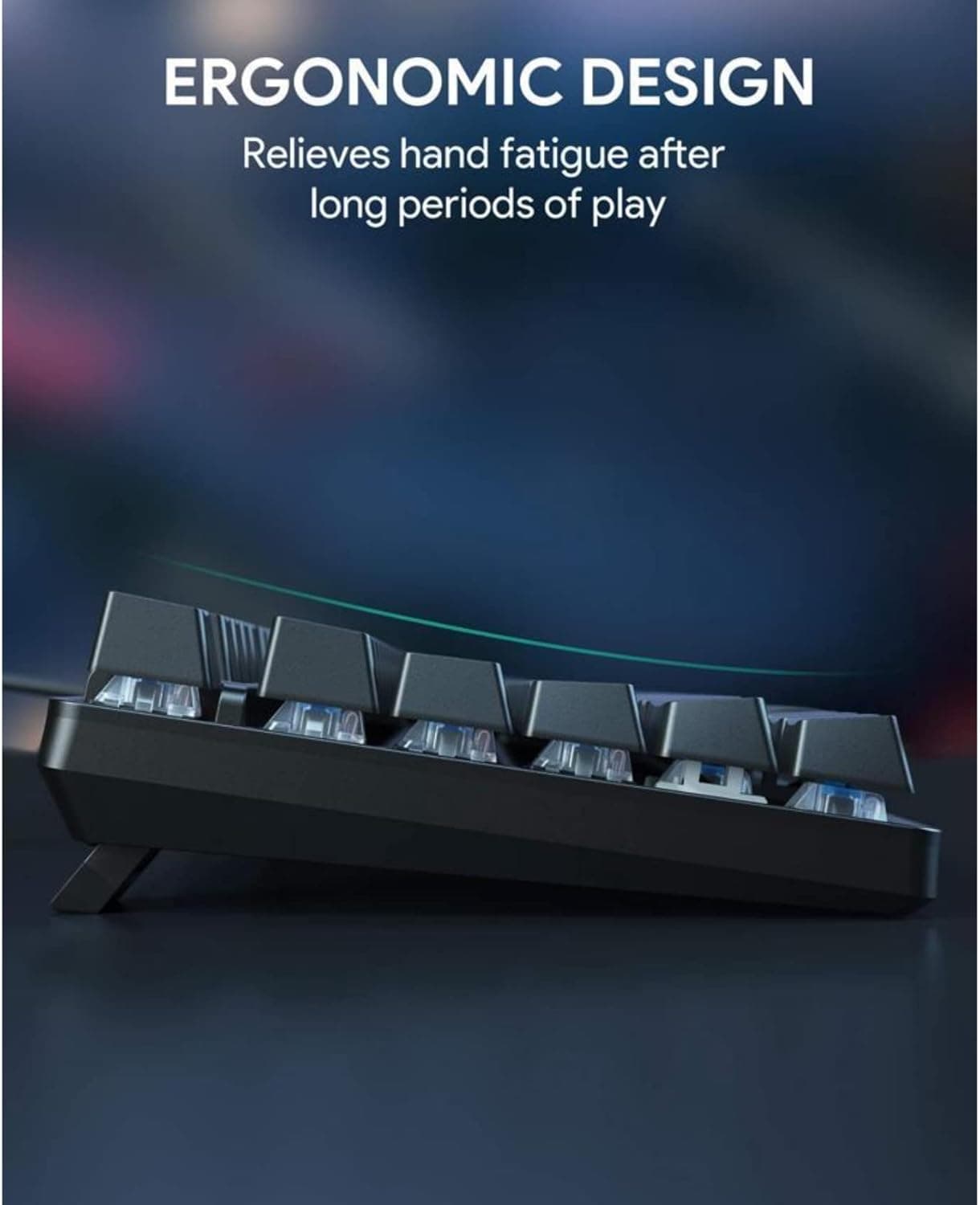
This is the part where the board stops being marketing copy and starts being a real ergonomics play. JezailFunder positions Jiffy75 as a way to reduce shoulder tension and wrist strain while freeing up the middle of the desk for other tools. That is the practical language split-keyboard buyers actually care about.
The broader research backs that up. A 2009 Ergonomics study from the University of California, San Francisco, by David Rempel, Dan Nathan-Roberts, Bing Yune Chen, and Dan Odell found that split, gabled keyboard designs can prevent or improve upper-extremity pain by reducing awkward wrist and forearm postures. The same study found that lower keyboard height reduced elbow height and lessened wrist ulnar deviation and forearm pronation.
That is why split boards keep converting skeptics when they are done right. The benefit is not abstract posture theory. It is the very specific feeling of your shoulders settling down and your wrists stopping the little daily fight that one-piece boards can trigger over long sessions.
The practical hardware choices that made Jiffy75 feel sane
Jiffy75’s appeal also comes down to how aggressively it avoids weirdness. The official campaign positions it as a 75% split with Bluetooth and 2.4G wireless support, which immediately puts it in the “usable every day” camp instead of the “desk art for enthusiasts” camp. Wireless matters here because a lot of people will tolerate an ergonomic board only if it does not turn their desk into a cable project.
The campaign pricing was equally important. Third-party trackers put pledges starting around $219, with an expected retail price of $249. Optional wooden wrist rests were listed at $99. That is not cheap, but it is also not custom-board insanity, and in the split-keyboard world that middle ground is often where products win.
The value pitch is pretty clear: you get the ergonomic logic, the familiar 75% footprint, and the convenience of modern wireless support without diving into a highly specialized layout. For a lot of buyers, that is the exact point where curiosity turns into a pledge.
Why backers trusted JezailFunder
Creator credibility is doing more work here than most people admit. BackerClub describes JezailFunder as a Hong Kong-based studio with years of OEM keyboard manufacturing experience, and that background matters when you are asking people to back a first Kickstarter campaign. It tells buyers there is a factory reality behind the renderings.
The Cornix reputation helped, too. BackerClub says the earlier split board had strong reviews and a loyal following, which is exactly the sort of prior trust that gets reused on a successor project. In enthusiast markets, a first campaign can still feel like a gamble, but a first campaign from a team with proven manufacturing chops and a respected earlier board feels more like a calculated bet.
The booth presence at Keyket 2026 also made the project more tangible. Greenkeys reported that a Jiffy75 sample was shown at the Jezail Funder Japan booth and that many attendees tried it out. That kind of hands-on exposure matters in keyboards more than it does in many other categories, because layout preference is physical. People want to feel the key spacing, the split angle, and the way the board sits in front of them before they commit.
The momentum was visible before the campaign ended
By April 7, 2026, Greenkeys reported that Jiffy75 had already passed 30 million yen with 796 backers. Four days later, the campaign had closed at more than 32 million yen and 835 backers. That final stretch matters because it shows the project was not just getting polite niche support; it was converting attention into pledges at a steady clip.
That trajectory is exactly what makes the result notable in Japan’s still relatively small split-keyboard scene. Greenkeys’ larger point is that once one board has successfully moved users into a new layout family, the follow-on products can capture demand far more easily. In other words, Cornix taught the market how to think about split keyboards, and Jiffy75 made the lesson feel safe enough to buy.
What this means for split keyboards going forward
Jiffy75 is important because it shows where the category is headed when it stops acting like a novelty. The winning formula is not maximal layout radicalism. It is a familiar shape, real ergonomic intent, wireless convenience, and enough creator credibility to make first-time backers comfortable.
That is the lesson split keyboards keep repeating when they break through: once users understand the tradeoffs, the board no longer has to be exotic to be desirable. Jiffy75 proved that in Japan, the split keyboard has moved from hobby curiosity to a much more readable consumer choice, and Cornix is a big reason why.
This article was produced by Prism’s automated news system from verified source data, official records, and press releases, then run through automated quality and moderation checks before publishing. The system is built and supervised by the people who set the standards it runs under. Read our full AI policy.
Did this article answer your question?