Leopold’s Alchemie keyboards add modular numpad, premium wireless build
Leopold’s Alchemie line gives desk-savers a rare option: a premium 84-key TKL that can snap into full numpad duty with the FC220TP. The build is all aluminum, wireless, and hot-swap.
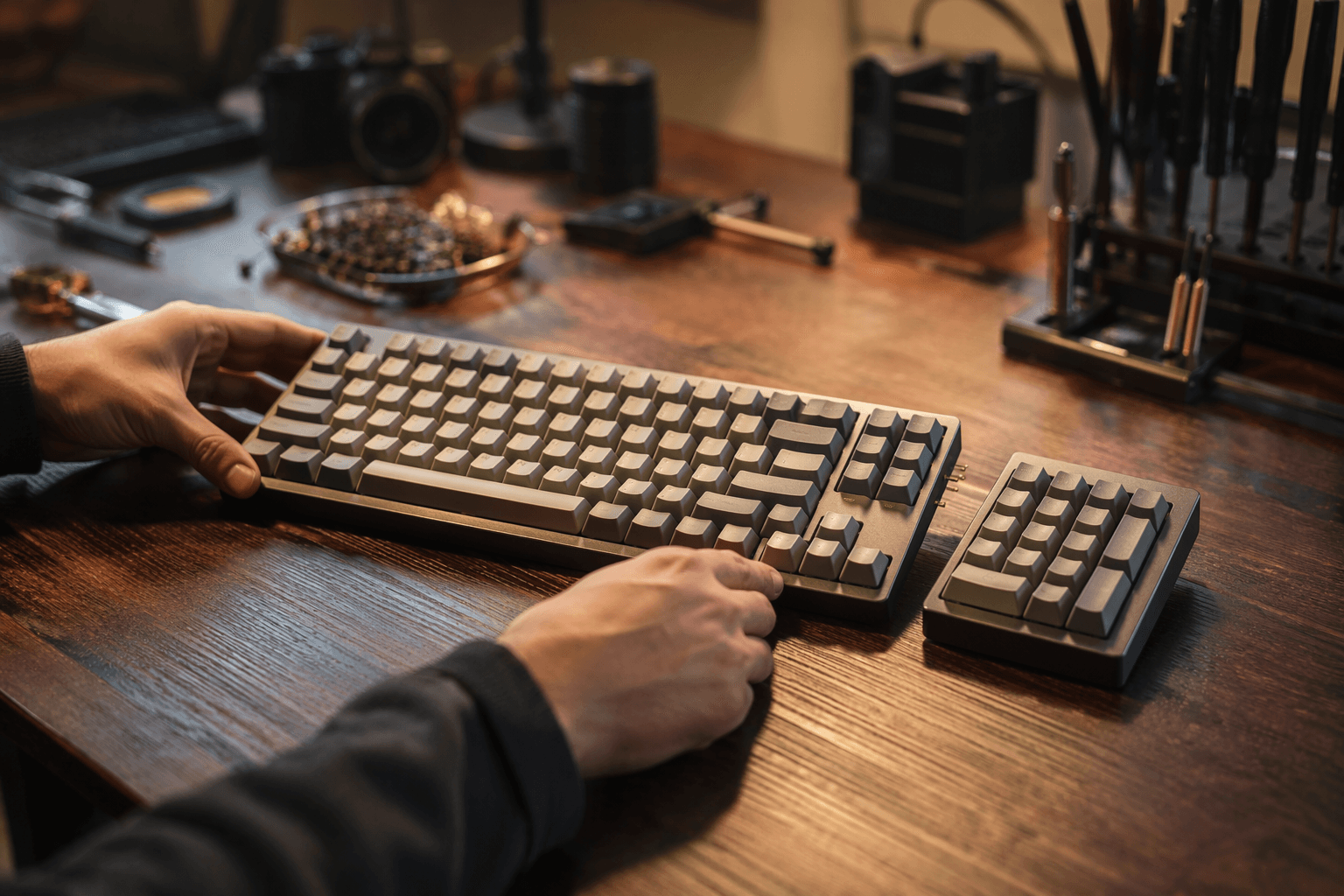
Leopold’s new Alchemie line lands on a simple desk problem: you want the cleaner footprint of a TKL most days, but you still need a numpad when the work turns number-heavy. The answer is a premium keyboard system built around an 84-key Alchemie TKL, a full-size 104-key model, and a separate FC220TP numpad that can be added when the extra keys matter.
The boards keep Leopold’s familiar focus on materials and typing feel. The Alchemie chassis uses anodized aluminum with CNC machining, hot-swappable lubricated switches, sound-absorbing padding, N-key rollover, and zonally programmable RGB lighting. The full-size Alchemie carries a 4,000 mAh battery, and the TKL uses the same 4,000 mAh pack, which makes the smaller board feel like a real daily driver instead of a compromise with weak battery life.
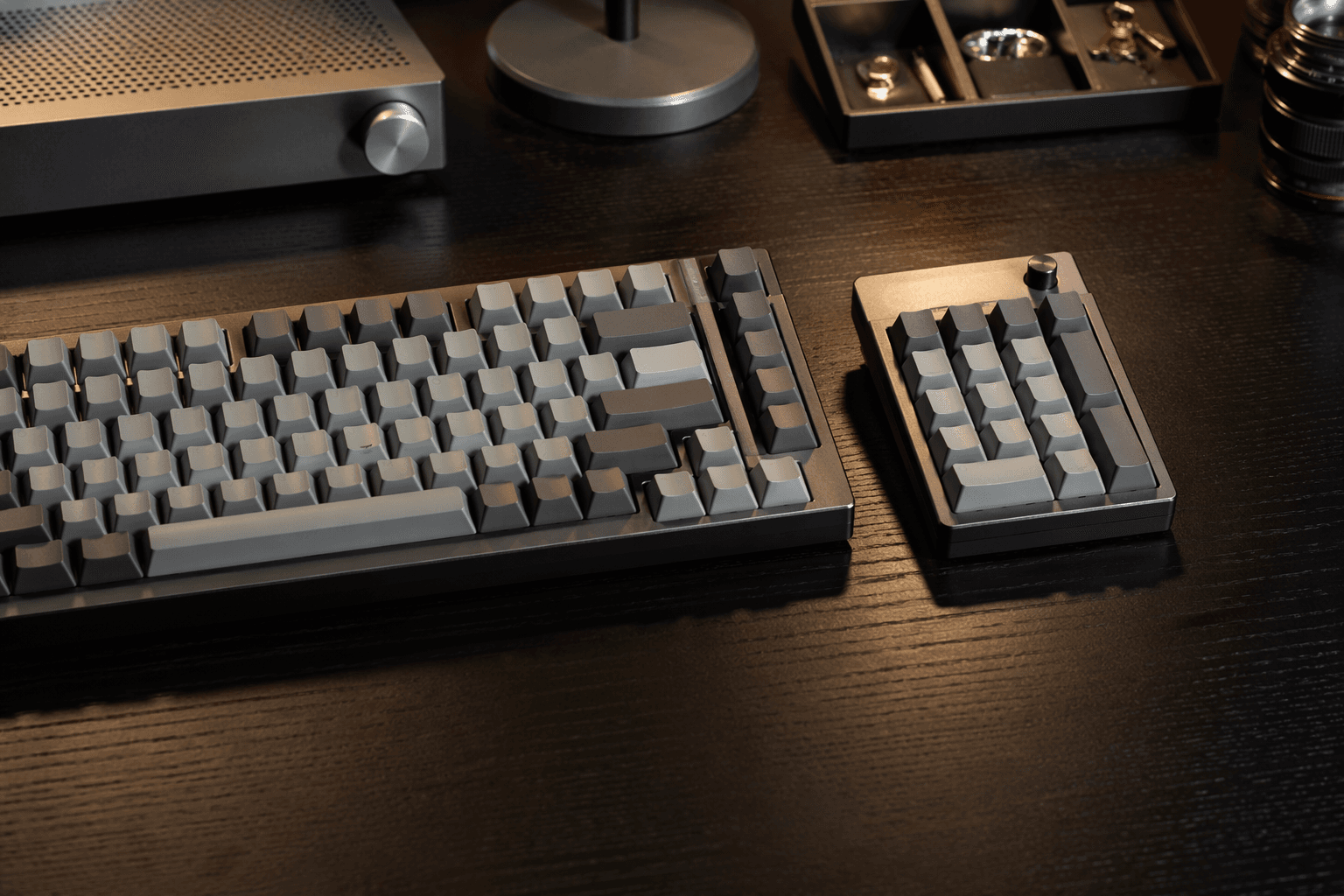
The modular piece is what changes the pitch. Leopold’s FC220TP numpad runs on a 2,000 mAh battery and supports wired USB, 2.4GHz wireless, and Bluetooth. Leopold’s Japanese product page says Bluetooth can pair with up to three host PCs, and the unit can connect to up to five total hosts across wired, wireless, and Bluetooth modes. It also supports QMK and VIA remapping in wired mode only, hot-swap sockets for 3-pin and 5-pin MX-compatible switches, three layers of sound-damping foam, RGB backlighting, and a hidden switch for NumLock-independent mode, which is the kind of detail laptop users notice immediately.
That modular approach fits Leopold’s broader catalog. Leopold says it was established in 2005 and has long sold full-size, TKL, 96%, 65%, and standalone numpad boards, including the FC900RBT, FC750RBT, FC980MBT, FC660MBT, and NP900RBT. The Alchemie family extends that conservative, layout-first identity into something more flexible, without giving up the polished industrial look people expect from the brand.
MechanicalKeyboards.com lists the FC220TP at $49 and describes Leopold’s founding year as 2006, which shows how even the brand’s history gets framed a little differently depending on where you look. The bigger takeaway is harder to miss: Leopold is trying to make a keyboard that can stay compact on ordinary typing days, then turn into a full productivity setup the moment the numpad comes back into play.
This article was produced by Prism’s automated news system from verified source data, official records, and press releases, then run through automated quality and moderation checks before publishing. The system is built and supervised by the people who set the standards it runs under. Read our full AI policy.
Know something we missed? Have a correction or additional information?
Submit a Tip