Lofree Edge debuts as thinnest, lightest mechanical keyboard yet
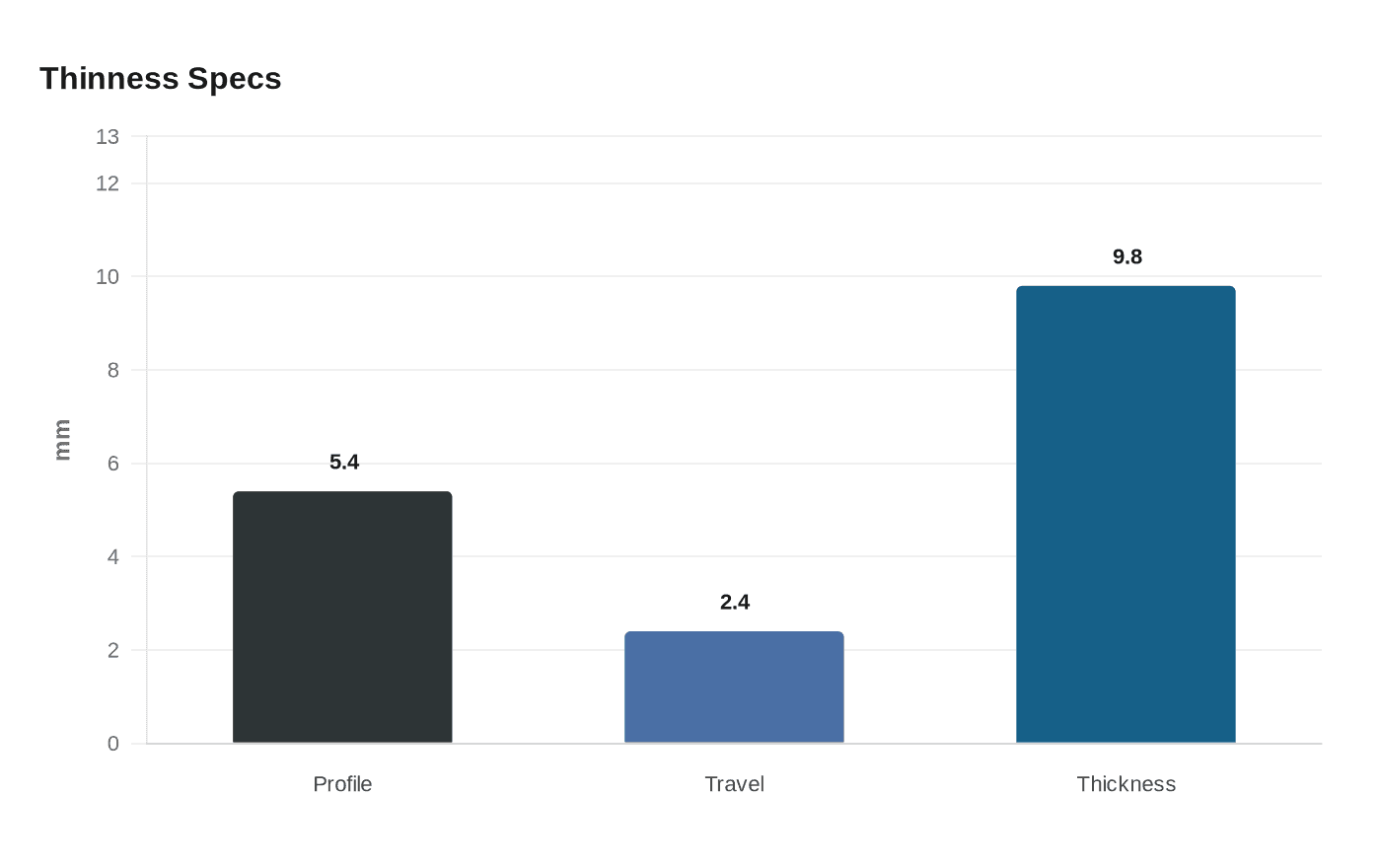
Lofree’s Edge swaps the usual low-profile aluminum formula for carbon fiber and magnesium, then backs it with a 485g body and a 5.4mm profile.

The most interesting thing about the Lofree Edge is not that it is thin, but how it gets there. Lofree built the top shell from 3K twill-weave carbon fiber and the bottom from magnesium alloy, a materials mix that immediately separates it from the usual low-profile metal boards. At 1.07 lbs, or 485g, with a 5.4mm ultra-slim profile, Lofree says this is its thinnest and lightest keyboard ever, and the numbers make the portability pitch feel real instead of gimmicky.
That lightness comes with the kind of compromises mechanical keyboard buyers will notice fast. The Edge uses Kailh Full POM Switch 2.0 switches in a PCB-gasket mount, with 2.4mm total travel and a claimed 18% reduction in thickness to 9.8mm compared with Lofree’s Flow switch design. It also supports Bluetooth and wired USB-C, ships with dye-sub PBT keycaps, and includes customizable keys and macros. What it does not bring is equally important: there are no hot-swap sockets, so the keyboard leans harder into Lofree’s factory-tuned vision than into the usual hobbyist habit of swapping parts until the board feels right.

That trade-off is why the Edge lands in a very specific lane. It is not chasing the broad, utility-first crowd that wants every switch option and full mod friendliness. It is chasing the user who wants a travel board that still looks and feels like a premium mechanical keyboard, especially one trying to beat back the bulk that usually comes with low-profile models. Against something like Apple’s Magic Keyboard, the Edge is clearly thicker on features and far more mechanical in character, but it is also positioned as a style object as much as an input device.
The market reaction was loud enough to match the pitch. Lofree’s Kickstarter campaign ran from April 25, 2024 to May 25, 2024, and drew 2,060 backers who pledged HK$2,792,050 against a HK$156,728 goal. Supporters came from the United States, Japan, Singapore, Canada, the United Kingdom, Australia, South Korea, Germany, France, and the Netherlands, which fits a product selling portability and design in equal measure.
Lofree’s founder and designer, Tim Chu, adds another layer to that story. The company says he has 20 years of experience and has designed more than 150 electronic products. That background shows in the Edge’s priorities: carbon fiber, magnesium, and extreme thinness first, flexibility and repairability later. For buyers who want the lightest possible mechanical board without giving up the feel of a real one, that may be exactly the point.
This article was produced by Prism’s automated news system from verified source data, official records, and press releases, then run through automated quality and moderation checks before publishing. The system is built and supervised by the people who set the standards it runs under. Read our full AI policy.
Know something we missed? Have a correction or additional information?
Submit a Tip