Lofree Hyzen Combines Mechanical and Magnetic Actuation in 65% Aluminum Board
Lofree's Nexus switch pairs TMR magnetic sensing with traditional metal contacts in a hot-swappable socket, and the PCB accepts standard mechanical switches too.
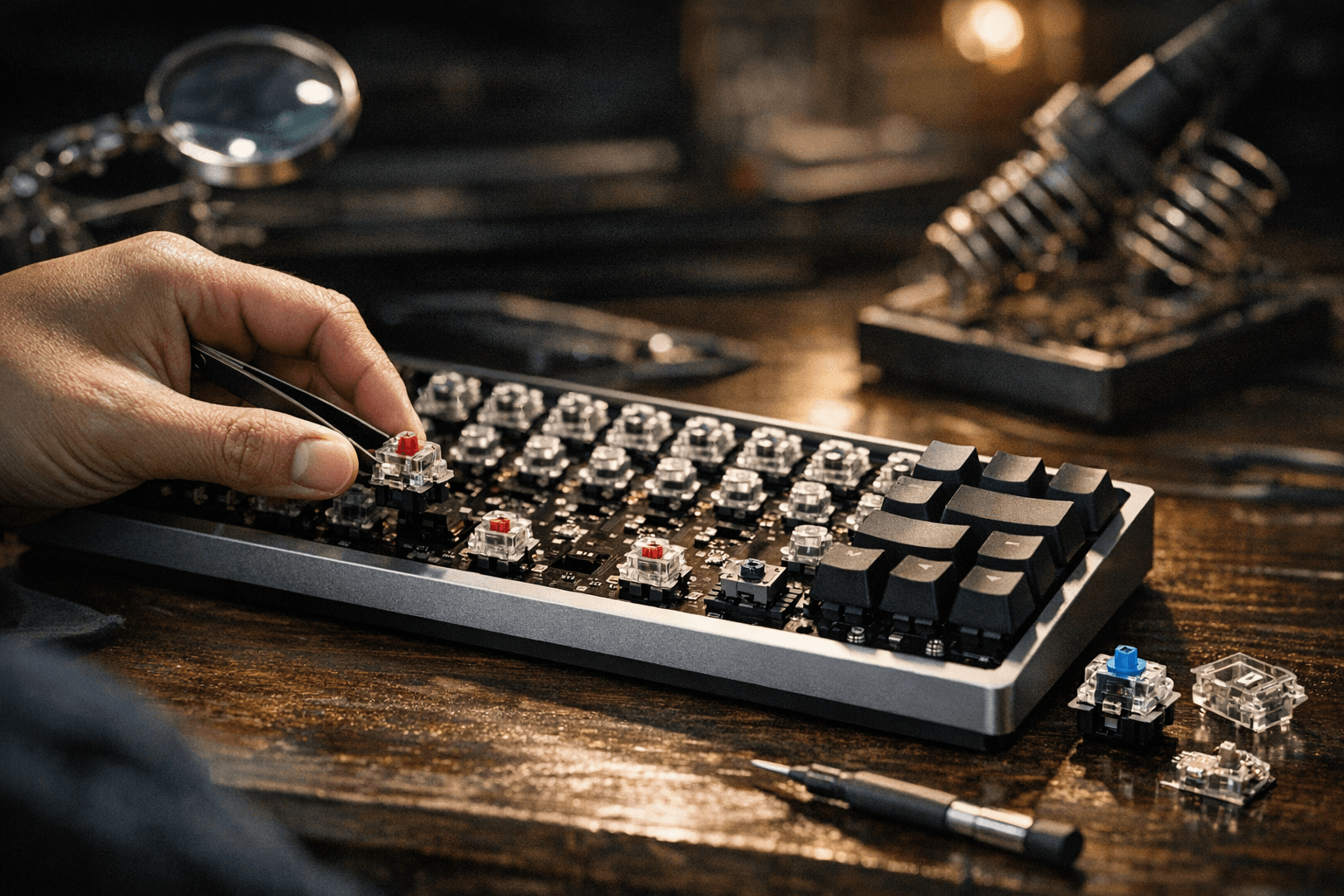
The Hyzen's headline claim is architectural: its Nexus switch, co-developed with Kailh, runs two signal paths simultaneously inside a single housing. Metal leaf contacts handle the traditional mechanical signal while a tunneling magnetoresistance (TMR) sensor embedded in the stem reads positional data down to 0.01mm resolution. That combination is what Lofree markets as a world first, and the distinction from a conventional Hall Effect board matters: TMR technology claims meaningfully higher magnetic sensitivity than Hall Effect sensors, which is what makes sub-millimeter actuation adjustments a genuine spec rather than a rounding error.
For modders, the more immediately practical detail is in the PCB. Lofree confirmed the Hyzen's hot-swap socket accepts both Nexus switches and standard mechanical switches, which means the board does not orphan you to a proprietary ecosystem on day one. Swap in linears or tactiles you already own and the board functions as a conventional mechanical keyboard. Install Nexus switches and you get access to the magnetic mode, toggled at any point via Enter + Fn, which flips the board into rapid-trigger and adjustable actuation territory. The failure point to watch here is firmware: with two distinct operational modes and a TMR calibration layer underneath, production tuning will carry disproportionate weight in whether the Nexus actually performs at spec across a full set of switches rather than just the hand-selected demo units shown at Lofree's March 28 Shinagawa pop-up.
On the platform side, Lofree chose the Nordic nRF54L series MCU to back its 8 kHz wireless polling claim. That polling rate, if it holds under real wireless conditions rather than just wired, would put the Hyzen at the competitive edge of the current wireless gaming keyboard market. The battery underpinning that wireless performance is a 10,000 mAh cell, unusually large for a 65% form factor, with Lofree quoting up to 80 hours of runtime. Battery life figures like that are almost always mode-dependent: 80 hours at low-polling Bluetooth is a very different story from sustained 8 kHz wireless use. A straightforward test of runtime across both mechanical and magnetic modes, with polling rate held constant, would tell buyers far more than the headline figure.
The hardware surrounding the switch stack holds up on first inspection. Green-Keys attended the Shinagawa event and published first impressions on April 2, noting that the Hyzen's sound signature is "quite complete" as a package: the CNC-milled aluminum chassis, gasket mounting, and foam strategy collectively shape the acoustic and tactile experience rather than the Nexus switch working in isolation. That is an important observation for anyone tempted to attribute the sound character entirely to the new switch type. Green-Keys also flagged that top-out behavior and acoustic consistency across switch variants remain open questions until production units ship.
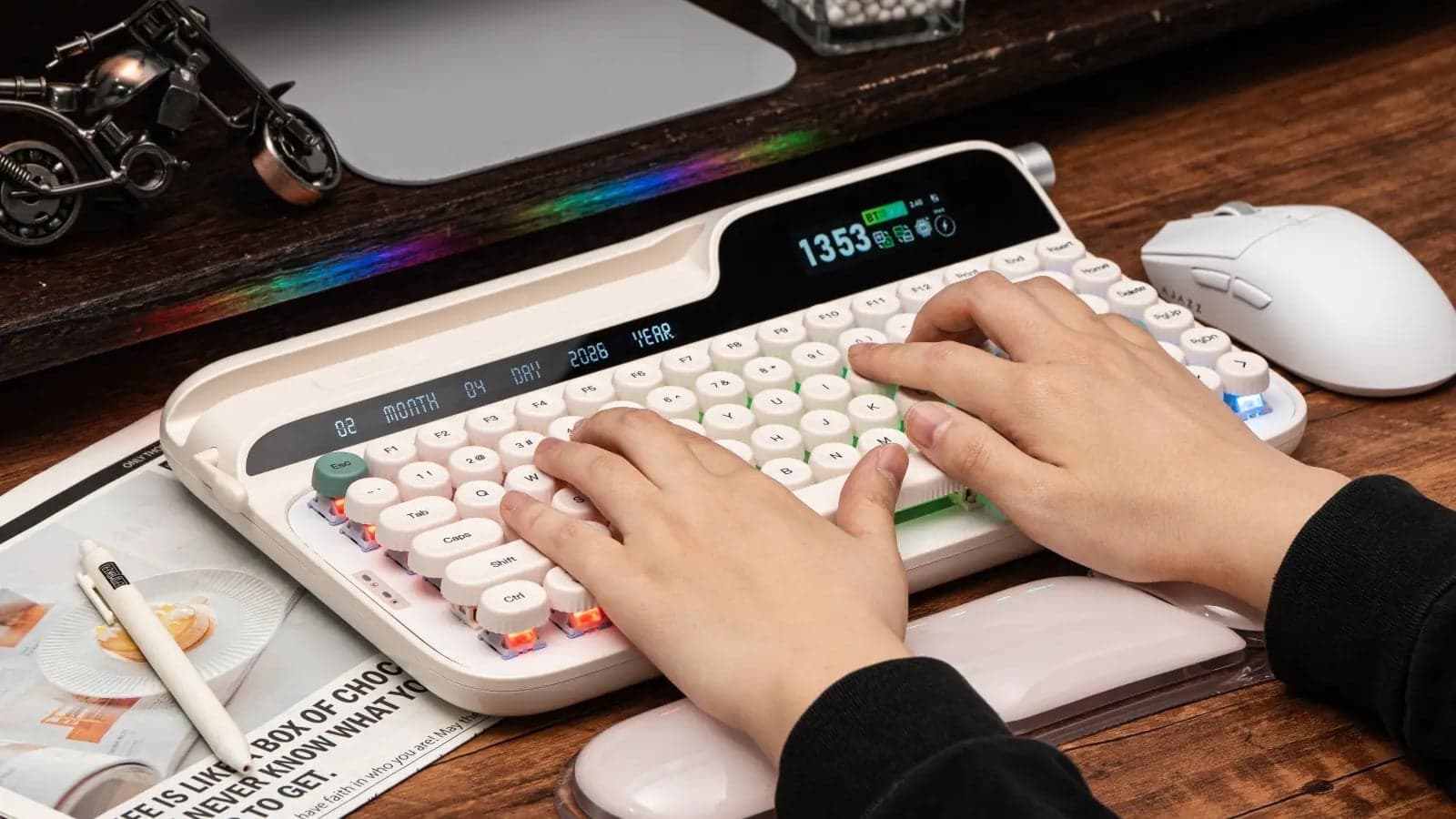
Beyond the switch, the Hyzen adds practical hardware: a rear volume knob, a physical toggle that converts the number row to a function row with an LED row indicator above it, and tri-mode connectivity covering wired, 2.4 GHz, and Bluetooth. The chassis ships in Silver and Space Gray, includes a matched palm rest as an accessory, and targets a Kickstarter launch on April 23, 2026, with a $2 deposit reservation currently holding a VIP price.
The wait-or-buy calculus here is straightforward. The PCB's compatibility with standard switches and the gasket mount platform are proven benefits you can evaluate on day one. The 8 kHz wireless polling, TMR actuation precision, and that 80-hour battery figure are marketing claims that need controlled testing against shipping firmware before they earn full confidence. If you are primarily a tactile typist with occasional gaming use, the hot-swap compatibility alone makes the Hyzen worth watching. If magnetic mode performance and wireless latency are the deciding factors, the Kickstarter timing means those answers will not arrive until well after the April 23 campaign opens.
Know something we missed? Have a correction or additional information?
Submit a Tip