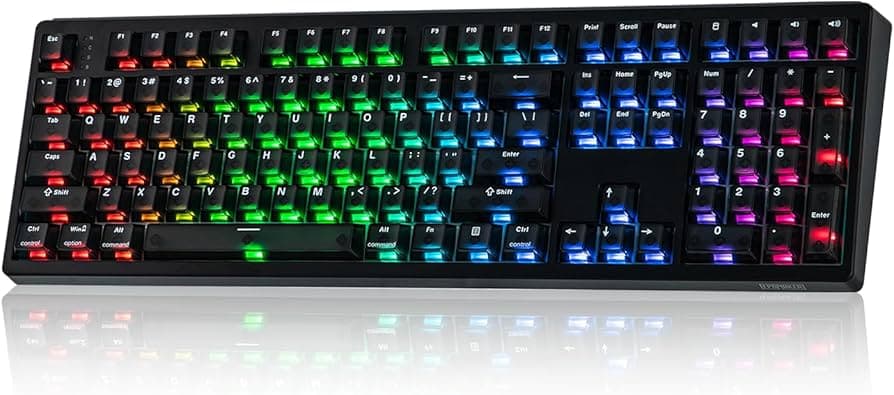
PCMag updates best mechanical keyboards guide, highlights a crowded market
Mechanical keyboards have outgrown the gaming niche. PCMag’s 2026 guide shows a market now split between quiet office boards, dense layouts, and enthusiast features.

A crowded market is now the story
The mechanical keyboard market has reached the point where the real question is not whether to buy mechanical, but which typing problem the board is supposed to solve. PCMag UK’s refreshed guide makes that shift obvious: the category now spans quiet office boards, fast gaming models, compact layouts with a numpad, and ergonomics that actually try to reduce wrist and shoulder strain.
PCMag’s own framing starts with the basics, because the basics still matter. Mechanical keyboards are defined by individual springs and switches under each key, but that simple definition now covers a much wider field of use cases than it did a few years ago. What used to be a niche upgrade for enthusiasts is now treated as a mainstream input choice with real trade-offs in comfort, sound, software, and layout.
What PCMag is rewarding now
The guide’s current top recommendation for most users is the Razer Pro Type Ultra, and that choice says a lot about how the category has matured. This is not just about actuation feel anymore. Razer positions the Pro Type Ultra around silent mechanical switches, sound-dampening foam, and a cushioned wrist support, plus a durability rating of up to 80 million clicks. That combination is aimed squarely at the person who wants the mechanical feel without turning every workday into a typing soundtrack.
PCMag also separates the field by use case instead of pretending one board can do everything. The Be Quiet Light Mount gets the nod as the best wired mechanical keyboard, the Keychron C3 Pro is the budget pick, and the Asus ROG Strix Scope II 96 Wireless is the gaming choice. That spread is the point: the guide reflects a market where users are choosing between silence, price, layout density, and wireless flexibility, not just switch color and keycap style.
The new buying logic is more specific
The old mechanical keyboard conversation used to center on a simple binary, mechanical versus membrane. That debate is mostly over. Now the questions are more practical and much more interesting: Do you want a TKL board because your mouse hand needs room? Do you want a 96% layout because you refuse to give up the numpad? Do you need a wrist rest because long sessions are rough on your hands? Those are the decisions that actually separate one recommendation from another.
That is why PCMag’s deeper buying guide on switch types matters. Switch choice remains one of the biggest barriers for newcomers and one of the biggest rabbit holes for enthusiasts. Quiet linear switches, tactile bumps, and the sound profile of a board all shape whether a keyboard feels like a satisfying daily driver or a novelty that gets old after a week. In 2026, the switch conversation is less about bragging rights and more about matching the board to the way you type.
Why the featured boards make sense
The Keychron C3 Pro is a good example of how enthusiast features have gone mainstream. Keychron describes it as a wired TKL keyboard with QMK and VIA support, a gasket-mount structure, acoustic foam, and a 1000 Hz polling rate. That is a serious feature set for a budget pick, and it shows how customization and tuning have moved far beyond the expensive end of the market.
The Asus ROG Strix Scope II 96 Wireless makes the same point from the gaming side. ASUS says it combines a 96% layout with tri-mode connectivity, hot-swappable switches, support for up to three Bluetooth devices, and 2.4 GHz wireless through its Omni Receiver. In plain English, that means you get a dense layout that keeps the numpad, enough connection options for a desk with multiple devices, and the kind of switch-swapping flexibility that used to be reserved for hobby builds.
Even the simple category labels matter here. A “best wired” pick, a “best budget” pick, a “best gaming” pick, and a “best for most users” pick are not redundant. They are signs that the market has split into clear lanes, and buyers are increasingly choosing based on workflow, desk space, sound, and travel behavior rather than chasing one mythical all-purpose board.
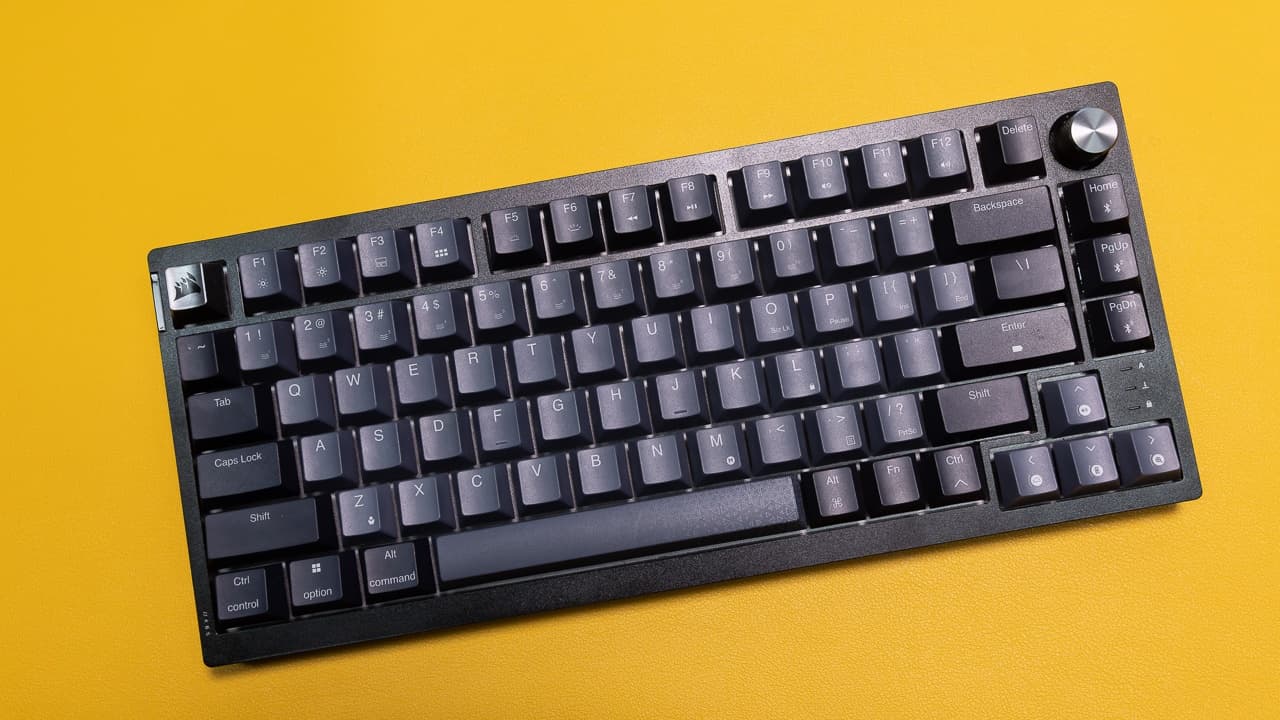
PCMag’s testing has become a long game
PCMag says it has tested more than 100 keyboards since 2020, and the majority have been mechanical. That is important because it means the guide sits inside a long-running review program, not a one-off seasonal roundup. Its testing looks at ergonomics, feature set, software, and value, while PCMag UK’s broader keyboard coverage also weighs design, key feel, ease of use, software, and value.
That kind of sustained testing matters in a category where specs do not tell the whole story. Two boards can both claim hot-swappable switches or wireless support, but one can feel cramped, mushy, or annoying in software while the other disappears into the background and just works. The strongest guides are the ones that separate those differences instead of pretending every mechanical keyboard is just a pile of switches and keycaps.
The market is still growing, not settling down
The broader market numbers back up what the guide is showing on the ground. One 2026 market report puts the mechanical keyboard market on track to grow from $1.8 billion in 2025 to $2.04 billion in 2026, with a 13% CAGR. Another source estimates the 2026 market at about $2.66 billion. The exact figure depends on methodology, but both point in the same direction: this is still an expanding market, especially across gaming, office, and enthusiast segments.
That growth helps explain why the category feels so fragmented now. There is room for quiet office boards with wrist support, dense layouts that preserve productivity keys, and enthusiast-friendly models with gasket mounts and remappable firmware. The old mechanical keyboard pitch was simple. The 2026 pitch is smarter: choose the board that solves your actual typing problem, because the market is finally built to let you do exactly that.
This article was produced by Prism’s automated news system from verified source data, official records, and press releases, then run through automated quality and moderation checks before publishing. The system is built and supervised by the people who set the standards it runs under. Read our full AI policy.
Did this article answer your question?