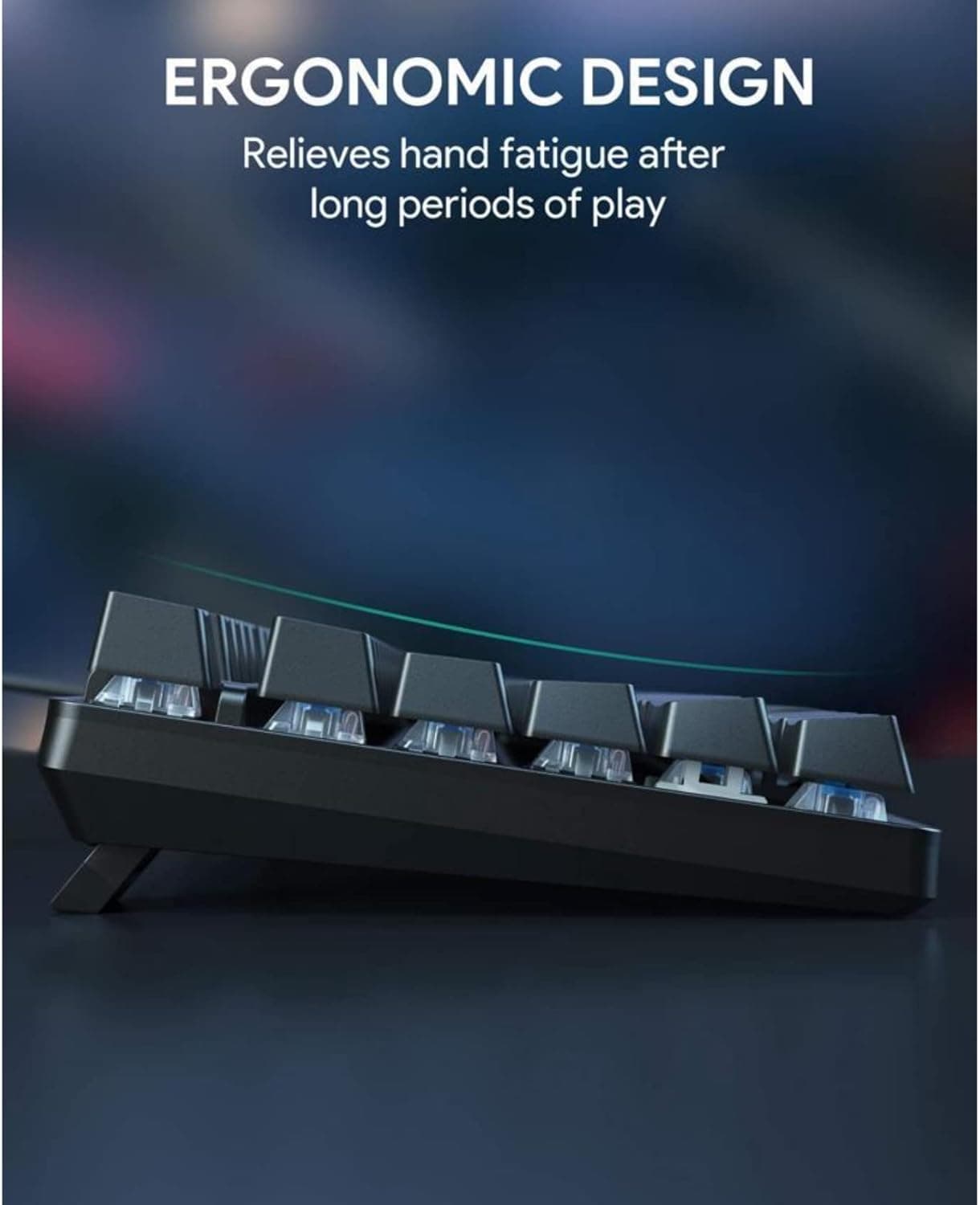
Vortex M50 Combines Split Ergo, Low-Profile Design, and Integrated Trackball
Vortex's M50 pairs a 34mm encoder and integrated trackball with a fully wireless low-profile split chassis, targeting Japan first in a move that reverses typical Western-launch patterns.
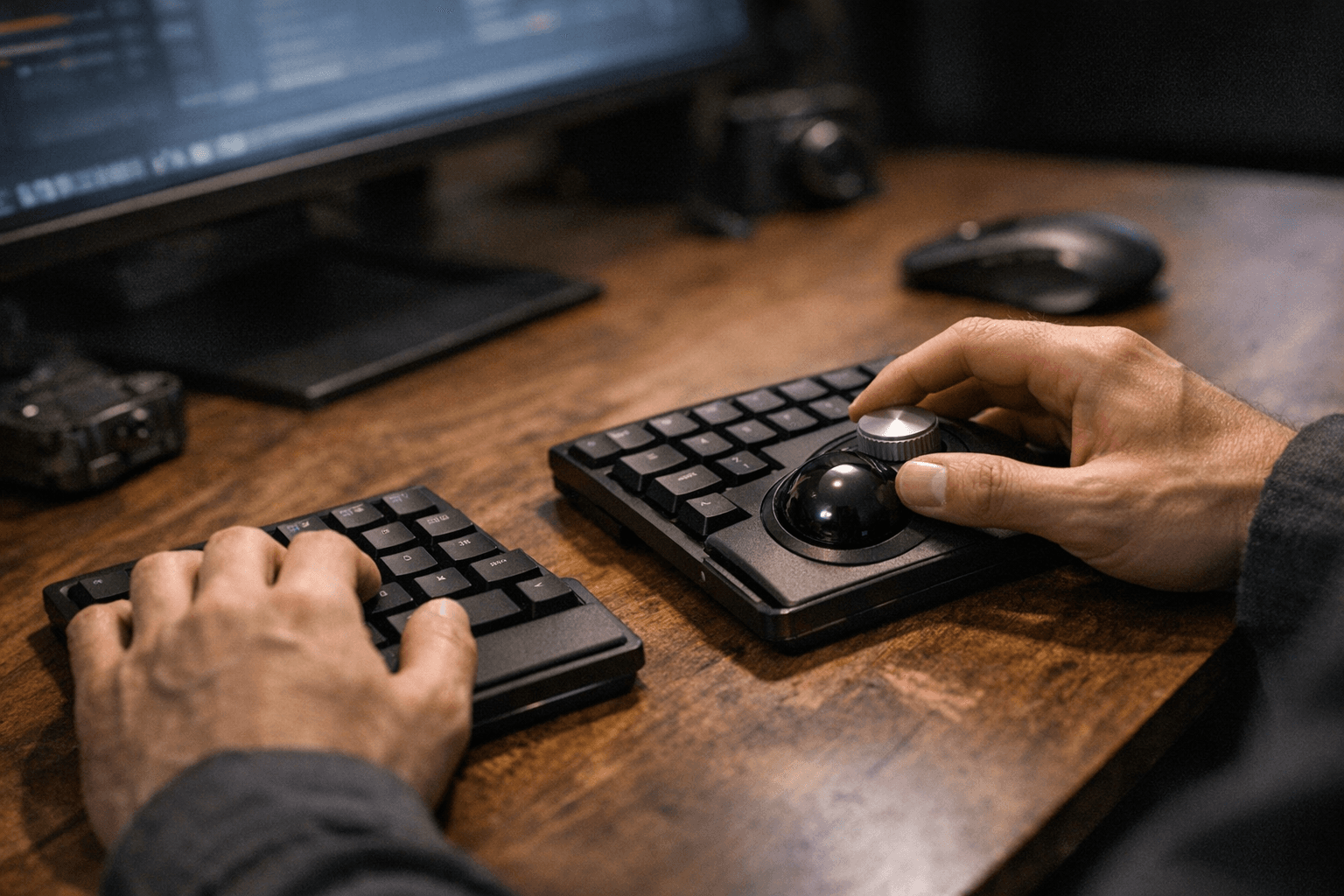
The Vortex M50 asks a question that Keyball builds and Charybdis conversions have been quietly answering in DIY form for years: can integrated pointing controls keep your hand off the mouse long enough to actually matter? Vortex's answer is a 55-key, fully wireless split with a trackball and a 34mm encoder on the left half, housed in a CNC-machined aluminium top case and running on a pair of 1,000 mAh batteries, one per half.
Announced on March 24 and shown at a Japanese exhibition shortly after, the M50 targets Japan first, a deliberate reversal of the Western-first launch pattern most boutique keyboard makers follow. The JIS market focus signals layout variants tuned for local users and a calculated first-mover play in a region where ergonomic keyboard adoption has grown steadily alongside remote work culture.
The low-profile architecture uses a 1.3mm aluminium plate in a top-mount configuration and supports hot-swap for both Gateron LP 3.0 and Kailh Choc v2 switches, the two dominant options in low-profile mechanical. That combination puts the M50 in direct conversation with Charybdis Nano builds and Keyball variants, which typically run standard-profile switches and QMK over wired or single-dongle wireless. The M50 goes further with true split Bluetooth and ZMK firmware handling left-to-right wireless communication between halves, a genuine engineering challenge that most commercial boards still sidestep entirely.
Hands-on time with the demo unit at the exhibition revealed the aluminium top mount's trade-offs clearly: stiffer typing feel and stronger metallic resonance than a gasket-mounted low-profile board. That's expected given the construction method, but it carries more weight on a board built around all-day productivity use. The demo unit also shipped without its final cushioning foam, which means the current acoustic impression is effectively a ceiling rather than a floor. Production units with foam installed should land considerably closer to comfortable for extended sessions.
The trackball-plus-encoder pairing on the left half handles scroll and cursor work without a separate peripheral, which is the practical promise at the heart of this entire category. External options like the Ploopy Nano still offer larger rolling surfaces and more precisely tuned sensors, but they add desk footprint and break the unified wireless story the M50 is built around.
Whether Vortex can deliver polished ZMK firmware, stable split wireless, and consistent battery life across both 1,000 mAh cells at launch will determine whether the M50 becomes a reference point for integrated pointing in low-profile splits. The feature set is genuinely ambitious; the production execution is what remains to be proven.
This article was produced by Prism’s automated news system from verified source data, official records, and press releases, then run through automated quality and moderation checks before publishing. The system is built and supervised by the people who set the standards it runs under. Read our full AI policy.
Did this article answer your question?