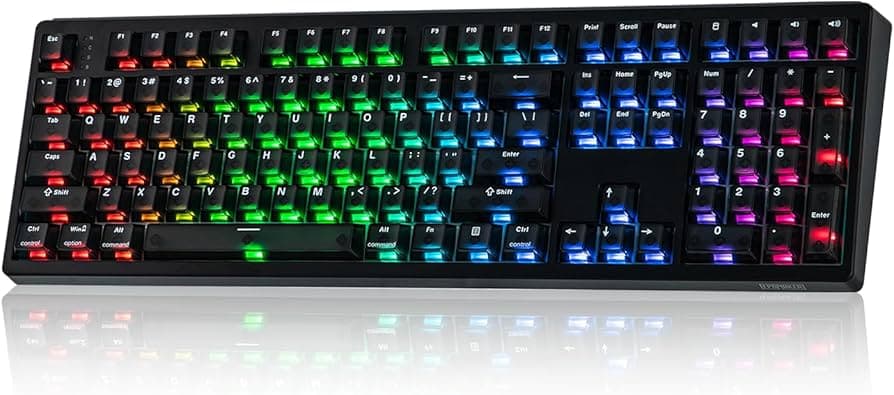
What TMR keyboards are, and why gamers care
TMR is the new magnetic-sensing buzzword in premium keyboards, but the real win is finer actuation control, not a totally new typing feel.
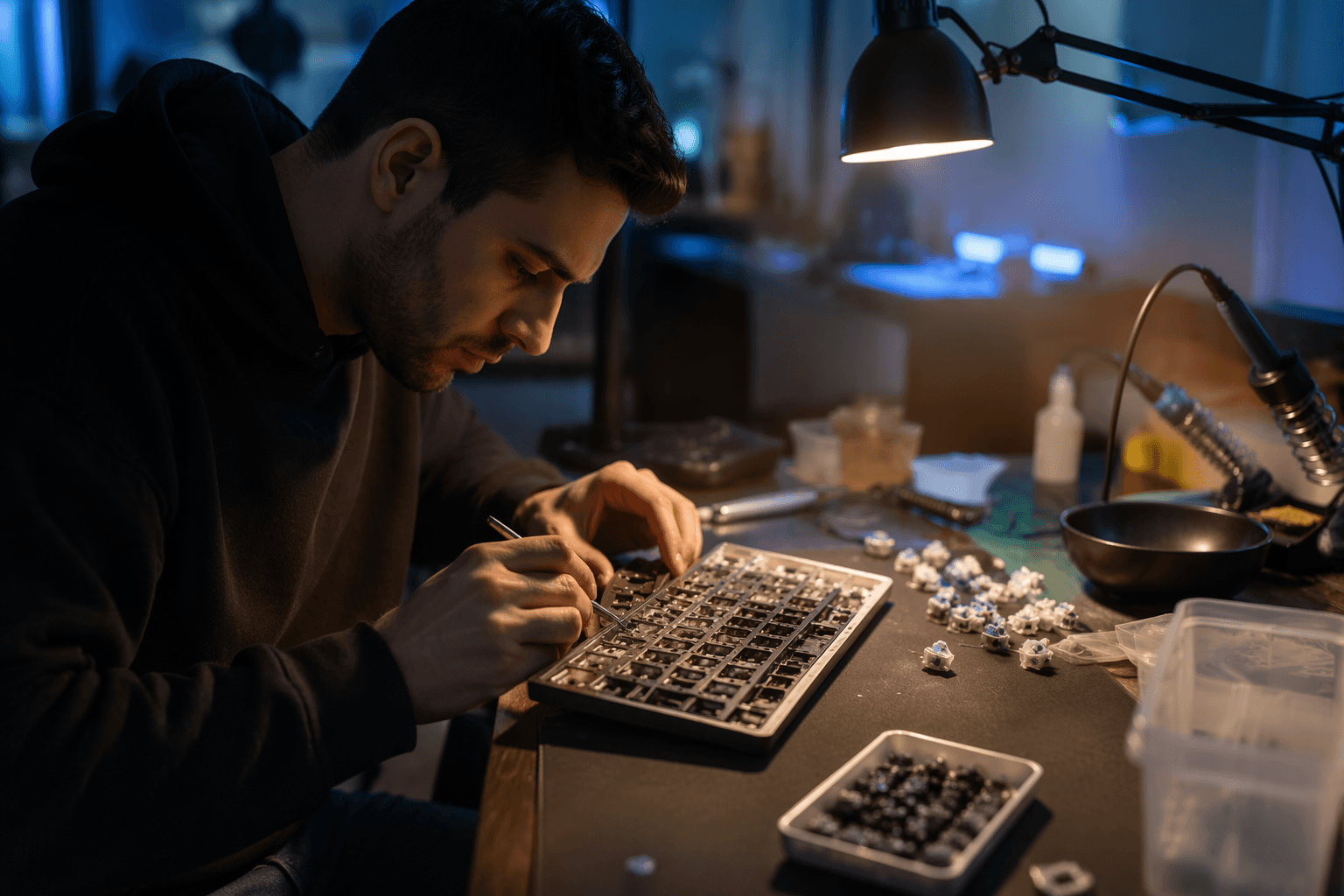
In a TMR keyboard, a key press is sensed without physical contact inside the switch, changing how the board reads input, not just how it sounds on a desk. That lets makers tune trigger points and response much more precisely. That is why TMR keeps showing up beside Hall effect and Rapid Trigger in gaming-focused boards.
What TMR is actually doing
The cleanest way to think about TMR is as contactless sensing with tighter control. Because there are no metal contacts to wear out, the typing feel stays consistent over time. The pitch is not only speed, it is repeatability.
For gamers, that repeatability matters when a board lets you set exactly where a key activates and resets. TMR does not change the fact that you are still pressing a keycap and bottoming out a switch housing if that is how you type. What changes is the board’s ability to measure movement and respond to it in a far more granular way than a conventional contact-based switch.
Hall effect is the older playbook
TMR is not coming out of nowhere. Hall-effect keyboard switches were first introduced in the 1960s, which puts today’s magnetic keyboards in a long line of contactless input tech rather than some brand-new invention.
Hall effect already gave the keyboard world adjustable actuation and rapid reset behavior, and brands like CORSAIR and Glorious have pushed those features hard. Glorious says actuation on Hall-effect keyboards can be adjusted in 0.1 mm increments, while CORSAIR says Rapid Trigger lets a key reset and reactivate at any point along the travel path. That is the practical reason competitive players pay attention: the board can react faster than a traditional mechanical switch that has a fixed on-off contact point.
What changes for gaming, and what does not
The main change is control. With Hall effect and TMR boards, you can tune how quickly a key fires, how quickly it resets, and how aggressively it responds in fast repeated taps. That is why these boards keep showing up in competitive setups, where tiny differences in actuation and reset behavior can change how movement keys, strafing, and ability inputs feel under pressure.
What does not change is the basic shape of the typing experience. A magnetic board can still feel like a keyboard, with the same keycap profile, stabilizers, and switch travel you would notice on any other board. Keychron’s V6 Ultra HE pre-launch page says mechanical switches preserve the satisfying feel, while magnetic input powered by TMR sensing unlocks faster response, programmable actuation, and finer gaming control.
The early products already show where this is headed
Akko says its 5075 V5 TMR is the company’s first keyboard with TMR sensors, and it pairs that with 0.005 mm Rapid Trigger and dual 8KHz polling.
Keychron says its magnetic keyboards have used TMR from the first Keychron Q1 HE onward, and its K2 HE product page calls the board a 75% layout QMK wireless keyboard with magnetic switches and advanced TMR tech. It also supports Bluetooth connections to up to three devices.
MonsGeek describes TMR as delivering higher precision, lightning-fast response, exceptional durability, and improved power efficiency compared with traditional Hall-effect sensing.
Who should pay for TMR now, and who should wait
If you already care about Rapid Trigger, per-key actuation, and the ability to tune a board in tiny increments, TMR makes sense as an early-adopter upgrade. It is especially attractive if you are buying into a board like the Keychron K2 HE, the V6 Ultra HE, or Akko’s 5075 V5 TMR and you want the latest sensing platform rather than a well-worn magnetic implementation.
If you mostly want better typing feel, better sound, or a solid mechanical board for work and play, you can wait. The big day-to-day gain from TMR is not a magical new sensation under your fingers. It is more control over when a key triggers, more consistency over time, and a better shot at extracting competitive behavior from the board without leaning on a physical contact system that wears differently.
This article was produced by Prism’s automated news system from verified source data, official records, and press releases, then run through automated quality and moderation checks before publishing. The system is built and supervised by the people who set the standards it runs under. Read our full AI policy.
Did this article answer your question?