APRStac bridges APRS and Meshtastic with a single web-based binary
APRStac lets APRS and Meshtastic meet in one lightweight bridge, so you can link packet habits to LoRa without a tangle of glue software.
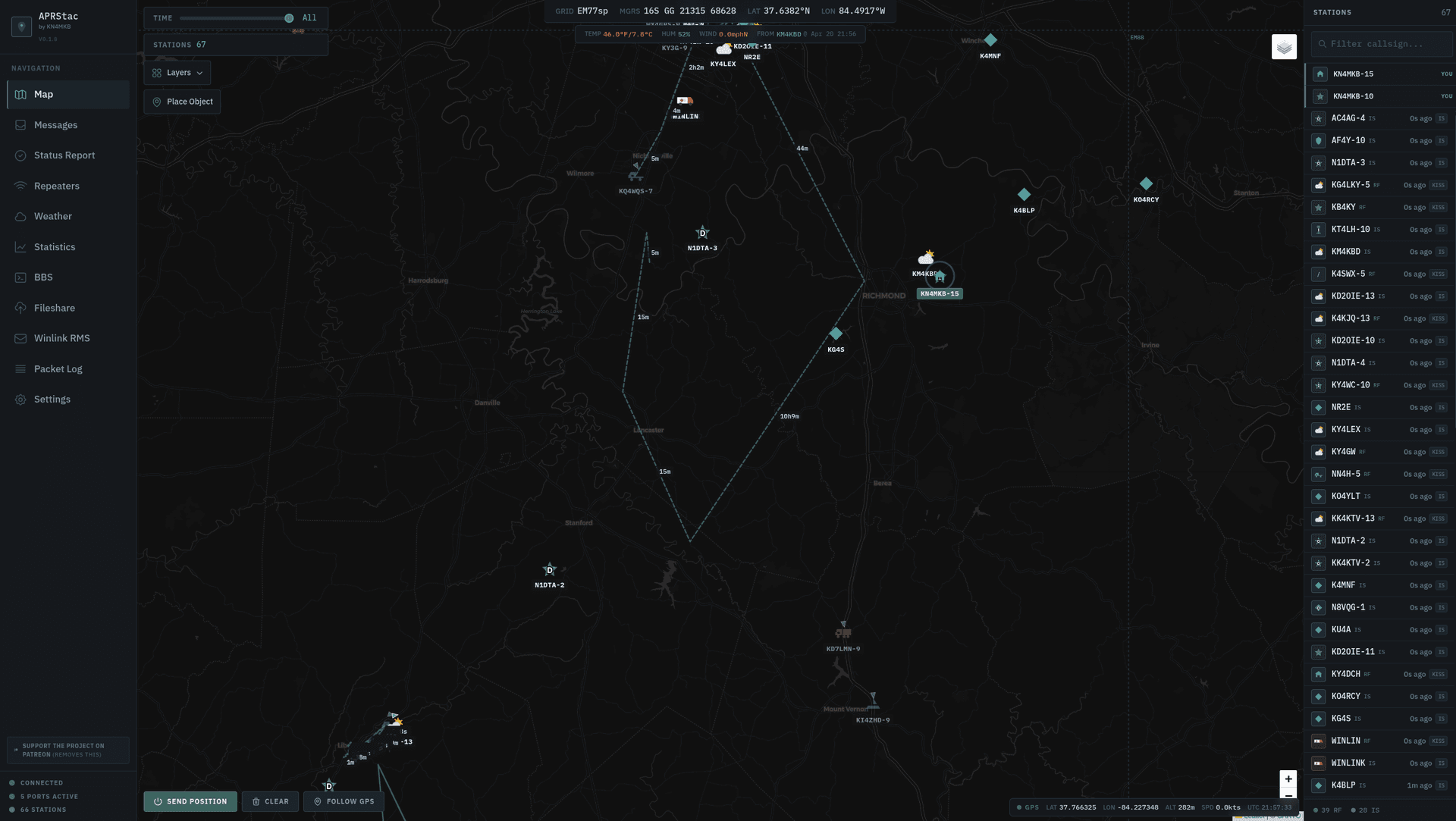
APRStac turns an old ham-radio habit into a much simpler bridge
If you already speak APRS, APRStac is the kind of tool that makes immediate sense: it lets your existing packet habits reach Meshtastic without requiring a sprawling stack of helper apps. Instead of stitching together separate pieces for web control, gating, messaging, and file handling, it packages the whole workflow into one binary with a browser-based interface.
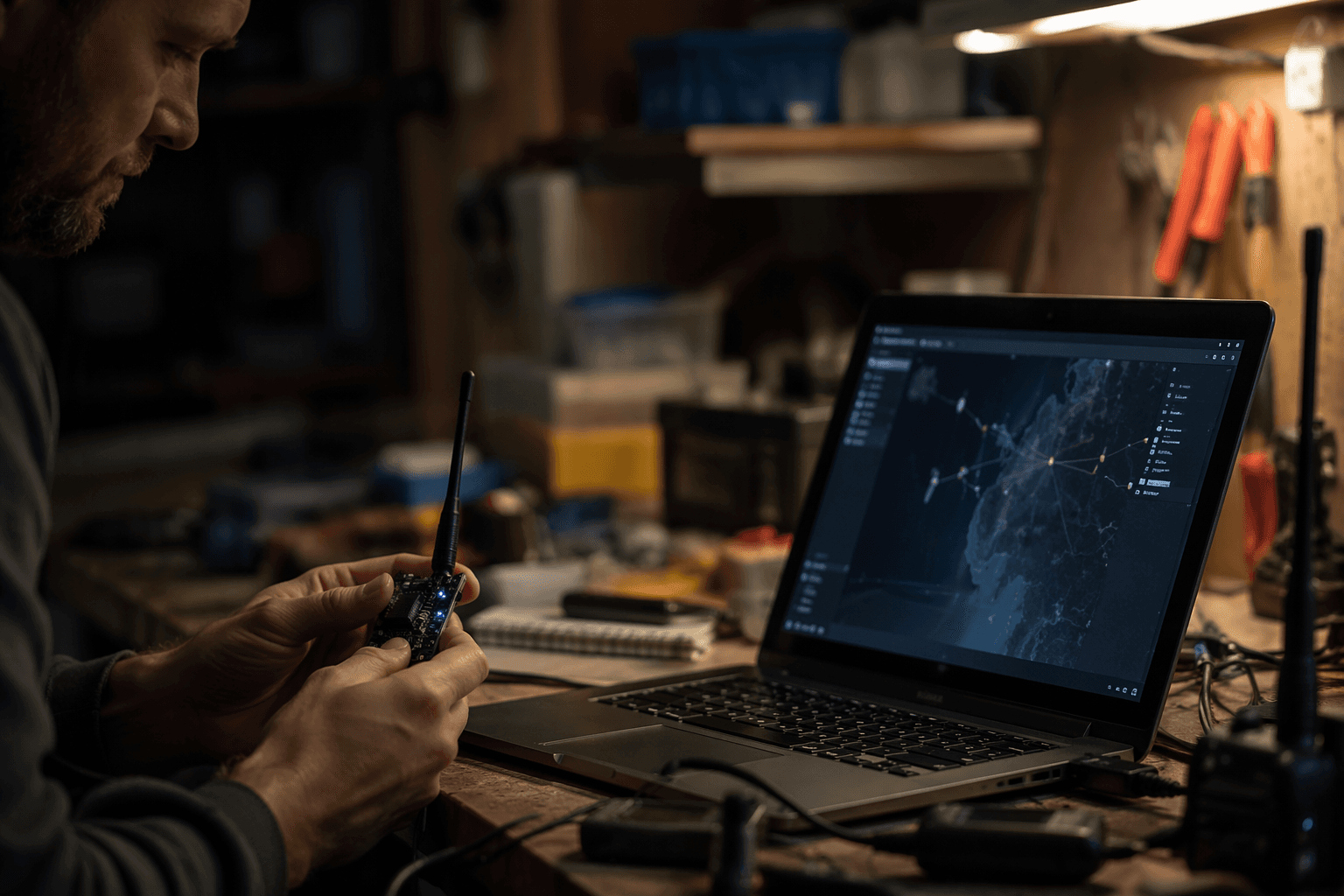
That matters because APRS and Meshtastic solve adjacent problems from opposite directions. APRS began as a real-time packet-radio system for position reporting and local information exchange, with drafts starting in April 1999 and Version 1.0 issued on August 29, 2000. Meshtastic, meanwhile, is an open-source, decentralized off-grid mesh network built on affordable, low-power devices. APRStac sits right where those two traditions overlap.
What APRStac actually does
APRStac is not just a bridge in the narrow sense. It is described as an APRS web client, digipeater, I-Gate, BBS, fileshare host, email gateway, and multi-protocol bridge, developed under the ModernHam project by KN4MKB. That combination is the real selling point: one program can wear several hats, and it does so without asking you to assemble a pile of dependencies first.
The packaging is unusually friendly for a hobby radio tool. The current download builds are available for Windows x64, macOS Apple Silicon and Intel, Linux x64, and Raspberry Pi ARM64, and the project says it ships as a single binary with no dependencies and no installer required. Once it is running, you manage it through a local web server from a browser on your local network, which makes it feel closer to a small appliance than a traditional ham-radio utility.
For someone trying to get a weekend project on the air, that lowers the barrier in a very real way. A spare Raspberry Pi, an old laptop, or a supported desktop can become the center of the setup without a full software maintenance project attached to it.
Why the Meshtastic side is the interesting part
The Meshtastic angle is what gives APRStac its broader appeal. Meshtastic’s official client API supports BLE, Serial or USB, and TCP, and APRStac takes advantage of that flexibility by supporting Meshtastic TCP and Serial inputs and outputs. A GitHub pull request explicitly added TCP support so APRStastic could connect to Meshtastic nodes over the network instead of only over serial, with a default port of 4403.
That is more useful than it might sound at first glance. Serial-only bridges usually mean the radio and the gateway have to sit physically close together, while TCP opens the door to networked deployments and more flexible placement. In practical terms, that makes APRStac feel less like a bench experiment and more like a bridge you could leave running.
APRStac also treats Meshtastic traffic carefully. Native Meshtastic node positions can be imported into its map with a badge and kept local, while real APRS frames sent over Meshtastic use a private port number so the packet structure stays intact. That distinction matters if you want to visualize a mesh without mangling the APRS payload itself.
How it fits into the broader Meshtastic ecosystem
Meshtastic already leans hard into integrations, and APRStac slots neatly into that culture. The project’s integrations page highlights CalTopo and SARTopo, an ATAK plugin, and MQTT-based connections to systems such as Home Assistant and Node-RED. APRStac belongs to the same family of thinking: Meshtastic as the transport layer, other software as the place where data becomes immediately useful.
That is why the bridge feels practical instead of novelty-driven. A node on a hill can feed location data into a map, a gateway can hand off messages, and a local operator can route traffic into familiar APRS workflows. For someone who already uses APRS for position reporting or local messaging, the point is not to abandon old habits. It is to extend them into a low-power mesh that does not depend on cell towers or internet access.
What happens when you start it up
APRStac’s first-launch behavior is designed to keep you from accidentally broadcasting before you are ready. It creates a default configuration file and SQLite database the first time it runs, opens a local web interface on a fixed port, and blocks transmissions until a callsign has been configured. It supports station setup fields like callsign, SSID, symbol, and position, and it can also take GPS input for automatic updates.
The gateway side is broader than Meshtastic alone. APRStac can connect through KISS Serial, KISS TCP, APRS-IS, and UDP broadcast, which makes it clear that this is meant to be a flexible gateway rather than a one-protocol toy. The result is a tool that can sit between several radio workflows and make them talk to each other without demanding separate bridge utilities for each path.
There is also a hard constraint that matters in the real world: the APRStastic README says the gateway requires at least two Meshtastic devices, one gateway and at least one client. That is the kind of detail that helps a new deployment go smoothly, because it sets expectations before you start wiring things together.
The human part: who is already using it and what they are pushing for
The early use cases around APRStastic make the project feel alive rather than theoretical. Users have reported connecting Meshtastic nodes to APRS servers and to SARtrack or SARTopo-style software, and one maintainer reply explained that the gateway behaves like an I-Gate and can support multiple Meshtastic users when callsigns and devices are pre-registered. The README says call-sign registrations can optionally be beaconed to MESHID-01 to support roaming across participating gateways, and direct messages sent to the gateway are forwarded to APRS using the registered call sign.
The issue tracker shows the community already leaning into its limits and next steps. One issue asks for KISS support to gate to RF rather than APRS-IS, another asks to keep APRS text messages within the 67-character APRS limit, and another requests support for sensors and weather data. There is even an issue about adding APRS packet-forming code to CI tests, which is exactly the sort of detail that signals a project moving from clever proof-of-concept to something people expect to rely on.
The license line that keeps everything grounded
This bridge also sits in two different regulatory worlds. APRS on amateur radio is a licensed service, and the APRStastic README explicitly warns that legal operation requires an amateur radio license and a valid callsign. Meshtastic, by contrast, is an ISM-band LoRa system that does not require a ham license for ordinary use. That split is part of why APRStac is compelling: it offers a way to connect the unlicensed mesh side to the licensed APRS side while preserving callsign mapping and message routing rules.
That is the real payoff for operators who already know APRS. APRStac does not ask you to relearn the hobby from scratch, and it does not force Meshtastic into a separate silo. It gives both worlds a shared gateway, one web-based binary at a time.
This article was produced by Prism’s automated news system from verified source data, official records, and press releases, then run through automated quality and moderation checks before publishing. The system is built and supervised by the people who set the standards it runs under. Read our full AI policy.
Know something we missed? Have a correction or additional information?
Submit a Tip