Elecrow’s ThinkNode M6 brings rugged solar Meshtastic to field deployments
Elecrow packed a 6W solar panel, 7,000 mAh battery, and IP65 shell into a $79.90 Meshtastic node built for real relay and cache deployments.

Meshtastic gets interesting when a node has to survive rain, sun, and neglect for months at a time. That is where Elecrow’s ThinkNode M6 stops looking like a desk project and starts making sense as a field box.
Elecrow lists the Meshtastic version at $79.90 and says the M6 is meant for harsh outdoor environments and industrial scenarios. The hardware stack is unusually complete for the price: an nRF52840 core, SX1262 LoRa transceiver, L76K GPS module, 6 W solar panel, 7,000 mAh battery system, and an IP65 waterproof enclosure, all in an 800 g package. For a permanent relay point, trail coverage node, cabin deployment, or emergency cache node, that matters because it cuts out the usual scavenger hunt for a battery, panel, charge circuit, GPS, enclosure, and a weatherproof way to keep everything alive.
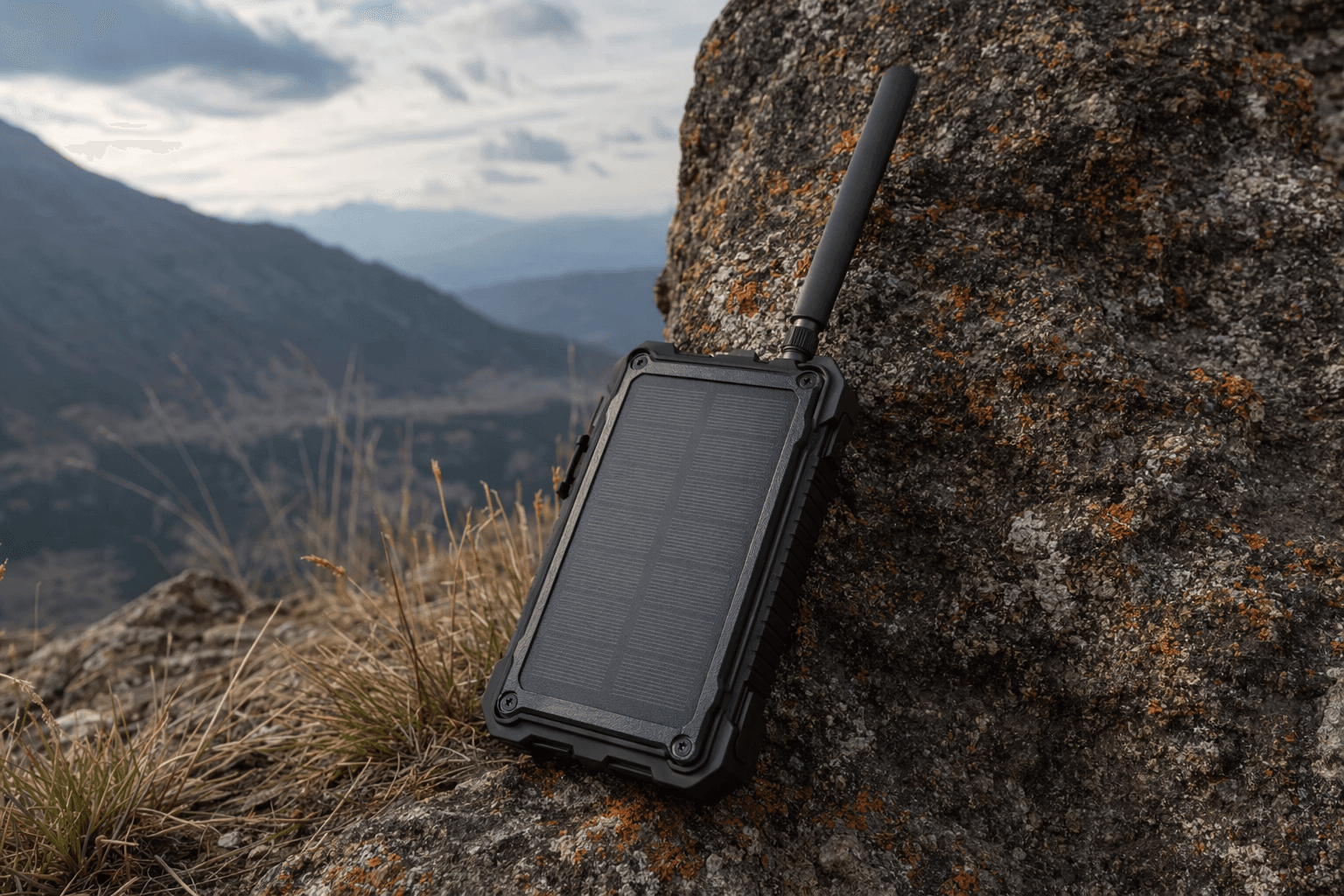
The real win is deployment friction. OpenELAB says the M6 is ready for out-of-the-box use and rapid deployment, with wall mounting, brackets, pole mounting, and U-shaped clamps. It also has dual SP11 waterproof aviation connectors for IIC and UART expansion, so you can hang temperature, humidity, gas, or soil probes off the box without improvising cable management in a plastic case. The wiki’s button and indicator behavior for power, GPS, firmware update mode, charging, and low-battery alerts is the kind of detail that saves time once the node is bolted somewhere inconvenient, which is usually where a field node ends up.
That is the point of a rugged solar node like this. A DIY weatherproof Meshtastic box can still be the right answer if you want full control over every part, but it also means choosing the panel, sizing the battery, sealing the case, routing the connectors, and debugging the whole stack when something sours in the weather. The M6 trades some of that tinkering freedom for speed and simplicity. If the job is to get a relay online fast, keep it powered, and add sensors later without rebuilding the enclosure, that trade is easy to understand.
OpenELAB also says the M6 fits MeshCore ecosystems, which broadens the audience beyond pure Meshtastic builds. And compared with Meshtastic’s own Seeed SenseCAP Solar Node, which uses a 5 W panel, four 18650 batteries, and a Grove interface, the ThinkNode M6 pushes harder on integration with a 6 W panel, larger battery system, and sealed IP65 design. For hobbyists who need gear that can sit outside and do a job, that extra polish is exactly what turns a solar node from promising into field-ready.
This article was produced by Prism’s automated news system from verified source data, official records, and press releases, then run through automated quality and moderation checks before publishing. The system is built and supervised by the people who set the standards it runs under. Read our full AI policy.
Know something we missed? Have a correction or additional information?
Submit a Tip