GridDown pairs RTL-SDR, SARSAT, and Meshtastic for offline situational awareness
GridDown turns Meshtastic into one layer of an offline sensor stack, tying LoRa chat to maps, navigation, ADS-B, Remote ID, and 406 MHz distress alerts.
GridDown turns Meshtastic from chat into a field-ready awareness stack
GridDown is interesting because it does not treat Meshtastic as the whole answer. It treats Meshtastic as one layer in a broader offline situational-awareness setup, alongside maps, navigation, sensor feeds, and distress-beacon reception. That matters if you are building for power outages, remote work, disaster response, or any scenario where cell towers and cloud services are not part of the plan.
BlackAtlas presents GridDown as an open source Android tablet-based system that works without an internet connection, and describes it as a Progressive Web App for tactical navigation, team coordination, and situational awareness. In practical terms, that shifts the value from “we can still message” to “we can still operate,” with the tablet acting as the local command surface and the radio stack feeding it information.
What GridDown actually solves in the field
The main appeal is not novelty. It is redundancy. GridDown is aimed at emergency preparedness, field response, tactical operations, and infrastructure-degraded environments, which means the software is built for the moments when the usual stack is gone: no cellular data, no Wi-Fi, and no dependable cloud dependency. That is exactly where Meshtastic already earns its place, because Meshtastic is an open-source, off-grid, decentralized mesh network built for affordable low-power devices with no cell towers and no internet.
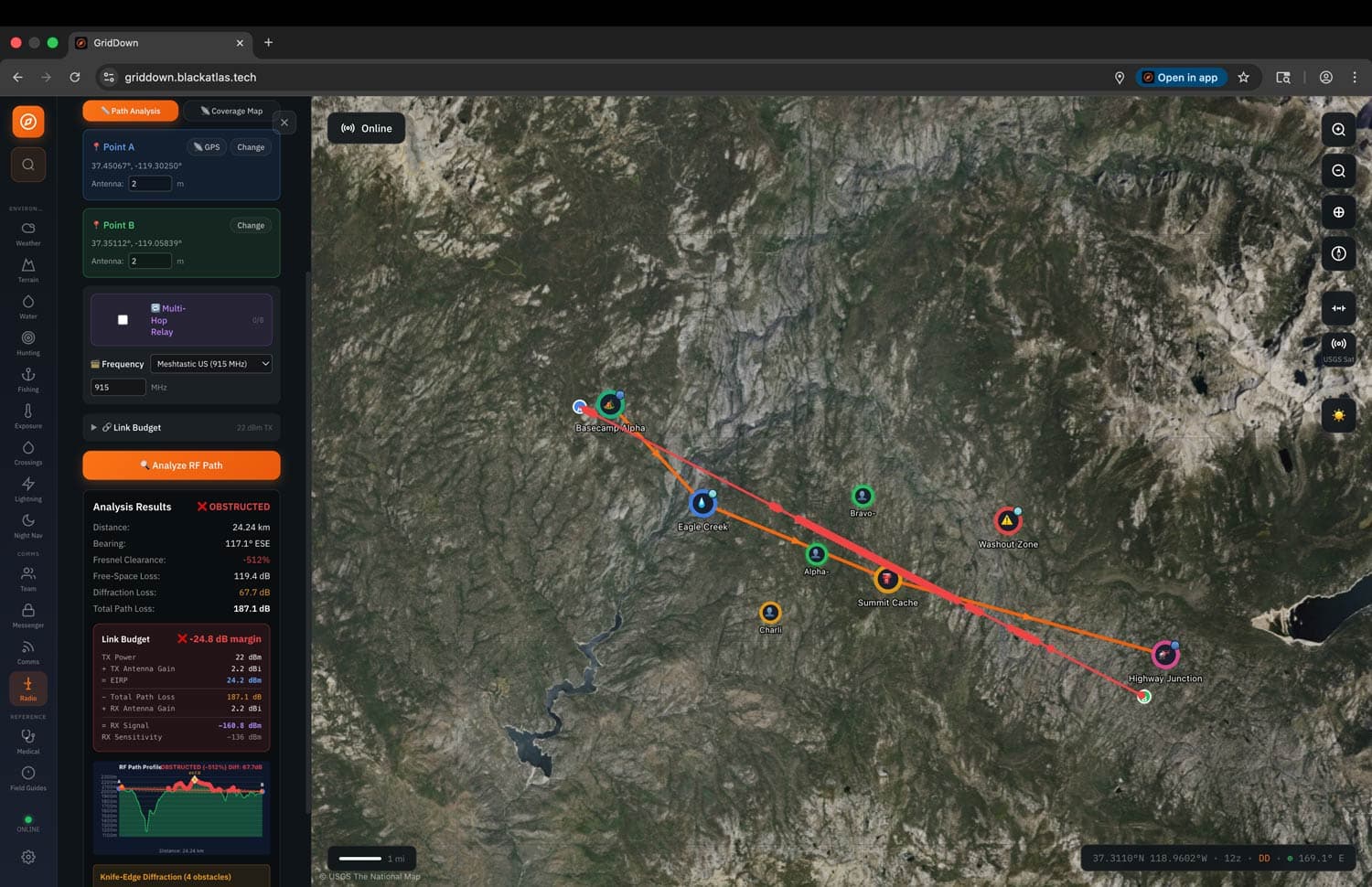
Used together, the setup gives you two different kinds of resilience. Meshtastic handles local messaging over LoRa, while GridDown adds the situational layer above it, including offline maps, GPS-denied navigation, celestial positioning, mesh radio integration, and sensor fusion. That combination is more useful than a demo screen full of icons, because it supports actual decision-making when your team needs to know where it is, what it is seeing, and who still has a working link.
How Meshtastic fits into the stack
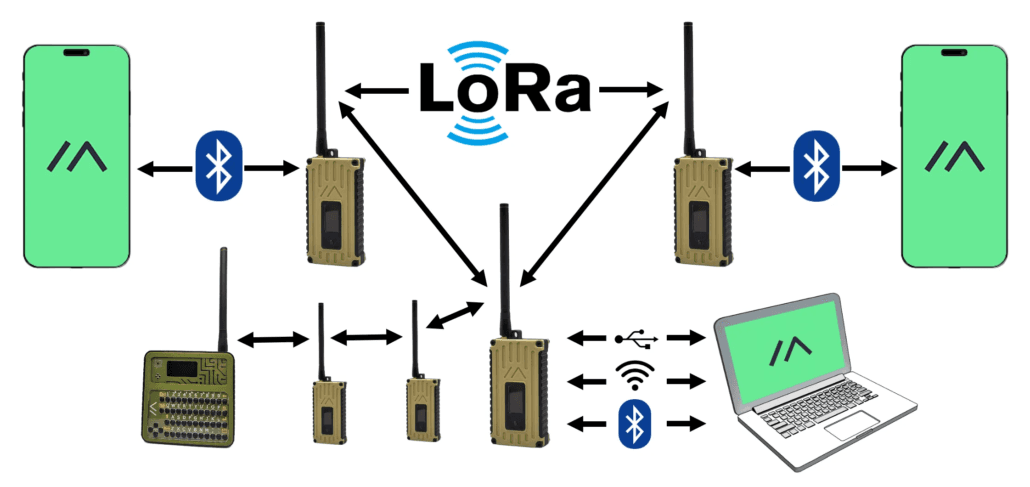
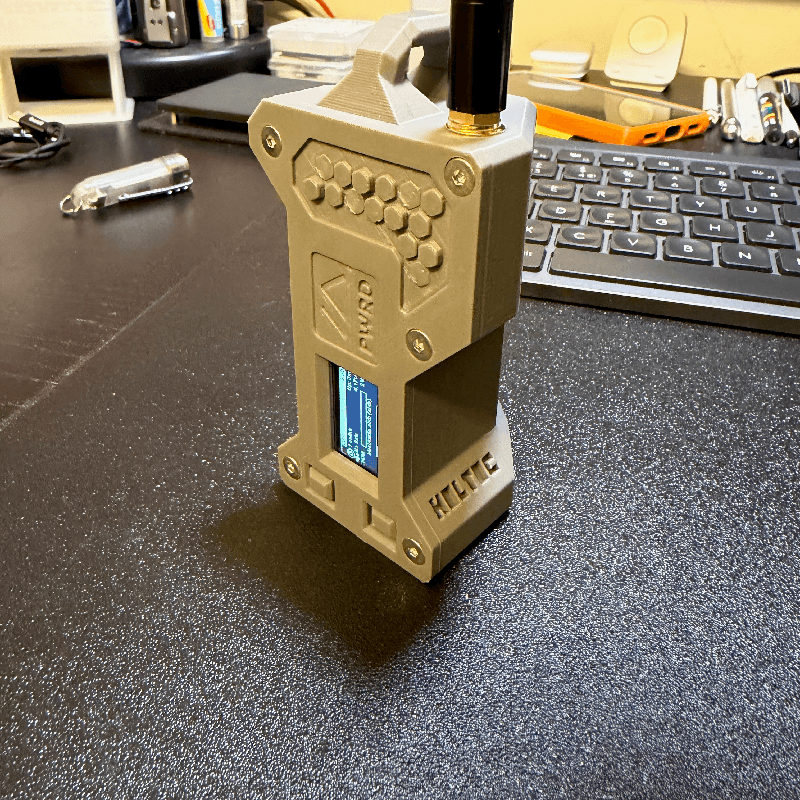
Meshtastic is the communications backbone here, not the whole product. Its documentation says you can connect a phone or computer to a radio through Bluetooth, Wi-Fi, or USB and communicate over LoRa without cellular service. That makes it a clean fit for GridDown, which BlackAtlas says supports mesh radio integration.
If you already run Meshtastic nodes, GridDown gives you a bigger display and a more mission-oriented workflow around them. Instead of thinking only in terms of text messages, you can think in terms of shared position, local alerts, route planning, and sensor inputs on one offline tablet. That is the real jump: from peer-to-peer chat to a broader field picture.
Where the pairing is genuinely useful
- You need local comms and local awareness at the same time.
- You are working around damaged or absent infrastructure.
- You want a tablet-based interface that does not collapse when the internet does.
- You need one device to combine radio traffic, maps, and sensor feeds.
That is where GridDown makes sense. It gives Meshtastic a purpose beyond message relay and puts it into a system that can support team movement, coordination, and decision-making.
The sensor side: ADS-B, Remote ID, and SARSAT
BlackAtlas says its Sensor Hub can receive ADS-B at 1090 MHz, UAT at 978 MHz, FAA Remote ID broadcasts, and integrated 406 MHz SARSAT beacon signals for ELT, PLB, and EPIRB distress alerts. That is the part of GridDown that moves it from “offline messaging app” into “off-grid awareness console.”
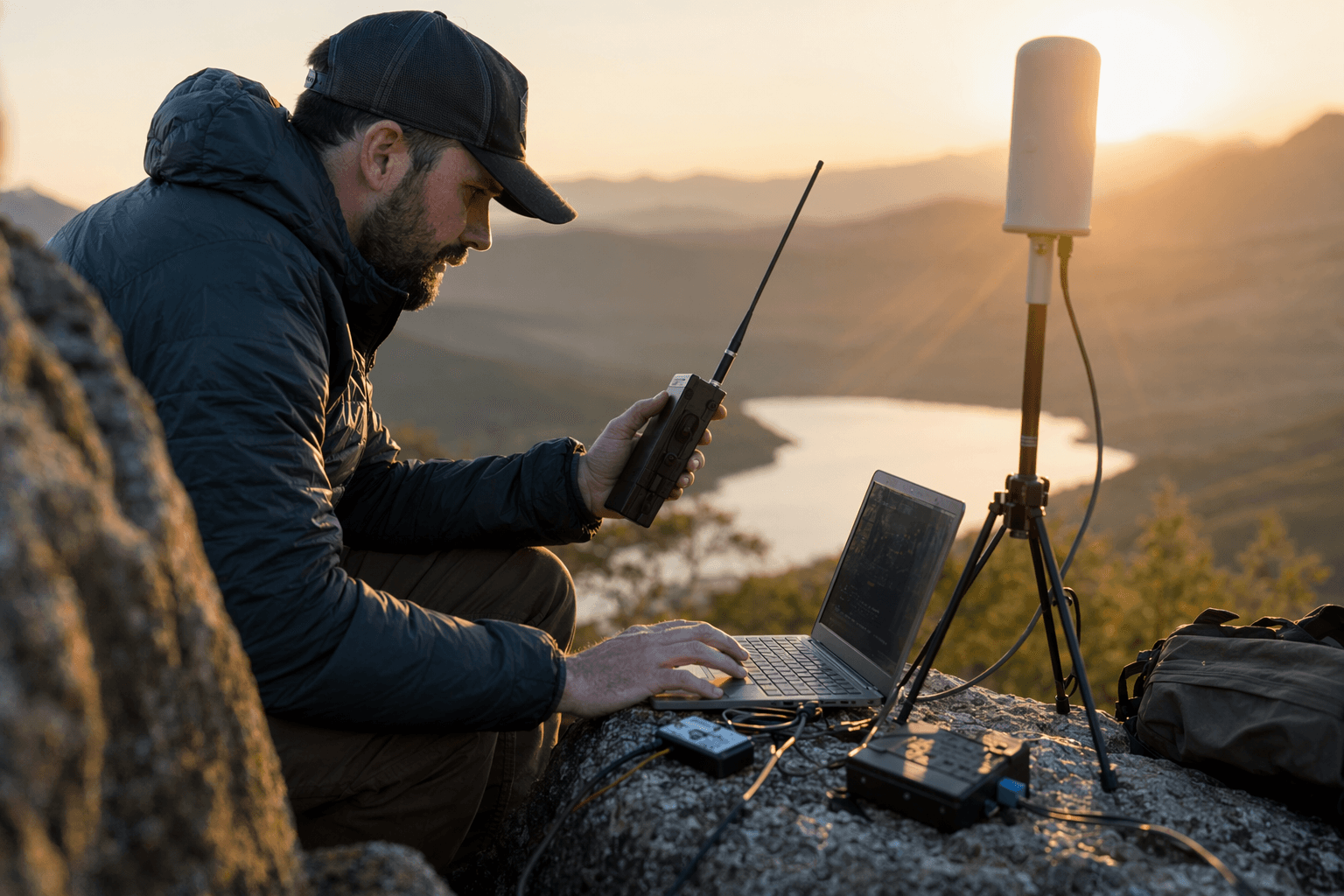
ADS-B and UAT can help you track nearby aircraft, while FAA Remote ID can identify drones broadcasting their presence. The 406 MHz SARSAT support matters even more in a true distress scenario, because it ties into the international beacon system used for emergency location signals from aircraft, personal beacons, and maritime beacons. If you are operating in a degraded environment, those feeds can give you a broader picture than a radio mesh alone ever could.
Why the SARSAT connection matters
The Cospas-Sarsat system has deep roots. It was formed in 1979, NOAA says the beginnings of SARSAT date to October 1972, the first rescue using the technology happened on September 10, 1982, and ATEC says the system became fully operational in 1984. That history matters because it shows this is not speculative tech bolted onto a hobby project; it is a mature international distress framework with a long operational record.
For GridDown users, that means the 406 MHz side is not just another sensor checkbox. It is a way to fold trusted distress-beacon monitoring into an offline tablet workflow. In a field setup, that can be the difference between noticing an alert and missing it because the network you depended on was already gone.
What hardware you are actually buying
BlackAtlas says the software runs as a pre-configured hardware option on a Samsung Galaxy Tab Active5 Pro. The company lists GridDown software at a one-time $200 purchase with free updates, a GridDown tablet at $799, and a tablet-plus-Secure Messenger bundle at $949.99. That pricing matters because it puts the project in the realm of serious preparedness gear, not a disposable app experiment.
The one-time software price is the clearest signal of the product philosophy. You are not buying a cloud subscription that assumes uptime somewhere else. You are buying a local toolset that is meant to keep working when the network picture gets ugly.
What the price gets you
- GridDown software: $200 one-time purchase with free updates.
- GridDown tablet: $799.
- Tablet plus Secure Messenger bundle: $949.99.
- Pre-configured hardware option: Samsung Galaxy Tab Active5 Pro.
Where it is cool, and where it is actually useful
There is no shortage of projects that look impressive on a bench and fade in the field. GridDown feels more credible because its functions line up with real failure modes: no internet, no cellular, weak GPS, and fragmented team communications. Offline maps and sensor fusion are practical. Mesh radio integration is practical. Celestial positioning is practical if you need another navigation reference when GNSS is unreliable.
The less useful side is simple: if you already have normal connectivity, a lot of this is overkill. In a fully connected environment, the stack may feel elaborate compared with a standard mapping app and a chat client. But when infrastructure disappears, the extra layers stop being decoration and start being insurance.
GridDown’s value is that it makes Meshtastic part of a larger operating picture instead of a standalone feature. For anyone building for resilience, that is the right direction: not just staying in touch, but staying aware.
This article was produced by Prism’s automated news system from verified source data, official records, and press releases, then run through automated quality and moderation checks before publishing. The system is built and supervised by the people who set the standards it runs under. Read our full AI policy.
Did this article answer your question?