LilyGo devices get spotlighted as ready-made Meshtastic hardware choices
LilyGo’s Meshtastic-ready lineup now covers handhelds, wearables, and fixed nodes, so the real choice is battery life, portability, display usefulness, and setup friction.

Start with the job, not the board
If you want Meshtastic gear this week, the mistake is buying the wrong form factor and living with it. The real tradeoff is simple: a handheld gives you faster, more readable field use, a wearable disappears onto your wrist for passive tracking, and a big e-paper node earns its keep by sipping power and staying legible all day.
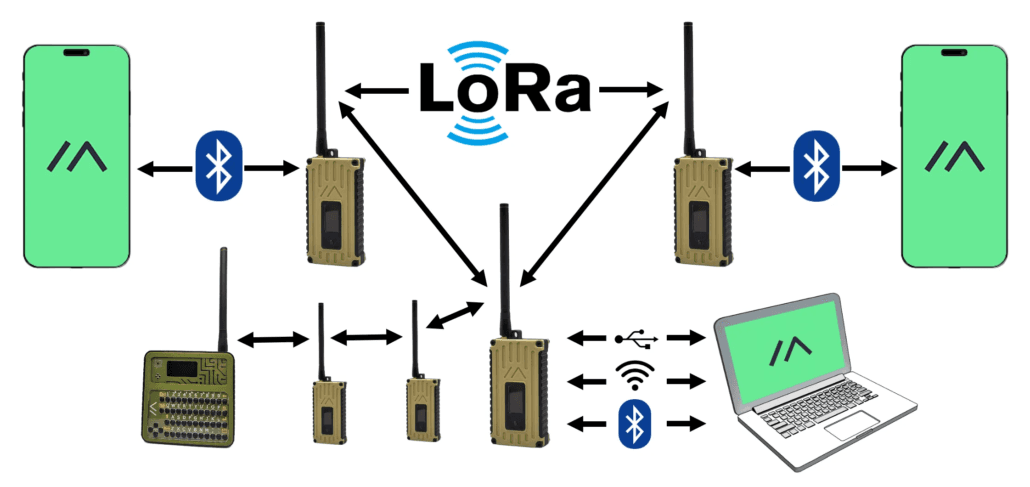
That is why LilyGo keeps getting attention. Meshtastic describes itself as an open-source, off-grid, decentralized mesh network built to run on affordable, low-power devices, and its official hardware docs now place LilyGo squarely inside the supported family. In practice, that means you can choose a device around the job you actually have, instead of treating the radio like a weekend science project.
The handheld that saves the most setup pain
The cleanest buy for a newcomer who wants a serious field communicator is the LilyGo T-Deck Pro Meshtastic. It is the one that most clearly feels like a finished tool: a 3.1-inch sunlight-readable e-paper touchscreen, a full QWERTY keyboard, SX1262 LoRa, ESP32-S3, GPS, and optional 4G. LilyGo splits it into two versions, A7682E for 4G and PCM5102A for voice, and also adds a Bosch BHI260AP smart sensor, a 3.5mm headphone jack, and an extended Qwiic interface.
That mix matters because it cuts down on the usual Meshtastic friction. You are not bolting together a screen, a keyboard, a radio, and a power setup from scratch. You are getting a handheld that is already aimed at off-grid communication, and Meshtastic’s own T-Deck documentation calls the T-Deck Pro a low-power, sunlight-readable e-ink model in the T-Deck family. If you want something you can grab, configure, and carry into the field without much tinkering, this is the obvious shorthand for “ready to go.”
The pocket node that makes battery life the selling point
If your use case is hiking, carrying a node every day, or keeping a compact backup in a pack, the T-Echo Meshtastic is the easier fit. Meshtastic’s docs describe it as a compact device with an nRF52840 MCU, SX1262 LoRa radio, L76K GNSS support for GPS, BeiDou, GLONASS, and QZSS, a 1.54-inch eInk display, and an 850mAh battery. LilyGo says it ships preloaded with Meshtastic firmware and lists FCC, CE, and MIC certifications, which makes it easier to trust as a starter node and a field node.
That preloaded firmware detail is the quiet advantage. It saves you from the first painful hour many newcomers lose when they buy a board that still needs firmware, enclosure planning, and a battery plan before it becomes useful. The T-Echo is the one to pick when you care more about reliable carry and long battery life than about typing a lot on the device itself. It looks like a pocket node because that is what it is.
The fixed node that favors visibility over hand-held convenience
The T5 E-Paper S3 Pro pushes in the opposite direction. With its 4.7-inch touch e-paper display, ESP32-S3, LoRa, and GPS, it is much more comfortable as an always-on dashboard or a node you leave in place than as something you want in a pocket. LilyGo’s page adds an ESP32-S3-WROOM-1, 16MB flash, 8MB PSRAM, RTC, TF card support, BQ25896 and BQ27220 battery management chips, and an SX1262 LoRa transceiver with 433, 868, and 915 MHz variants.
That spec list tells you exactly where it fits. If you want a display that is large enough to glance at from across a table, or a fixed node that can stay readable while sipping power, this is the form factor that makes sense. It is the least “grab and go” option of the bunch, but that is the point: you are buying visibility and persistence, not pocketability.
The wristwear option is more useful than it looks
The T-Watch S3 and T-Watch S3 Plus take the idea of Meshtastic wearable hardware seriously. Meshtastic’s community-supported docs describe the T-Watch S3 as a compact 1.54-inch IPS LCD touch wearable at 240x240, with haptic feedback, a microphone, speaker, RTC, and a three-axis accelerometer. LilyGo’s T-Watch S3 Plus adds an ESP32-S3, 16MB flash, 8MB PSRAM, BLE 5.0, microphone, MAX98357A audio, BMA423 sensor, GPS positioning, a 940mAh battery, SX1262 LoRa, DRV2605 haptics, and AXP2101 power management.
That makes the watch line more than a novelty. If you want passive use, quick glances, or a node that stays on-body without asking for pocket space, this is where the wearable format earns its keep. It is not the first thing I would reach for if my main job were long typing sessions or bright-sun readability, but for low-friction messaging and location-aware carry, it is a legitimate Meshtastic platform.
Why the choice matters now
Meshtastic is no longer just a handful of dev boards and a phone app. The ecosystem now covers handheld communicators, pocket-sized trackers, display-heavy fixed nodes, and wrist-mounted devices, and LilyGo has become one of the easiest ways into each of those lanes. That matters because the network itself has already proven it can go long, with a current ground record of 331 km and a current air record of 206 km. The hardware you choose still determines whether you actually enjoy using that capability.
So if you are buying with a real job in mind, the decision is not abstract. Pick the T-Deck Pro when you want the most complete handheld. Pick the T-Echo when battery life and pocket carry matter most. Pick the T5 E-Paper S3 Pro when you want a readable, low-power fixed node. Pick the T-Watch S3 family when you want the radio on your wrist and out of the way. The right LilyGo device is the one that removes the most friction from the way you will actually use Meshtastic, because that is what turns a mesh radio from an idea into gear you will carry every day.
This article was produced by Prism’s automated news system from verified source data, official records, and press releases, then run through automated quality and moderation checks before publishing. The system is built and supervised by the people who set the standards it runs under. Read our full AI policy.
Did this article answer your question?