Meshtastic gains momentum in the Cardputer pocket-computing ecosystem
Meshtastic is moving into the Cardputer world, where a pocket keyboard and launcher-friendly firmware make off-grid messaging feel much easier to try. That crossover could bring in a far wider crowd.

Meshtastic is starting to look less like a side project and more like a natural fit for pocket computers. Put a card-sized keyboard, a tiny screen, and a curated firmware catalog together, and off-grid messaging stops feeling like a lab demo and starts looking like something you can actually carry.
Why this crossover matters
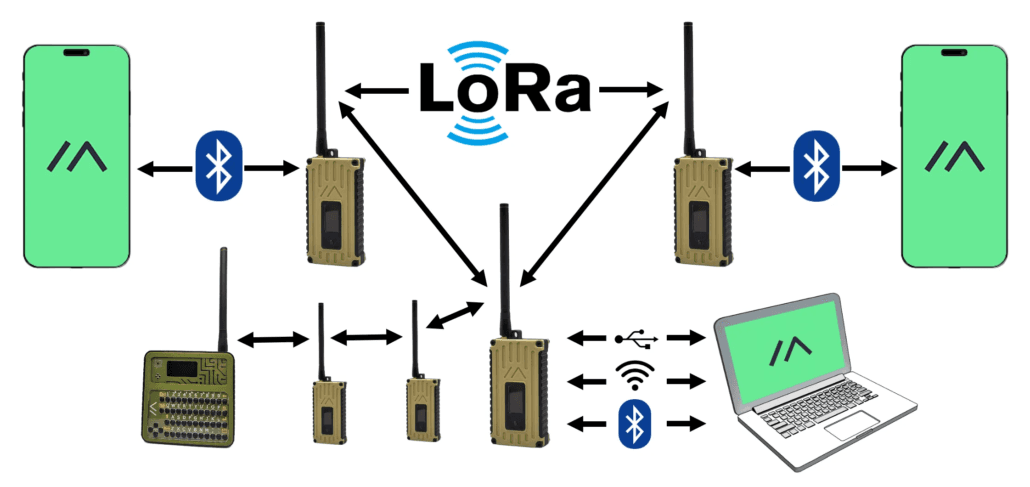
Meshtastic has always had a simple but powerful pitch: it is an open source, off-grid, decentralized mesh network built to run on affordable, low-power devices. It uses inexpensive LoRa radios as a long-range communication platform in places without existing or reliable communications infrastructure, and the whole project is 100% community driven. That combination matters because it gives the software a practical job, not just a hobbyist identity.
The key detail is that Meshtastic does not require a phone. Its radios automatically create a mesh and forward packets as needed, so people in the group can receive messages even if they are far away, and phones are only optional. That makes it unusually well suited to a pocket-computing setup, because the hardware itself can be the communicator instead of just a companion to one.
Why the Cardputer is such a strong hook
M5Stack’s Cardputer already looks like the kind of device that can pull Meshtastic into a broader audience. The original Cardputer is a card-sized computer built around an M5StampS3 main controller, with a 56-key keyboard and a 1.14-inch TFT screen. The newer Cardputer-Adv keeps that same compact, self-contained shape, but moves to a programmable Stamp-S3A core module based on ESP32-S3FN8.
That matters in practice because Meshtastic users care about fast access, quick message entry, and gear that does not feel like a science project every time you power it on. A tiny keyboard and a screen in the same pocketable shell make Meshtastic feel closer to a handheld terminal than to a board you still need to finish assembling.
The real crossover is cultural as much as technical. The Cardputer sits at the intersection of retrocomputing, programming, and maker culture, which means it is exactly the kind of device that can introduce people to Meshtastic before they ever go looking for a dedicated radio project. If your first instinct is to tinker with a pocket computer, Meshtastic becomes one of the things that pocket computer can do.
Official hardware is closing the gap
The biggest signal that this is more than community improvisation is the Cardputer Mesh Kit. M5Stack launched it as a portable card-sized Meshtastic communication terminal built around the Cardputer-Adv controller and a CapLoRa-1262 expansion module. That is a meaningful shift, because it turns Meshtastic from something you port onto hardware into something that can arrive as part of a defined handheld package.
For people who want to get into Meshtastic without piecing together every last part, that changes the experience immediately. You are no longer starting from a blank bench and asking whether a board can be made to work. You are starting from a pocket device that already points toward off-grid messaging as a first-class use case.
What the launcher catalog says about momentum
The firmware ecosystem around the Cardputer is moving quickly too. During May and June 2026, firmware activity accelerated across the M5 Launcher catalog, with launcher updates, gaming projects, utilities, experimental apps, and Meshtastic builds appearing regularly. That is the kind of environment that turns a niche radio stack into a discoverable option for people who came for the hardware first.
There is also real variation in the Meshtastic builds themselves. A May 2026 Fluxcoil post noted one Cardputer ADV Meshtastic build based on upstream Meshtastic 2.7.23, while an M5Stack Cardputer Mesh Kit firmware was based on upstream 2.7.22. That tells you the ecosystem is active enough to support parallel paths, with community experimentation and vendor-supported hardware moving side by side.
For users, that is the important part. A launcher catalog does not just make Meshtastic visible, it lowers the activation energy to try it. Instead of hunting through forums for a one-off flash procedure, you are looking at Meshtastic as one option inside a broader handheld workflow, alongside the other tools people already expect on a pocket computer.
Who gets pulled in next
The new audience here is easy to spot. There are the pocket-computing people who want a tiny keyboarded machine for utilities, apps, and tinkering. There are the Meshtastic users who want a more approachable handheld than a bare radio board. And there are the builders who want gear that can shift between offline messaging, local-first tools, and experimental firmware without feeling bolted together.
That is where the practical value shows up. Meshtastic already makes sense as a standalone off-grid mesh for low-power devices, and it already supports optional GPS sharing. On the Cardputer side, the hardware gives that idea a face people will recognize immediately: a compact computer with a keyboard, a small display, and a firmware launcher that makes the whole thing feel usable instead of fragile.
Meshtastic is still Meshtastic, but the packaging is changing fast. Once it sits inside a pocket-computing ecosystem with a recognizable hook like the Cardputer, the project stops being just a radio niche and starts looking like a standard tool in the handheld maker stack.
This article was produced by Prism’s automated news system from verified source data, official records, and press releases, then run through automated quality and moderation checks before publishing. The system is built and supervised by the people who set the standards it runs under. Read our full AI policy.
Did this article answer your question?