Meshtastic MQTT bridges off-grid meshes to the internet, raises privacy risks
MQTT can turn a Meshtastic mesh into a monitored, cross-site network, but every packet you export can widen your privacy footprint.
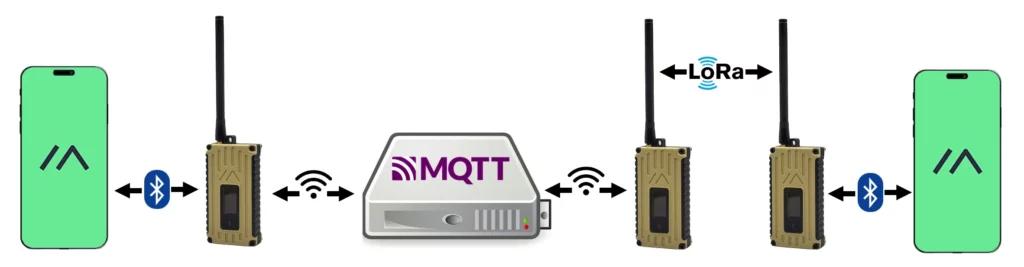
Meshtastic’s MQTT bridge is where an off-grid LoRa mesh stops being purely local and starts touching the internet. Used deliberately, it lets one internet-connected node forward selected packets to a broker so remote operators can watch telemetry, see maps update, and tie separate meshes together without standing beside the radio.
When MQTT adds real value
The clearest case for MQTT is a mesh that needs eyes on it from somewhere else. A rooftop gateway, a remote base station, or a community node on a hill can send approved traffic to a broker, letting telemetry show up on dashboards and maps while the local radios keep doing the short-range work. In practical terms, that means you can monitor a site, watch for failures, or coordinate across physically separate networks without flattening the whole mesh into a cloud service.
That boundary matters because Meshtastic is built as an open-source, off-grid, decentralized mesh that works without internet or cell service. MQTT does not replace that model, it extends it. Used well, it becomes a narrow bridge for remote monitoring, disaster response, and long-distance mesh federation. Used casually, it becomes the easiest way to export more than you meant to.
What the public broker actually forwards
Meshtastic’s public MQTT server is not a free-for-all relay. The project says it applies restrictions to protect network stability, and on the default PSK it prioritizes only specific portnums: NodeinfoApp, TextMessageCompressedApp, TextMessageApp, PositionApp, TelemetryApp, MapReportApp, and RoutingApp. It also uses a zero-hop policy, which means traffic from the public server reaches directly connected nodes but does not continue spreading through the local mesh.
There is another important filter built into the default path: position packets are only shared when location data is imprecise, at 10 to 16 bits. That matters for operators who want maps and status without broadcasting exact coordinates. It also means MQTT on Meshtastic is not simply a mirror of the radio network, but a curated export layer with rules about what gets through.
The privacy tradeoff is the point
The privacy risk is not abstract. The public broker can expose node identifiers, gateway metadata, and position data to anyone who is listening, which is why the choice to enable MQTT should be treated as a topology decision, not a convenience setting. Once you push mesh data to a shared broker, you are no longer only managing radio range and channel keys. You are also managing what a third party can infer from the flow of packets.
Meshtastic tightened that lesson on August 21, 2024, when it removed the ability to subscribe to all topics on the project-hosted MQTT server. The project said public mesh maps were storing and, in some cases, tracking node positions over time, and it kept regional topics such as msh/US/# available instead. That change is the clearest sign that the internet edge can preserve usefulness while still creating long-lived location records if operators are not careful.
How the mesh is already segmented before MQTT enters the picture
MQTT only amplifies what the mesh already shares. Meshtastic’s channel model is the first gate: a logical mesh is formed by a channel name and encryption key, and nodes on the same channel name and key can read that channel. The default primary channel is Channel 0, with a blank name and the encryption key AQ==.
That default is easy to overlook, which is why the channel limit also matters. A node can belong to a maximum of 8 channels, so operators already have room to separate traffic by purpose. MQTT should sit on top of that discipline, not replace it. If a site needs public telemetry, private coordination, and experimental traffic, those belong on different channels before any bridge to the internet is turned on.
Self-hosting is the cleanest privacy move
Meshtastic’s MQTT documentation points to self-hosting with Mosquitto when control matters. The setup examples include configuration changes that allow anonymous access on port 1883, which is useful for local integrations but also a reminder that broker policy is part of the security model, not an afterthought. A private broker gives you a place to decide who sees what, how long data is retained, and whether your node names or locations ever leave your own network.
That is the right path for operators who care about privacy, shared community infrastructure, or sensitive deployments. A public broker is convenient for broad visibility and quick experiments. A private broker is the better fit when you want the benefits of MQTT without letting your network advertise itself beyond the people you actually trust.
Node-RED and the home-lab side of the story
The most practical non-radio use for MQTT may be the one that never leaves your house. Meshtastic’s Node-RED integration docs describe MQTT feeding mapping, geofencing, and telemetry workflows, which turns a LoRa node into a sensor source for dashboards, automations, and alerts. That is where MQTT starts to feel less like a radio feature and more like a lightweight network bridge.
For a home lab, that could mean a map that updates when a field node moves, a geofence that fires when a unit leaves a known area, or a telemetry flow that triggers a script when battery voltage drops. Those examples are exactly why the bridge is attractive: it connects a slow, resilient mesh to tools people already use for automation without requiring the mesh to surrender its off-grid design.
The operator’s decision
The right question is not whether MQTT is useful. It is whether the data you export justifies the resilience, convenience, and privacy cost of making the mesh internet-aware. Crichton’s framing at D-Central gets to the heart of it: MQTT is the point where a mesh deliberately reaches back onto the internet, and that makes it powerful only when the boundary is intentional.
For remote monitoring, cross-site message flow, and selective dashboarding, MQTT can extend Meshtastic in exactly the ways active operators want. For networks that depend on anonymity, strict locality, or a hard off-grid stance, the safest choice is to keep the bridge narrow, self-host the broker, and leave the public topics alone.
This article was produced by Prism’s automated news system from verified source data, official records, and press releases, then run through automated quality and moderation checks before publishing. The system is built and supervised by the people who set the standards it runs under. Read our full AI policy.
Know something we missed? Have a correction or additional information?
Submit a Tip