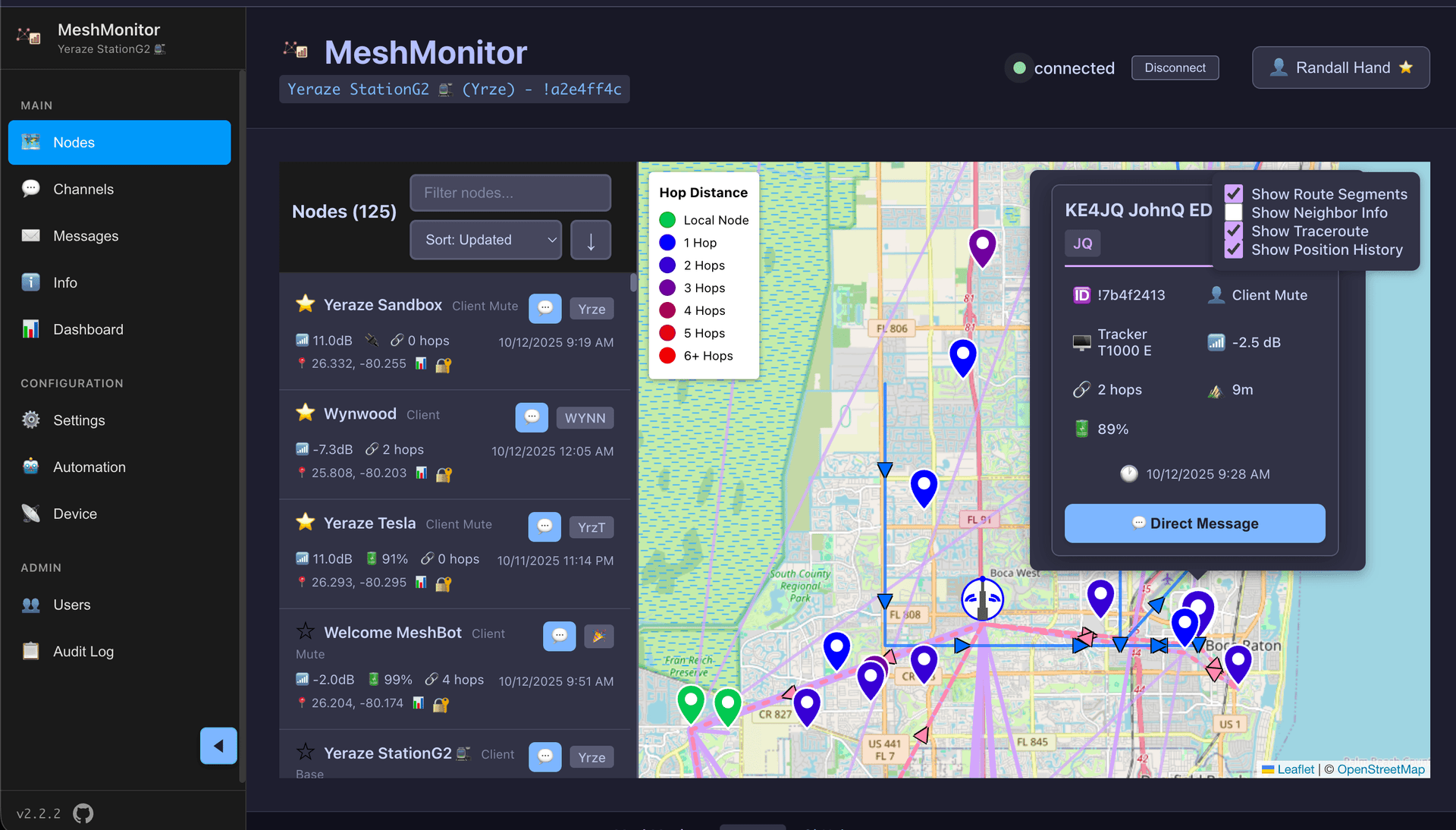
Meshtastic T-Beam V1.2 packs LoRa, GPS, and battery management
The T-Beam V1.2 still earns its place as a first serious off-grid node because it bundles LoRa, GPS, and battery management into one field-ready board.
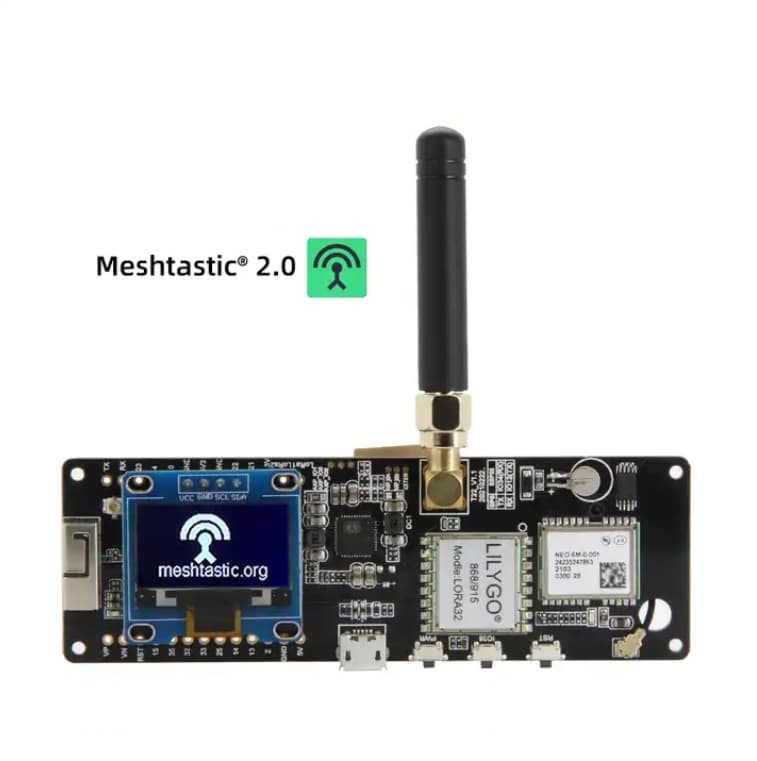
The T-Beam V1.2 is the kind of Meshtastic hardware that makes immediate sense the moment you stop thinking like a bench builder and start thinking like someone who needs a node to leave the desk. It combines an ESP32, LoRa, GPS, and onboard battery management in one compact board, so you can build a tracker, messenger, or emergency endpoint without bolting together a separate radio, receiver, and power stack. That is the real reason it still matters: it is not just compatible with Meshtastic, it is shaped like the kind of self-contained off-grid node Meshtastic was made for.
Why the T-Beam still lands in 2026
Meshtastic describes itself as an open-source, off-grid, decentralized mesh network built to run on affordable, low-power devices, and that is exactly where the T-Beam fits best. The board remains a supported hardware family, not a museum piece, which matters if you want a platform you can still follow, flash, and deploy with confidence. For anyone building around hiking comms, overlanding, remote monitoring, or emergency messaging, the T-Beam hits a sweet spot between convenience and capability.
The big appeal is integration. The T-Beam family is built around the Espressif Systems ESP32 SoC with Wi-Fi and Bluetooth, a Semtech SX1276-class LoRa radio, and a u-blox NEO-6M GPS receiver. LILYGO also lists LoRa support across 433, 868, 915, and 923 MHz variants, so the board adapts to regional bands instead of forcing you into a one-size-fits-all radio choice. In practical terms, you get a board that can run user code, handle wireless traffic, process location data, and expose peripheral interfaces without needing a pile of add-ons.
What V1.2 changes, and why it matters
The key hardware distinction in the T-Beam line is the power-management unit. LILYGO says V1.1 uses the AXP192, while V1.2 moves to the AXP2101. That sounds like a minor revision until you are the one trying to keep a node alive in the field, because battery handling is one of the places where a good off-grid board becomes a good off-grid system.
LILYGO also states that the board supports both USB micro and 18650 battery power, and that USB can charge the battery. That makes the V1.2 especially appealing for portable setups: you can top it up from a charger, battery pack, or vehicle power and then run it untethered on a single cell. For a Meshtastic node that you plan to carry, clip to a pack, or leave running in a vehicle, that is the kind of detail that saves time and wiring headaches.
What you actually get on the board
At the hardware level, the T-Beam is still a classic Meshtastic recipe with a few extras that make it more flexible than a bare radio module. Meshtastic’s hardware docs list T-Beam boards as having GPS, an 18650 battery holder, and an optional screen, and that combination is why the board keeps showing up in community builds. Some versions also include a 0.96-inch SSD1306 OLED, which is useful when you want a quick status readout without pulling out a phone.
The onboard GPS is not just a spec sheet checkbox. The receiver continuously provides coordinates, altitude, velocity, and timing information, which makes the board useful for location sharing across the mesh when you do not have cellular service or Wi-Fi infrastructure. If your use case involves moving between trailheads, convoy vehicles, remote job sites, or emergency caches, that built-in positioning is the difference between a radio node and a genuinely useful field device.
Here is the hardware stack in plain language:
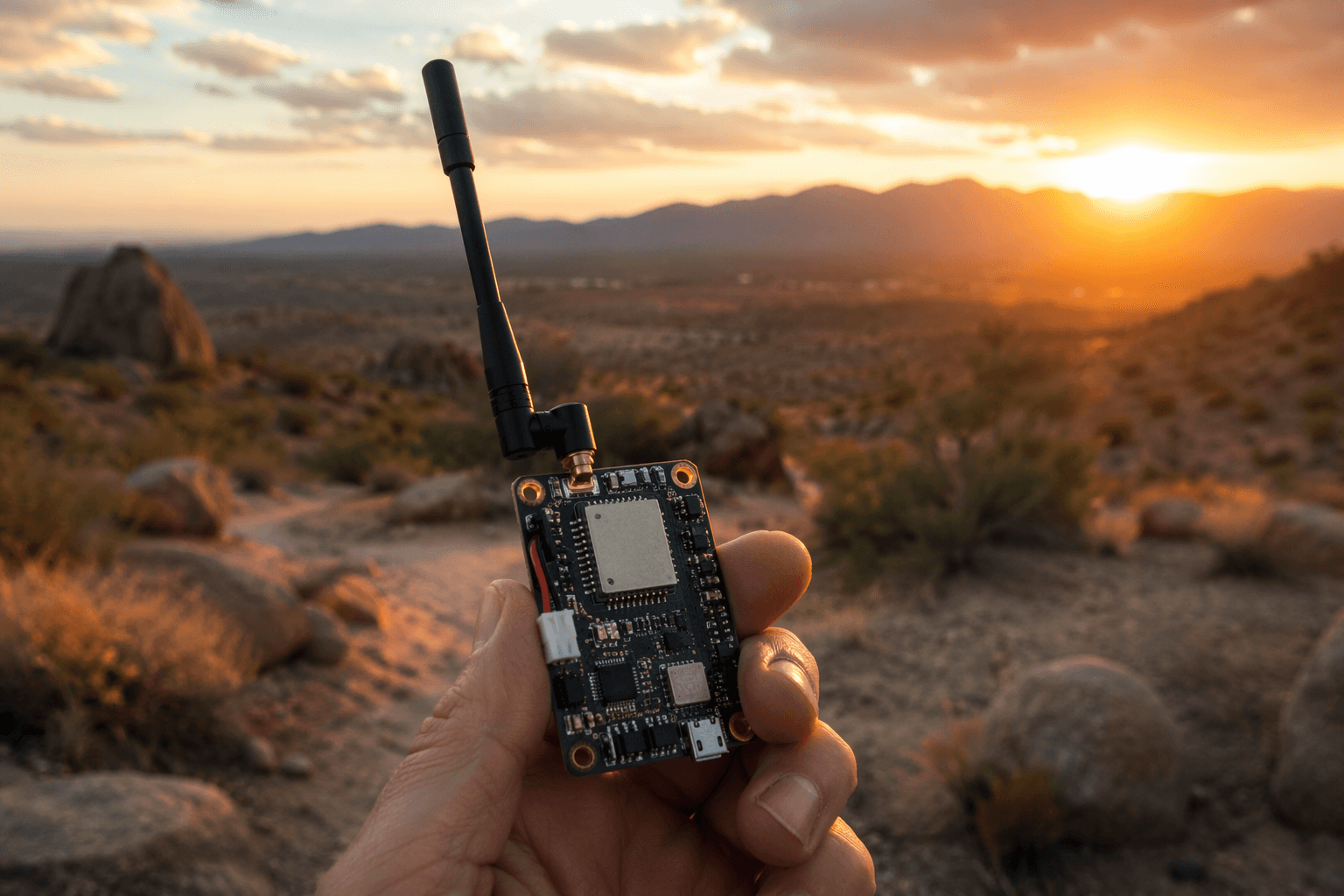
- ESP32 for application logic, wireless control, and peripheral handling
- Semtech LoRa radio for long-range, low-power mesh traffic
- u-blox NEO-6M GPS for position, altitude, speed, and timing
- 18650 battery support for portable operation
- USB charging for easier day-to-day power management
- Optional 0.96-inch OLED on some versions for quick local status
Best-fit use cases
The T-Beam makes the most sense when you want one board to do more than one job. Meshtastic calls out radios for places without reliable cellular service or internet access, and the T-Beam fits that mission especially well because it can act as a node, tracker, sensor platform, or rugged comms endpoint. For hiking, that means location-aware mesh messaging without depending on a phone network. For overlanding, it means a portable unit that can travel with the vehicle and still broadcast position. For emergency comms, it means a self-contained node that can be powered, charged, and redeployed quickly.
It is also a strong fit for custom IoT builds and remote monitoring. The board’s mix of GPS, LoRa, and battery management makes it easy to imagine deployments where the node needs to sit far from infrastructure, report status occasionally, and keep running on minimal power. That is the kind of real-world use that keeps the T-Beam relevant while more polished or specialized boards come and go.
The trade-offs versus newer Meshtastic hardware
The T-Beam is not the cleanest or most modern Meshtastic board you can buy, and that is the trade-off. Compared with newer, more stripped-down, or more highly integrated hardware, it asks you to accept a fairly specific shape: an 18650-based portable node with a built-in GPS stack and a familiar OLED-first layout on some variants. If you want the smallest possible board, or you already have an external GPS and power system, the T-Beam can feel a little redundant.
But that redundancy is also the point. It reduces the number of things you need to source, wire, and troubleshoot. In a hobby project, that means faster setup. In a field deployment, that means fewer failure points. The T-Beam is the board you reach for when you want practical reliability more than novelty.
Who should pick the T-Beam V1.2
Choose the V1.2 if you want your first serious off-grid node to be useful on day one. It is a strong pick if you care about portable operation, live location data, and battery management in one package. It is also the right call if you want a Meshtastic-friendly board that still sits squarely inside the supported, mainstream hardware set rather than on the fringe.
If your priority is a compact, field-ready node that can ride in a pack, a truck, or an emergency kit, the T-Beam still earns the recommendation. It remains one of the clearest examples of what Meshtastic is really about: a low-power radio network that works when the network does not.
This article was produced by Prism’s automated news system from verified source data, official records, and press releases, then run through automated quality and moderation checks before publishing. The system is built and supervised by the people who set the standards it runs under. Read our full AI policy.
Know something we missed? Have a correction or additional information?
Submit a Tip