Meshtastic_SDR adds EU868 support, monitors all presets at once
Meshtastic_SDR now watches EU868 traffic across SF7 to SF12 at once, turning passive SDR scans into a better way to spot mesh mismatches and packet noise.
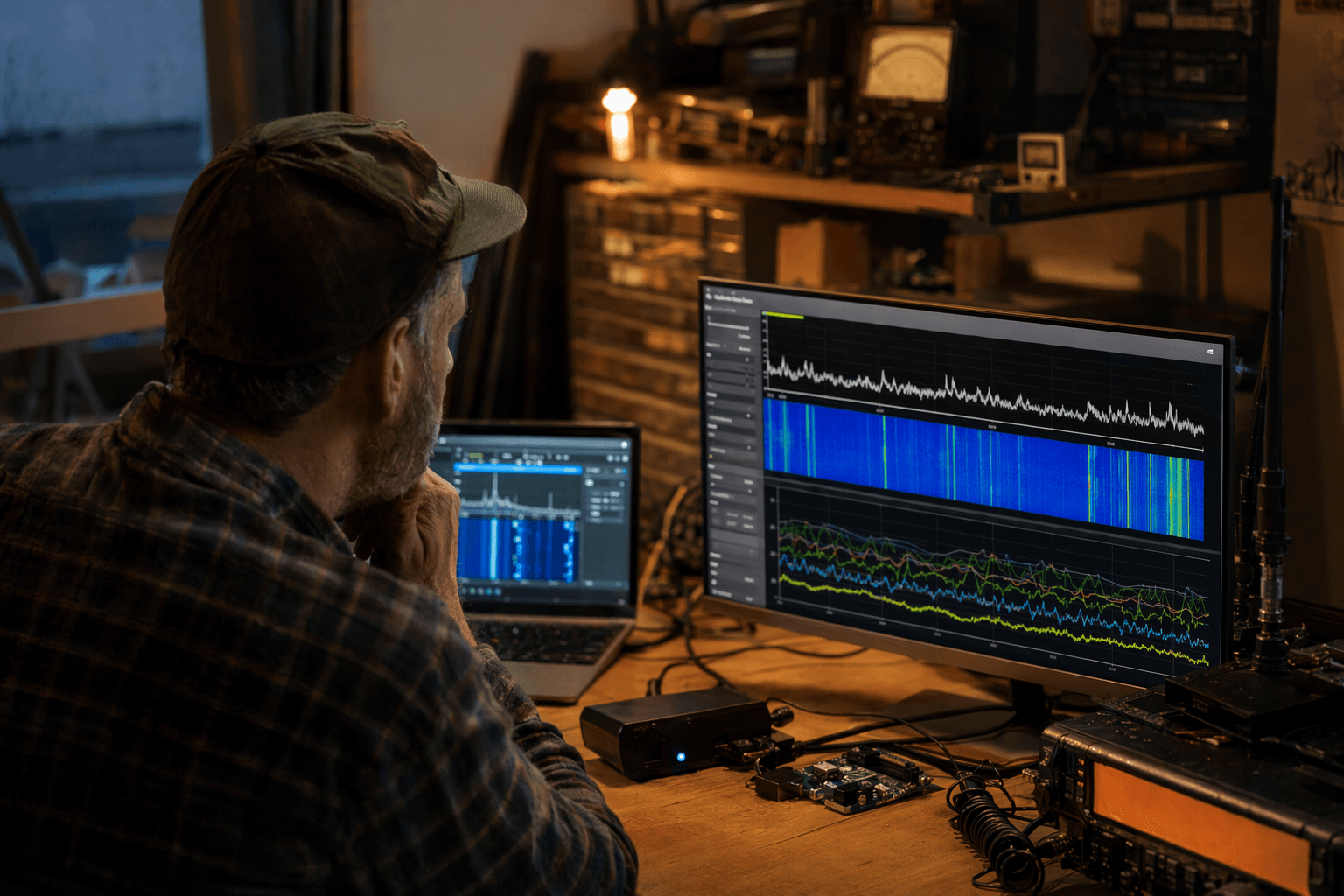
Meshtastic_SDR has moved past its Australia-first roots and into a more useful role for Europe’s EU868 band: it now replaces AU HackRF flowgraphs with EU868 RTL-SDR versions and monitors SF7 through SF12 simultaneously on 869.525 MHz. That frequency is not a random target. Meshtastic documents EU_868 as 869.4 to 869.65 MHz, and says the default LongFast center frequency after a factory reset is 869.525 MHz.
The practical shift is bigger than a band swap. The project now includes separate flowgraphs for 250 kHz, 125 kHz, and 62.5 kHz bandwidths, so it can watch multiple modem shapes without forcing operators to rebuild their setup every time the air changes. In main.py, the code now subscribes to all eight ZMQ ports by default unless a port argument is supplied, and the update adds a ZMQ poller with preset tagging on each packet. That means packets are no longer just seen as generic traffic; they are labeled against the preset that caught them, which makes passive observation more reliable and cuts down on false positives when the mesh is busy.
The cleanup matters just as much as the new coverage. Sample rate has been set to 2.0 MSPS for exact four-times oversampling across the supported bandwidths. ZMQ is now bound to 127.0.0.1 instead of 0.0.0.0, packet length validation now rejects anything outside the 16 to 255 byte range, and the reserved header bytes have been renamed to next_hop and relay_node to match current firmware. USB buffers were also increased for RTL-SDR V4, which should help the radio side keep up when the monitor is pulling more data at once.
That kind of detail lines up with how Meshtastic itself works. Devices in the same mesh must share identical Region and Modem Preset settings, or identical custom LoRa settings, and Meshtastic says SF5 and SF6 are only supported on newer LoRa chips while SX127x and RF95 radios are limited to SF7 through SF12. For anyone trying to troubleshoot a stubborn node, compare mesh behavior, or keep a quiet eye on the spectrum, a monitor built around SF7 to SF12 is aimed squarely at the hardware most people actually run.
The broader ecosystem helps explain the timing. Meshtastic says its GitHub organization manages 100+ repositories, the firmware repository has 7.6k stars, and the organization has 6.5k followers. Its range-test page also points to a 331 km ground record on 868 MHz using 62.5 kHz bandwidth, SF12, and coding rate 4/8, a reminder that bandwidth and preset choices are not abstract knobs but the difference between a clean link and a dead one. Meshtastic_SDR’s EU868 update takes that reality seriously, and for the first time it gives passive observers a cleaner view of it.
Know something we missed? Have a correction or additional information?
Submit a Tip