Seeed combines Meshtastic, reCamera, and Home Assistant for remote security
Seeed’s new build turns reCamera into an AI tripwire for Meshtastic, then hands the alert to Home Assistant without Wi-Fi or cell service.
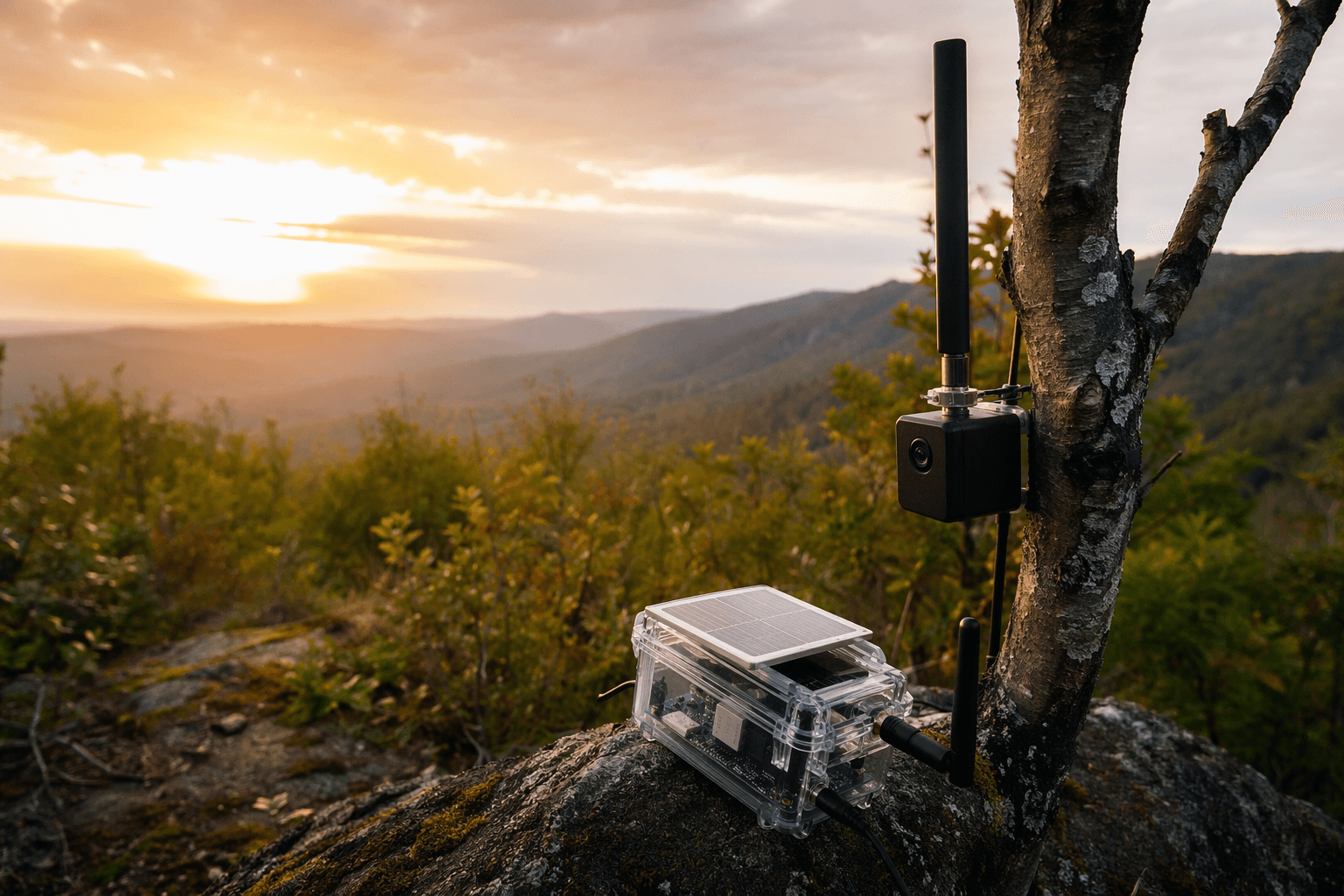
A reCamera PoE, two XIAO ESP32S3 boards, and a pair of Wio-SX1262 LoRa modules can build an off-grid human-detection alert chain that stays local from camera to Home Assistant. The setup is built for wilderness sites, large farms, and remote mountainous areas where Wi-Fi and cellular coverage are absent or unreliable.
How the chain is wired
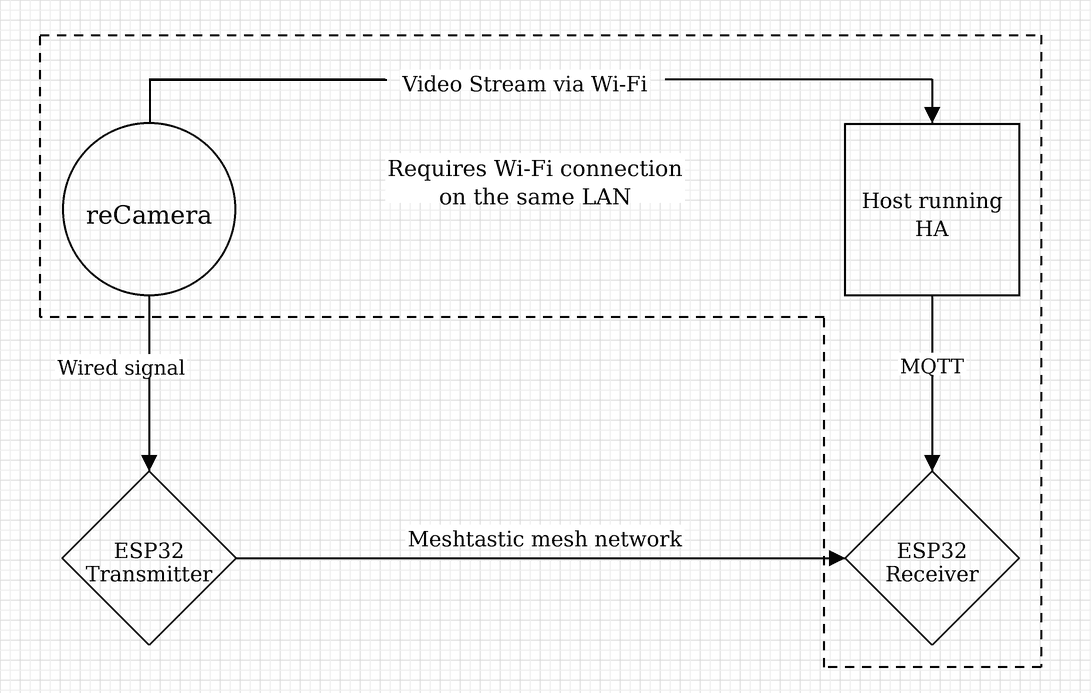
The architecture is straightforward and practical: reCamera PoE runs a YOLO human-detection model, drops a GPIO trigger when it sees a person, and hands that signal to a XIAO ESP32S3 transmitter paired with a Wio-SX1262 LoRa module. A second XIAO ESP32S3 and Wio-SX1262 receive the packet and push it into Home Assistant over MQTT, where automations can fire notifications or other connected devices. The PoE reCamera supports 802.3af and exposes three IO ports.
The camera does the vision work on-device, Meshtastic carries only the alert over LoRa, and Home Assistant handles the response on a local broker instead of relying on a cloud camera app. The reCamera software stack also includes a web interface, Node-RED, and local AI-vision workflows.
Why Meshtastic is the transport layer that makes this useful
Meshtastic’s value here is not that it replaces the camera or the smart home platform. It is the long-haul control layer, using LoRa to move a tiny event packet across terrain that would break a normal IP camera setup, and it does so as an open-source, off-grid, decentralized mesh network built for affordable, low-power devices. LoRa lets devices communicate over vast distances without internet or cell service.
The MQTT side is what makes the system easy to land inside a home automation stack. Meshtastic’s MQTT integration can bridge packets into software such as Home Assistant and Node-RED, and Home Assistant can create MQTT sensor entities while MQTT Explorer inspects the JSON traffic coming across the broker. nRF52 devices are not supported for this integration because of a known JSON issue, so Seeed’s build uses the XIAO ESP32S3 path.
Setup details that separate a weekend demo from a deployment
The build is not just a concept sketch. It includes the tedious parts that determine whether the system actually boots and talks: put the ESP32 into bootloader mode, flash the Meshtastic firmware with the Web Flasher, connect through the Web Client, then set the correct regional band and modem preset in Radio Config. The setup uses the Short Turbo modem preset for faster response.
A few practical constraints show up immediately:
- The receiver side still needs a local host running Home Assistant and an MQTT broker, so the system is private and self-contained, but not maintenance-free.
- Private brokers are meant for private channels with custom PSKs, while the public MQTT server is filtered and limited for network stability and privacy.
- reCamera’s PoE hardware exposes GPIO without extra board work, and Seeed’s earlier AI Human Detection and Meshtastic Notification demo makes the same PoE-versus-standard distinction.
Power, latency, and likely failure points
Seeed’s YOLO11n benchmark on reCamera reports 20 FPS, 50 ms end-to-end latency, and 1.5 W average operating power for object detection.
The likely failure points are less glamorous but easy to predict. If the regional radio setting is wrong, the Meshtastic link will fail. If the MQTT broker is not reachable, the packet will not reach Home Assistant. If someone swaps in the wrong board family, the Home Assistant integration can get tangled in JSON support issues. And if the site needs a wider mesh, the earlier Seeed demo uses the same reCamera-and-Meshtastic idea across multiple nodes for broader coverage.
This article was produced by Prism’s automated news system from verified source data, official records, and press releases, then run through automated quality and moderation checks before publishing. The system is built and supervised by the people who set the standards it runs under. Read our full AI policy.
Did this article answer your question?