Seeed Studio groups Meshtastic devices by real-world use case
Buy the right Meshtastic node for the job: Seeed’s latest roundup turns a crowded lineup into clear picks for hikes, vehicles, and remote coverage.
Buy for the job, not the spec sheet
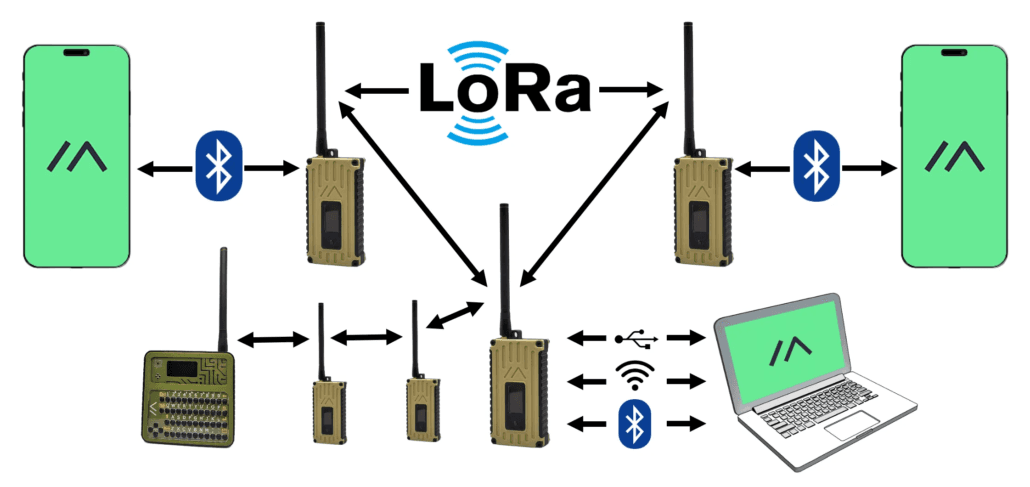
Pick the wrong Meshtastic radio and you do not just waste money, you slow down the whole mesh. Seeed Studio’s latest roundup leans into that reality by grouping devices around real deployment needs instead of treating every LoRa node like a generic gadget, and that is the right way to read the Meshtastic market now. Meshtastic is an open-source, off-grid, decentralized mesh network built on affordable, low-power devices, and it uses inexpensive LoRa radios to provide long-range communication where cell towers or reliable infrastructure are not available. The project says it is 100% community driven, and its hardware list keeps evolving, which means buying well matters as much as buying fast.

The clearest way to choose is to start with the job in front of you. Seeed breaks the ecosystem into practical buckets such as portable trackers, mobile communicators, solar repeaters, and DIY LoRa development kits. Those labels map cleanly to what you actually need in the field: something you can clip on and forget, something you can use while moving, or something you can leave in place to keep a wider mesh alive. Meshtastic’s own tooling reinforces that split, because officially supported devices are the ones that get pulled into the Web Flasher, documentation, client apps, and other core tools through the Backer and Partner programs.
Day hikes and go-bags: buy the SenseCAP T1000-E
If your main use case is a day hike, travel day, bike ride, or a go-bag node that lives in your pack, the SenseCAP T1000-E is the cleanest fit in Seeed’s lineup. It is a compact, plug-and-play tracker with built-in GPS, Bluetooth, a rechargeable battery, and an IP65-rated enclosure, which means it is built for people who want a ready-to-use tracker instead of a project that starts with flashing firmware and wiring extras. That low setup friction is the biggest advantage here, especially if you want Meshtastic in your life without turning the first weekend into a bench build.
The tradeoff is straightforward. A compact tracker gives you convenience, fast deployment, and low carry weight, but it is not trying to be a command center. If you care most about getting a node into the field quickly, keeping it charged, and pairing it with your phone through Meshtastic’s Android app, the T1000-E makes sense. Meshtastic describes Android as the gateway to the mesh for sending messages, viewing sensor metrics, and checking node locations, so the value of a ready-made tracker is bigger than the hardware alone. It gets you from box to actual use with the least friction, which is exactly what matters when the radio lives in a pocket or pack.
Vehicle and base-station use: buy the Wio Tracker L1 Pro
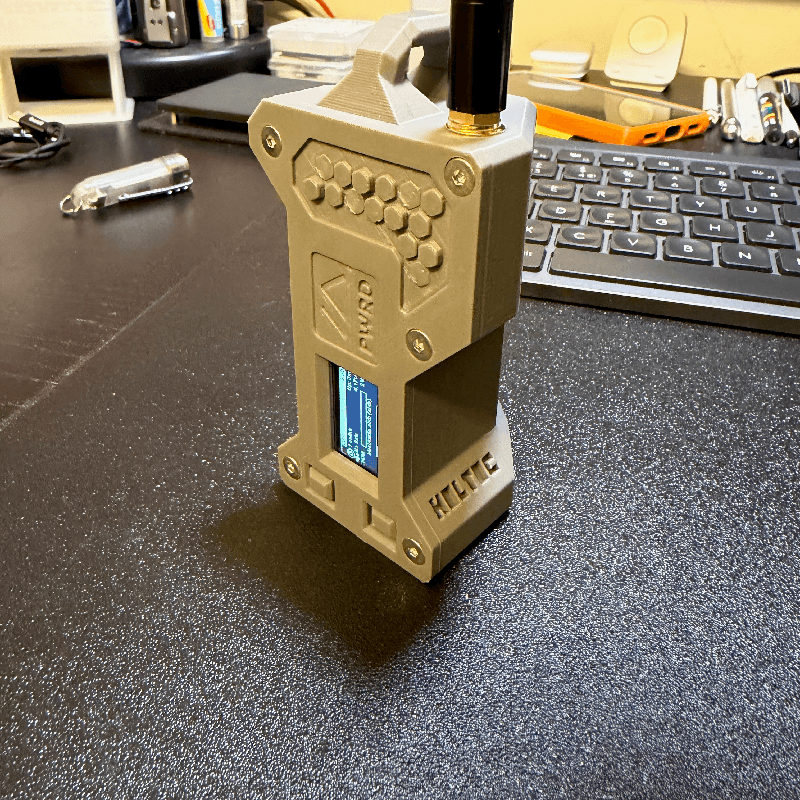
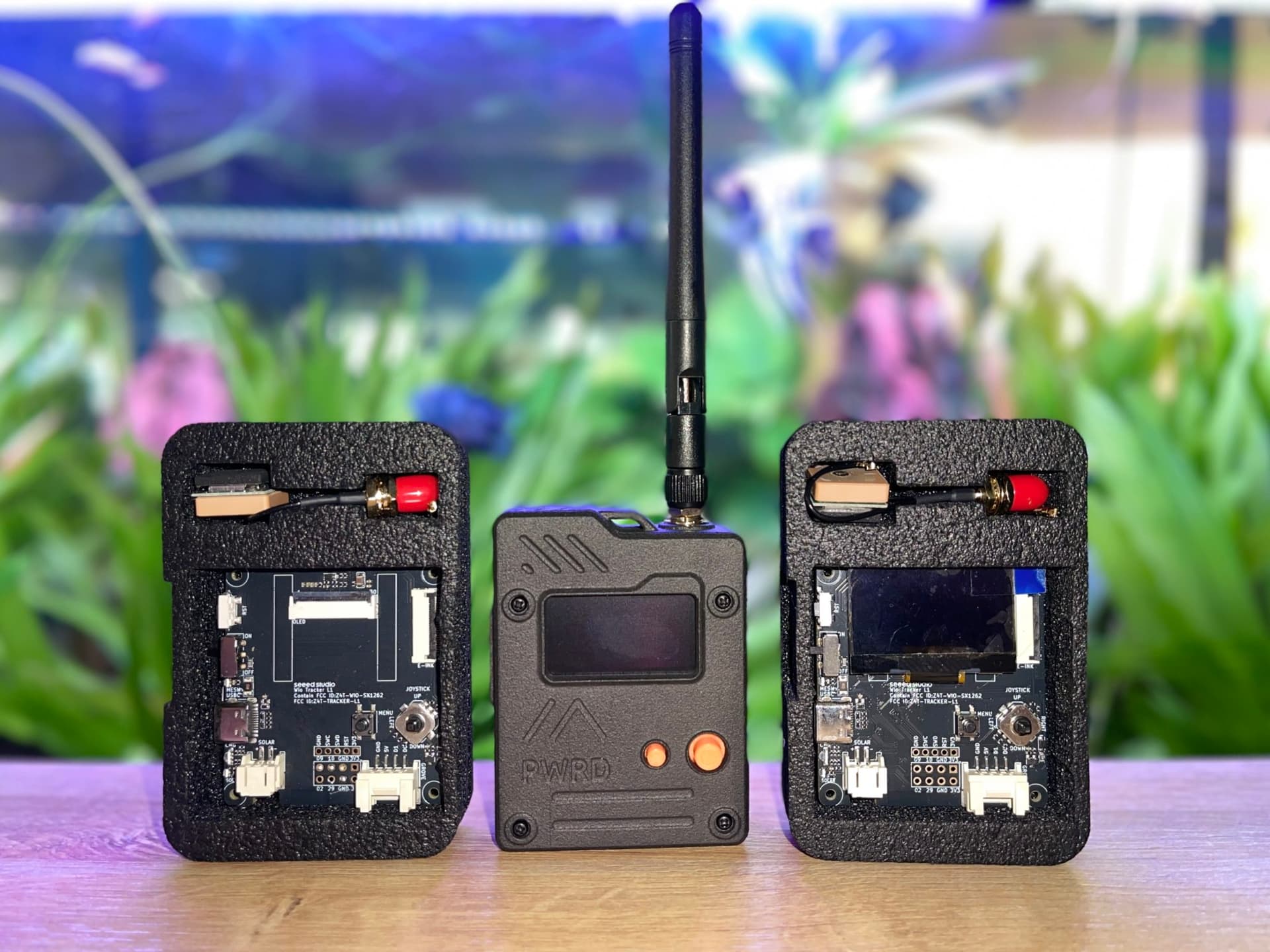
For a vehicle setup, a cabin node, or a base-station-style role where you want more control on the screen and less dependence on the phone, the Wio Tracker L1 Pro is the stronger fit. Seeed describes it as a handheld device with an integrated screen, virtual keyboard support, built-in GPS, and external antenna support. That combination matters because it makes the node more usable on the move and more adaptable once you start thinking about antenna placement and coverage.
This is the point where the tradeoffs become real. Compared with a small tracker, a handheld with a screen and keyboard support is less invisible and usually asks for a little more planning, but it also gives you more operator value. You can interact with it directly, and external antenna support gives you a path to better real-world range when the device is mounted in a vehicle or kept near a window, not buried in a bag. If the job is “I want a Meshtastic node I can actually operate,” this is the middle ground that makes the most sense.
If your “base station” is really a fixed mesh post that you expect to leave in one spot for a long time, that is where the next category starts to matter. The Wio Tracker L1 Pro is the flexible human-facing choice; once you want a node that behaves more like infrastructure, you are moving toward a repeater mindset and away from a handheld one.
Long-runtime remote nodes: buy the Solar Node P1 Pro
For a remote hilltop, yard edge, cabin, or other place where uptime matters more than interaction, the Solar Node P1 Pro is the right answer from Seeed’s roundup. It is presented as a permanent or semi-permanent repeater built for low-maintenance outdoor deployment, and that wording is the clue. This is not the device you buy because you want to carry it around. It is the device you buy because you want it to keep working when you are not there.
The payoff here is range and endurance, but the setup burden moves in the opposite direction. Remote nodes usually demand more thought about mounting, weather exposure, and power strategy, even when the node itself is designed to stay outside and stay alive. That means the total cost is not just the hardware. It includes the time and accessories needed to make the site dependable. If you want the mesh to reach farther and last longer, this is where you spend a little more effort up front so the node can do its job quietly afterward.
Seeed’s inclusion of DIY LoRa development kits in the same roundup is a useful reminder that not every remote deployment needs to be off the shelf. If you want to tune enclosures, power paths, or antenna placement yourself, the DIY route gives you that flexibility. But if your priority is reliable coverage with minimal day-to-day maintenance, the Solar Node P1 Pro is the cleaner buy.
Why this roundup matters now
Meshtastic started as a way to keep hiking buddies connected when cell service disappeared, and it has grown well beyond that origin story. The project now points to Search and Rescue operations, off-grid communication, disaster recovery, and grid-down scenarios as part of its real-world footprint. Its Android app, its official hardware categories, and its shifting supported-device list all show the same thing: the ecosystem is moving from experiment to usable tool.
That shift is also visible outside the product pages. Meshtastic says core contributors created Meshtastic Solutions to support businesses building on the platform, with Backer, Partner, Certified Device, and Integration offerings. Seeed’s Meshtastic Build-Off 2026 runs from May through August 2026 and advertises more than $3,000 in prizes, which tells you the platform is drawing both commercial attention and maker energy at the same time. Meshtastic also reported that many attendees at DEF CON 2025 saw more than 2,000 individual nodes connected during the event, a scale signal that is hard to ignore once you are thinking about deployment instead of demos.
That is the real lesson in Seeed’s use-case-first roundup. Meshtastic is no longer a pile of interchangeable radios sitting on a shelf. It is a system, and the best buy depends on whether you are packing for a hike, wiring up a vehicle, or trying to keep a remote node alive long after you have walked away.
This article was produced by Prism’s automated news system from verified source data, official records, and press releases, then run through automated quality and moderation checks before publishing. The system is built and supervised by the people who set the standards it runs under. Read our full AI policy.
Did this article answer your question?