Seeed Studio guide maps low-cost ESP32S3 Meshtastic builds with SX1262
A $10 Meshtastic node only stays cheap if the radio, band, and pin map line up. Seeed’s ESP32S3 guide shows where the bargain is real, and where it gets tricky.
A cheap node is only cheap if you buy the right one
The fastest way to waste money in Meshtastic is to chase the lowest sticker price and ignore the band, the radio, and the board layout. Seeed Studio’s new ESP32S3 LoRa guide is useful because it treats that mistake as the real problem, not an abstract hardware debate. Its core argument is simple: an ESP32S3 paired with a modern Semtech SX1262 radio gives you enough headroom to run mesh routing, sensor logic, and Wi-Fi MQTT bridging without painting yourself into a corner.
That matters because Meshtastic is built for more than casual text relay. The project describes itself as an open source, off-grid, decentralized mesh network built to run on affordable, low-power devices, and its MQTT support lets a node with internet access forward packets to the wider network when Wi-Fi or Ethernet is available. If your build might grow from a handheld chat device into a sensor gateway, trail relay, or community mesh node, the extra flexibility is the point.
Why the ESP32S3 and SX1262 combination stands out
Seeed’s guide pushes builders toward the ESP32S3 rather than the cheaper ESP32C3, and that recommendation makes sense once the workload gets messy. The ESP32S3 has more room to breathe when Bluetooth, Wi-Fi, and mesh traffic all show up at once, which is exactly what happens in mixed-use Meshtastic deployments. It is not just about raw speed; it is about keeping the node stable when it is doing several small jobs at the same time.
On the radio side, Seeed favors the SX1262 over older SX127x parts. The reasons are practical: lower receive current, better sensitivity, and wider frequency support. For a battery-powered node, that can mean the difference between a box you forget about and a box you keep babysitting.
The best part of the pitch is the price, but the price is not the whole story
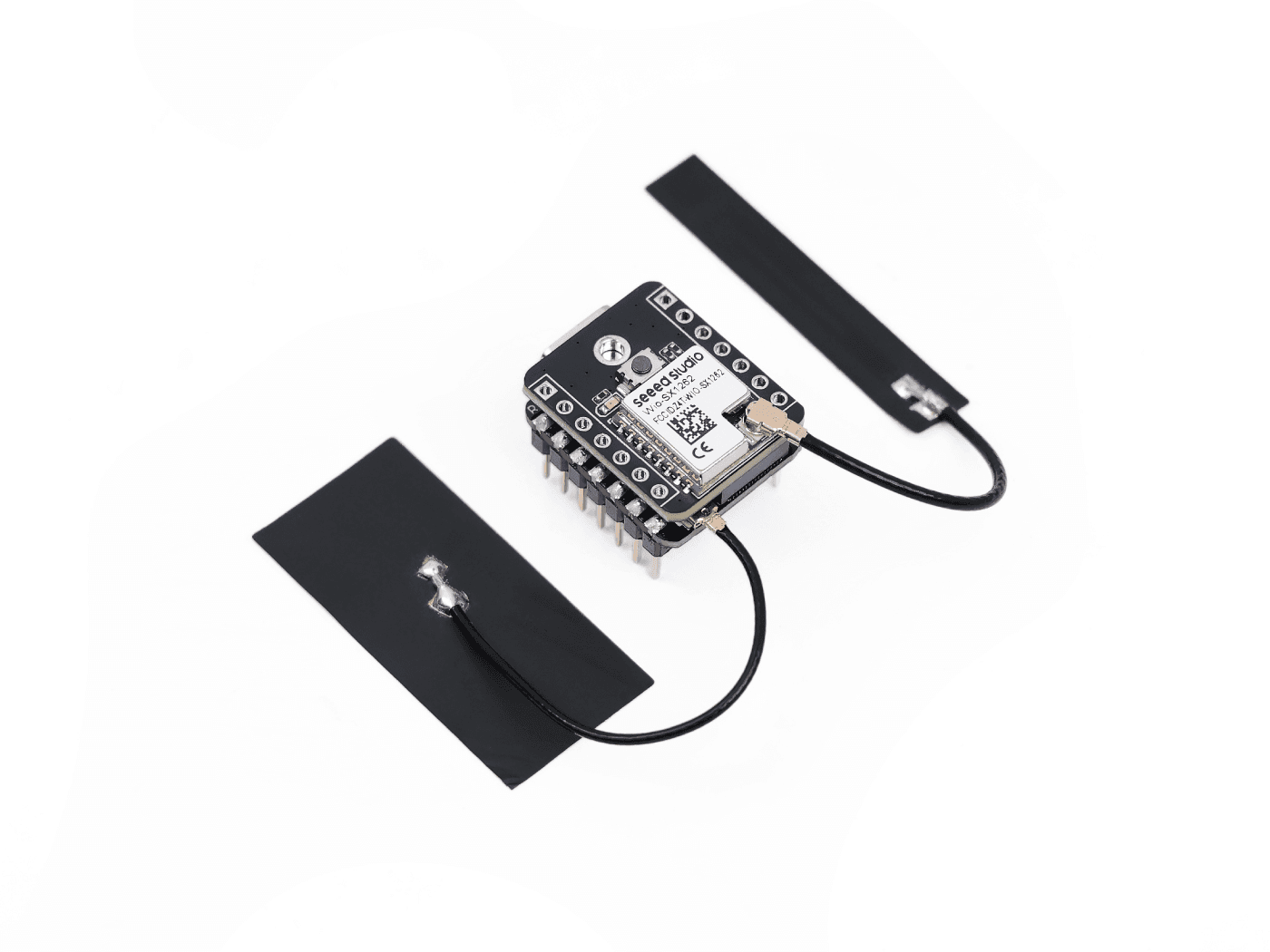
Seeed puts the XIAO ESP32-S3 & Wio-SX1262 Kit at $9.90, which is exactly the kind of number that gets attention in Meshtastic circles. The company also describes the kit as supporting LoRa in the 862 to 930 MHz range, with Wi-Fi and BLE connectivity, so it is not just a bare radio board pretending to be a platform. In older documentation, Seeed framed it as a low-price, high cost-performance device for long-distance, low-power, small-data applications, and said it could support more than 30 node devices depending on upload interval and payload size.
That combination makes the board feel like a starter kit that can grow up with you. It can run on battery power, connect to the internet when Wi-Fi is available, and still stay inexpensive enough that you do not feel punished for experimenting. For builders who want to test hiking networks, smart agriculture sensors, temporary community deployments, or city meshes, that balance is the real draw.
Region choice is not optional, and Meshtastic is blunt about it
If you buy the wrong band, you have not bought a bargain, you have bought a headache. Seeed’s guide calls out region selection directly, recommending 915 MHz for the United States, 868 MHz for Europe, and 433 MHz for parts of Asia. Meshtastic’s own regional documentation matches that logic, mapping North America to 915 MHz, Europe to 868 MHz, and some regions to 433 MHz or other local allocations.

That is why this board only makes sense as a decision guide if you start with geography. Meshtastic’s radio settings docs point out that 915 MHz is the North American ISM band, while 868 MHz is the most popular band in Europe. Canada also falls under the North American regional parameters, so the right answer is not “buy the cheapest board,” it is “buy the cheapest board that matches your legal band and your deployment.”
This is a flexible node, not a turnkey node
The XIAO ESP32-S3 & Wio-SX1262 Kit already sits in Meshtastic’s supported-device ecosystem as a community-supported board, with the Wio series page listing the ESP32-S3 MCU, Wio-SX1262 radio, Wi-Fi, Bluetooth 5.0, and optional GPS. That makes it more credible than a random hobby board pulled from a marketplace shelf. It is part of the broader pattern in Meshtastic hardware, where vendors are packaging inexpensive boards as gateways, sensor nodes, or community mesh devices rather than one-off experiments.
Still, this route is not as turnkey as a polished commercial node. The appeal is flexibility, but flexibility comes with more setup friction, more attention to firmware, and more care around pin mapping and module matching. If you want to plug in a device and forget about it, a more finished node can be the safer choice.
The pin map warning is the detail that separates a smooth build from a frustrating one
Meshtastic adds an important caution for anyone mixing parts from different Seeed kits: the Wio-SX1262 module in the XIAO ESP32-S3 kit has a different pin configuration from the Wio-SX1262 used in the XIAO nRF52840 kit. In plain terms, that means hardware that looks interchangeable may not behave that way without the right firmware definitions.
The supported-device page spells out the stakes. If you want to use a Wio-SX1262 module from a different Seeed kit with a XIAO ESP32S3, you may need to flash custom firmware with the correct pin definitions. That is not a dealbreaker, but it is a reminder that low-cost Meshtastic builds reward careful buyers more than impulse shoppers.
So is this the best low-cost Meshtastic entry point?
For builders who want the lowest-cost path without giving up expansion room, the answer is close to yes. The Seeed route is strongest when you want a battery-powered node that can start as a mesh endpoint and later become a sensor platform, Wi-Fi bridge, or small gateway. It is less attractive if you want zero-fuss deployment or if you are likely to mix parts without checking pin definitions and regional bands.
That is the real lesson in Seeed’s guide. The cheapest Meshtastic board is not the one with the smallest number on the page, it is the one that matches your region, survives your workload, and still gives you room to grow when the mesh stops being a toy and starts being a tool.
This article was produced by Prism’s automated news system from verified source data, official records, and press releases, then run through automated quality and moderation checks before publishing. The system is built and supervised by the people who set the standards it runs under. Read our full AI policy.
Know something we missed? Have a correction or additional information?
Submit a Tip