STRIDEtastic brings monitoring and forensics to Meshtastic mesh networks
STRIDEtastic gives Meshtastic operators a way to see what the mesh is doing, from packet flows and telemetry to PCAPs and Grafana dashboards.
Meshtastic’s biggest strength, its off-grid freedom, is also what makes operations tricky: there is no central server, no internet backbone, and no built-in control room watching the whole mesh. STRIDEtastic steps into that gap with monitoring and forensics tools designed for authorized diagnostics, network auditing, and troubleshooting on LoRa-based Meshtastic deployments.
Why visibility matters in a Meshtastic mesh
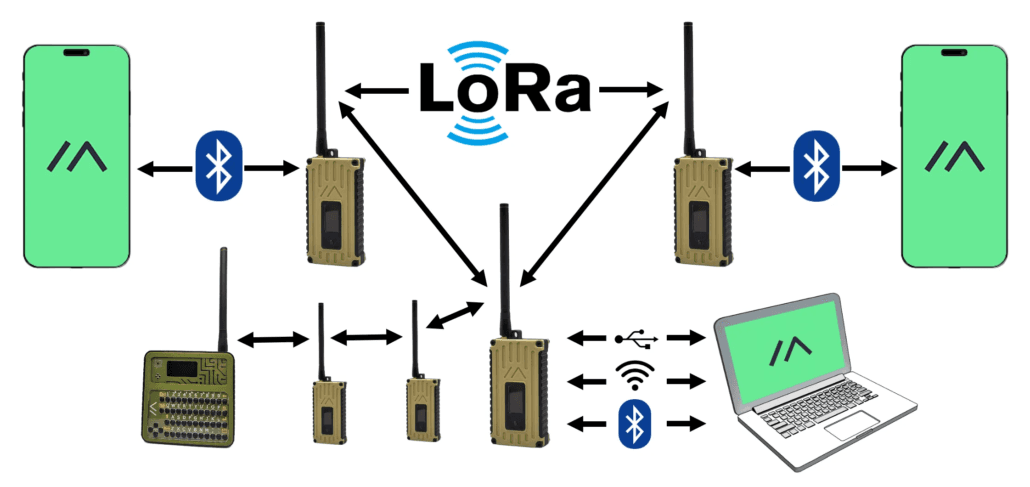
Meshtastic is built for resilience. It is an open-source, decentralized mesh network that runs on affordable, low-power devices and communicates over LoRa radio without cell towers or internet. Messages can enter the system from a phone or computer over Bluetooth, Wi‑Fi/Ethernet, or serial, then get rebroadcast across the mesh from node to node. That design is ideal for field use, emergency setups, and community networks, but it also means operators have to work harder to understand what the network is actually doing.
The mesh itself is shaped by radio settings and channel structure. Nodes share a LoRa spreading factor, center frequency, and bandwidth, and a node can belong to a maximum of 8 channels. Channels may also carry encryption keys, which protects traffic but can make troubleshooting more difficult when something goes wrong. In that context, observability is not a luxury. It is the difference between guessing at a problem and seeing whether a packet is being relayed, dropped, delayed, or misrouted.
What STRIDEtastic adds to the toolkit
According to Hackers-Arise, STRIDEtastic is an open-source monitoring and observability framework for Meshtastic LoRa mesh networks that brings dashboards, PCAP capture, virtual nodes, telemetry analysis, and Grafana reporting into the picture. That makes it especially relevant for anyone managing a distributed mesh where the normal assumptions of centralized logging do not apply.
The project originated as an undergraduate research effort at Pontificia Universidad Católica de Chile, supervised by Prof. Miguel Gutiérrez Gaitán from the IoT-UC Research Lab. That academic background shows in the tool’s emphasis on inspection, measurement, and repeatable analysis rather than flashy novelty. The repository had 137 stars and 7 forks at the time captured, a modest but meaningful sign of community interest around a very specific problem: how to see inside a mesh that is designed to operate without conventional infrastructure.
Recent repository activity also points to a security-aware direction. A Grafana dashboard tied to a CVE-2025-53627 downgrade attempt suggests the project is being shaped not just for visibility, but for testing, validation, and security-oriented review as well.
What STRIDEtastic can ingest and decode
A mesh is only as useful as the data you can interpret from it, and STRIDEtastic is built to collect multiple kinds of input. Hackers-Arise says it can ingest data from MQTT, serial radios, and TCP-connected nodes. That matters because Meshtastic deployments often mix connection methods, with operators bridging a phone, a desktop, or a local service into the radio layer in different ways.
Once data is in the system, STRIDEtastic can decode MeshPackets and common payloads such as NodeInfo, Position, Telemetry, NeighborInfo, and Routing data. In practical terms, that lets you answer questions like: which node last reported location, which neighbor relationships are visible, what telemetry is moving across the mesh, and how routing information is evolving over time. For a community network or a field deployment, that kind of packet-level clarity is what turns a vague “the mesh feels slow” complaint into a concrete diagnosis.
There is also an important security boundary here. Hackers-Arise notes that STRIDEtastic can decrypt channel PSKs and PKI-based direct messages when keys are available during authorized forensic analysis. That is a significant capability, but it is also one that belongs strictly in legitimate administration and incident review. In a decentralized network, authorized access to the right keys can be the difference between blind spots and a full accounting of what happened on your own system.
From live monitoring to post-incident analysis
One of STRIDEtastic’s most useful features is its ability to store sessions in PCAP-NG format for later inspection in Wireshark. That is the bridge between live observability and offline forensics. If you need to compare a healthy run with a failed one, or document behavior before and after a configuration change, preserving the capture in a standard format makes the workflow much easier.
The project also includes a bundled Lua dissector for Wireshark, which helps turn captured traffic into something readable instead of raw radio noise and opaque payloads. For operators, that means the same capture can support quick triage in the moment and deeper analysis later, without forcing everything into a single dashboard. It is a practical fit for hobbyists who want better diagnosis without giving up the flexibility of their existing tools.
Dashboards, automation, and network health checks
STRIDEtastic is not just a packet viewer. Hackers-Arise says it supports active publishing jobs, reactive automation, and scheduled health checks and traceroutes through Celery workers. That combination pushes it beyond passive observation and into operational management. You can continuously probe the mesh, detect whether paths are changing, and check whether nodes are still reachable under the current radio conditions.
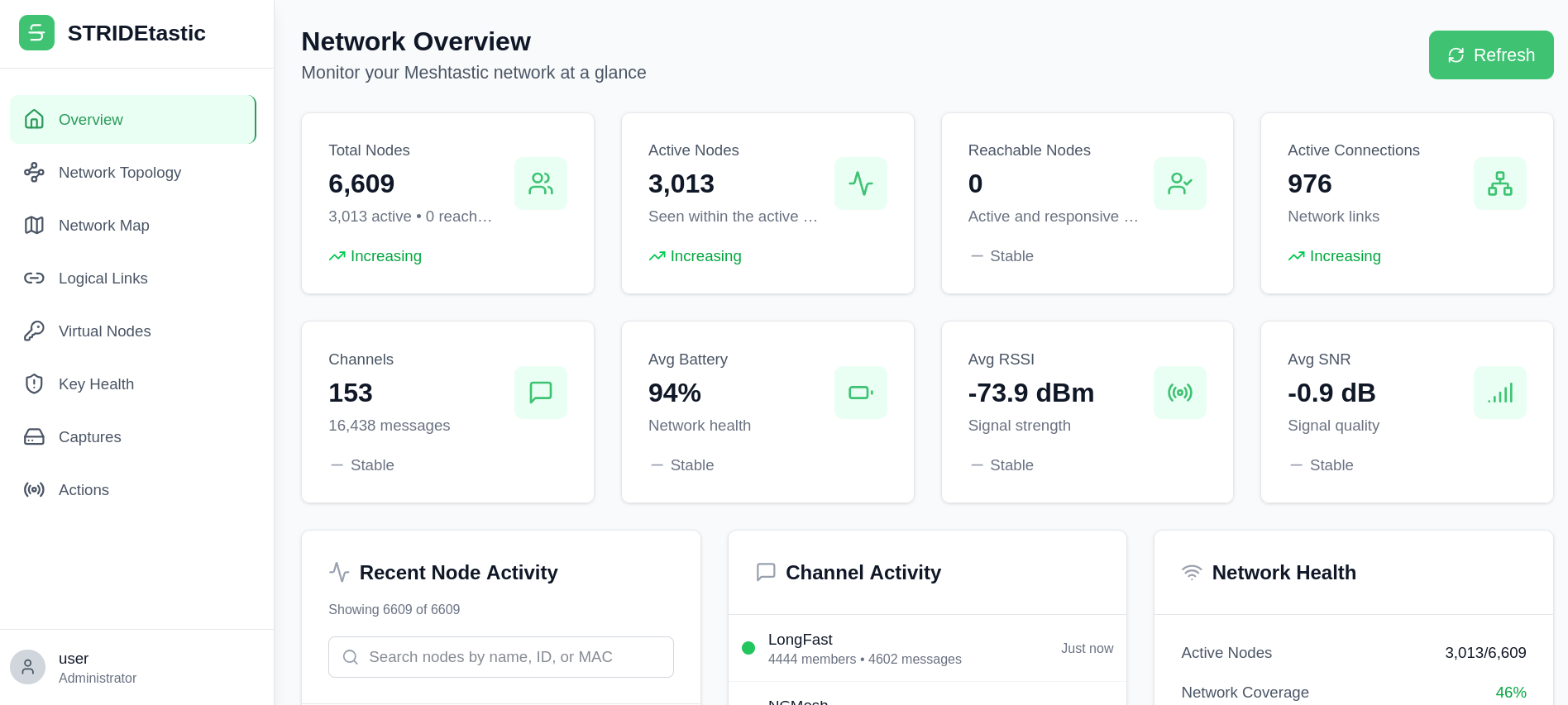
The Grafana layer adds another useful dimension. STRIDEtastic visualizes network health, geographic coverage, node telemetry, key health, and threat-focused dashboards. That is especially valuable in Meshtastic environments, where a network may be spread across wide terrain and intermittent links can be hard to distinguish from true failure. A good dashboard helps separate signal from noise, showing whether a problem is local to one node, tied to the radio environment, or related to configuration drift.
Where this fits in Meshtastic governance
Meshtastic already documents a secure Remote Nodes feature for administering devices over the mesh rather than through Bluetooth, Serial, or IPv4. That approach improves remote management, but it also raises the bar for oversight. Once devices are being managed across the mesh itself, operators need a way to understand exposure, confirm routing behavior, and verify that the network is doing what the configuration says it should do.
That is where STRIDEtastic earns its place. It is not a replacement for Meshtastic’s core design, and it does not change the fact that the system is decentralized by nature. Instead, it gives operators a way to audit their own network, watch how data moves across it, and preserve evidence when something needs to be reviewed. For hobbyists, that means fewer mysteries. For administrators, it means better governance. For anyone running Meshtastic at scale, it means the mesh finally has a monitoring layer that matches the realities of the radio underneath it.
This article was produced by Prism’s automated news system from verified source data, official records, and press releases, then run through automated quality and moderation checks before publishing. The system is built and supervised by the people who set the standards it runs under. Read our full AI policy.
Did this article answer your question?