Metal detectorist uncovers rare 16th-century diamond gold ring in Gloucestershire
A seven-hour search in Wormington ended with Stuart Jones lifting a Tudor-era diamond ring with eight stones, then recovering both missing diamonds from saved soil.

A late 16th- to early 17th-century diamond cluster gold ring with eight stones surfaced in the last hour and a half of Stuart Jones's seven-hour search of a field in Wormington, Gloucestershire, in November 2024. Jones, 42, from Solihull, was on a site he had never detected before, and he called it his "once-in-a-lifetime find" after lifting it from the soil.
The ring carries a central rose-cut diamond surrounded by hogback diamonds in a flowerhead-bezel setting, a style tied to early diamond cutting and the decorative rings worn in the baroque period. When Jones recovered it, two diamonds were missing, but one fell into his hand as he lifted the ring and the other turned up later after he took the surrounding soil home, washed it and sieved it carefully. The gold tested at 19.2 carats, and the British Museum examined the piece as part of the discovery process.
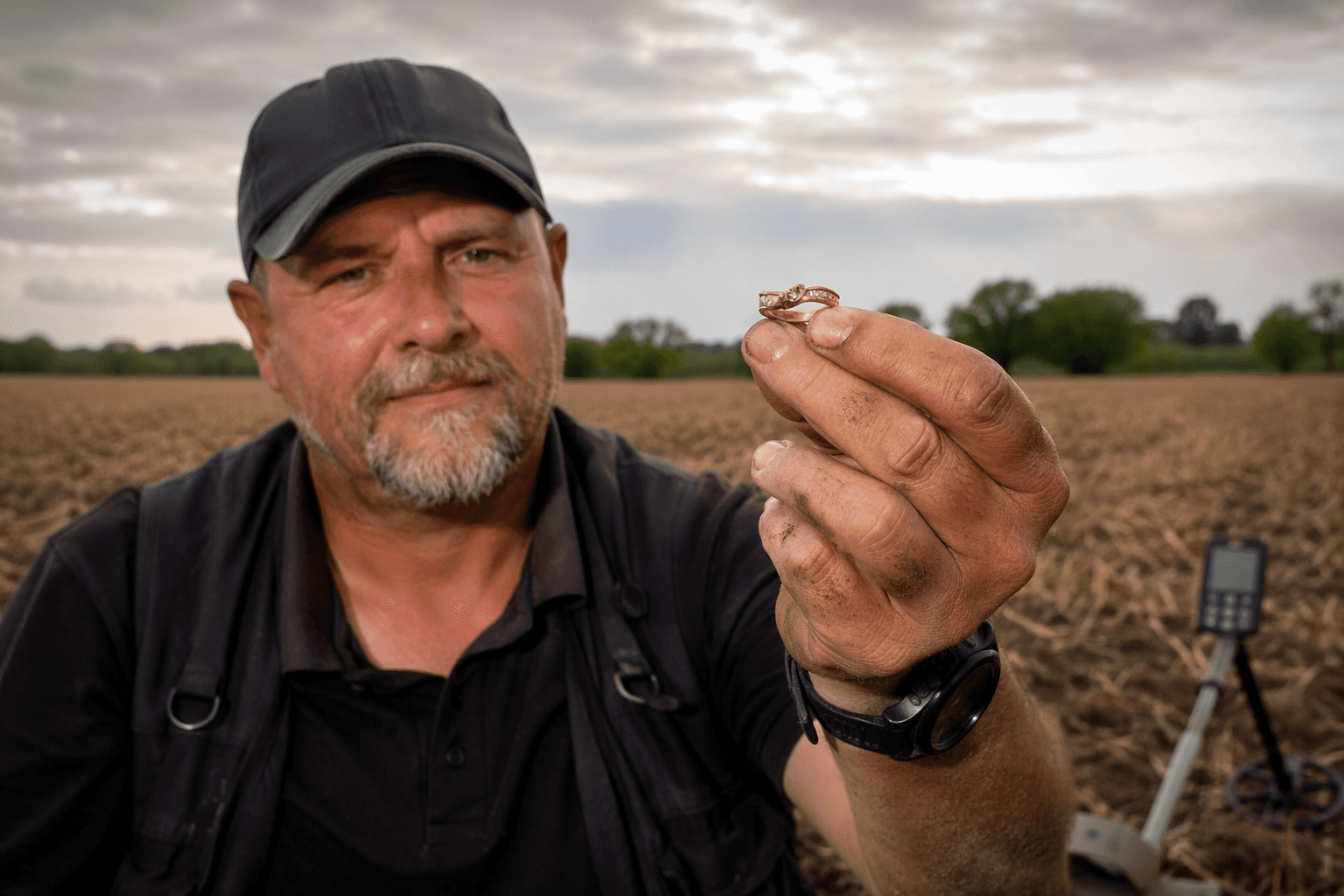
Noonans identified it as the Evesham Diamond Ring, taking the name from its discovery in the parish of Wormington near Evesham, about four miles from Broadway. The ring was recorded on the Portable Antiquities Scheme database under ref. WMID-15FCDD and disclaimed as Treasure under ref. 2025 T300. Jones, who works as a welder fabricator at Jaguar Land Rover, kept the landowner updated throughout the process, from the museum examination through to the auction room.

Noonans in London placed an estimate of £15,000 to £20,000 on the ring before it went under the hammer in the Jewellery, Silver & Objects of Vertu sale on June 23, 2026. A UK phone bidder bought it for £17,000, with the proceeds split equally with the landowner. The same sale included 14 items found by metal detectorists.
This article was produced by Prism’s automated news system from verified source data, official records, and press releases, then run through automated quality and moderation checks before publishing. The system is built and supervised by the people who set the standards it runs under. Read our full AI policy.
Did this article answer your question?