Silver coin and knee buckle find highlights Eastern Massachusetts woods hunt
A silver coin and a knee buckle show why old woods pay off in Eastern Massachusetts. Even in 90-degree heat, Silvermonkey’s hunt mixed high-value silver with an early relic.
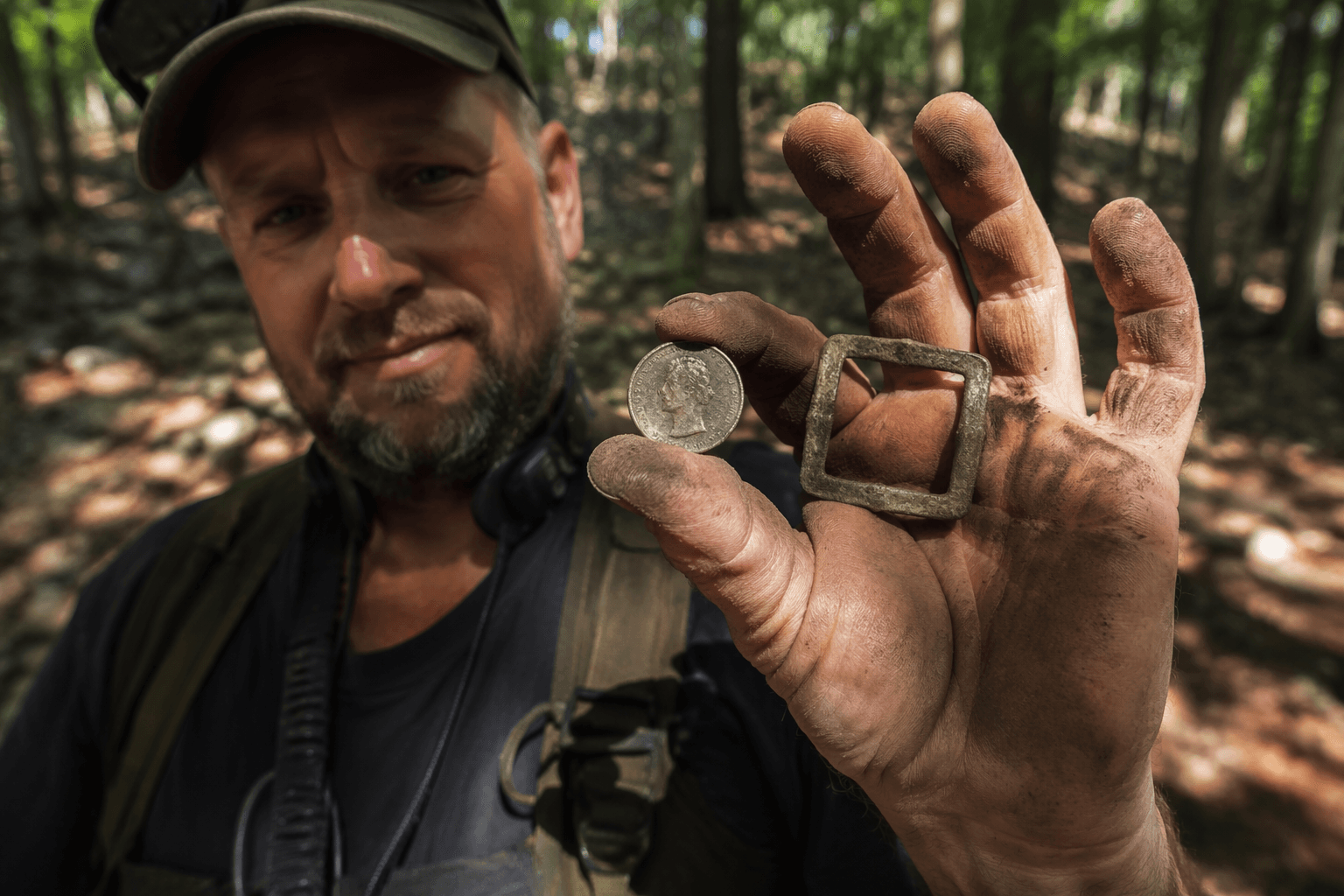
A big silver coin and a little knee buckle make a stronger woods story than either find alone. In Silvermonkey’s Eastern Massachusetts hunt, the pair points to ground that still holds both better conductors and the kind of early relics that mark long use, even when the thermometer is pushing into the 90s.
What the mixed bag says about the site
The headline find matters, but the buckle changes the picture. A knee buckle is the sort of relic that usually sits in the orbit of colonial or early post-colonial clothing and daily wear, which is why detectorists pay attention when one comes out of a patch that is also giving up silver. That combination suggests more than random loss. It suggests a site with layers, where personal items, dress hardware, and money all crossed paths in the same general ground.
That is the real appeal of a mixed recovery in old woods. A silver coin tells you the area still carries higher-conductivity targets worth chasing. The buckle tells you the same spot has older, lower-profile relics that can map how the land was used before it became just another wooded permission. When both show up in the same hunt, you are not only looking at value in the pouch, you are reading activity patterns.
Why Eastern Massachusetts woods keep producing
Eastern Massachusetts is exactly the kind of place where wooded permissions can hide this sort of spread. Old trees, limited disturbance, and long-term ground cover help preserve shallow targets that open fields often lose to grading, plowing, or repeated construction. That is why wooded sites can keep turning up buttons, buckles, and other small relics long after the obvious spots have gone quiet.
The buckle in this hunt fits that pattern. Collecting and detectorist media often group buckles with buttons and musket balls as classic colonial-era finds, and that grouping is useful for interpretation. When a site is producing that class of material alongside silver, it is usually telling you that the area saw repeated human activity over time rather than one brief drop-off of modern trash.
Heat did not stop the signal
Silvermonkey made the hunt in 90-plus degree weather, which is its own test in the Northeast summer. Heat like that changes how most of us work a permission: shorter sessions, more water, and less tolerance for wandering aimlessly through dead ground. The important part is that the hunt still happened, because summer pressure often keeps good sites from being worked as thoroughly as they should be.
That matters in Eastern Massachusetts woods, where a productive patch can reward patience. A hot-day hunt often means you stay focused on the spots with the best odds instead of trying to cover too much ground. The post’s result shows that a careful return to a known area can still produce fresh keeps, even in weather that would send many people home early.
Two machines, two ways to stay in the game
The detectors named in the hunt were an AT Pro and an XP Deus, a practical combination for a woods session. Each machine has its own feel in iron, depth, and target response, and running both gives a hunter flexibility when a site mixes old relic trash with desirable conductors. In a permission that can produce a buckle one pass and silver the next, that versatility is a real asset.
The setup also reflects how many detectorists work mixed ground now. One machine may be better suited to picking through dense trash or listening for a whispery non-ferrous signal, while the other gives a comfortable backup when conditions or target behavior change. The important point is not the brand names themselves but the approach: old wooded sites often reward hunters who can switch gears without leaving the patch.
Silver still carried strong weight in mid-July
The silver in this story was not just a nice display piece. Silver spot history for early July 2026 sat in the low $60s per ounce, with daily prices at $59.10 on July 1, $62.38 on July 3, $58.32 on July 8, and $59.87 on July 10. That means a silver recovery in mid-July had obvious bullion value even before any collector premium was added.
For detectorists, that market backdrop adds another layer to the excitement of a silver dig. A coin in the ground always carries the historical punch first, but strong silver prices make the recovery feel even sharper when it lands in the pouch. In a hunt like this, the coin and the buckle are not competing stories. They are two parts of the same read on the site.
Why the thread connected with other detectorists
This hunt did not stay a private win. The TreasureNet thread drew at least 11 replies and 352 views, which is the kind of response you get when a post mixes recognizable relic appeal with a clean silver hit. Silvermonkey’s profile also shows 5,529 messages, a 13,639 reaction score, and two banner finds, so this was not a casual one-off post from a brand-new account.
That experience level helps explain why the story resonated. A seasoned detectorist knows that a buckle can matter as much as a coin, especially in old woods where the buckle may be pointing to the right era and the silver may be pointing to the right part of the site. The value is in the combination, not just the headline item.
The best part of the hunt is the way it ties the whole picture together: tough heat, an old Eastern Massachusetts permission, two proven detectors, and a pouch that held both silver and a small buckle. That is the kind of mixed recovery that tells you the ground still has layers, and that the next pass through the woods may be just as revealing as the first.
This article was produced by Prism’s automated news system from verified source data, official records, and press releases, then run through automated quality and moderation checks before publishing. The system is built and supervised by the people who set the standards it runs under. Read our full AI policy.
Did this article answer your question?