App-Based Mindfulness Training Shows Gender Differences in Emotional Benefits
Women cut angry reactions by a medium-large effect (d = −0.56) in a four-week app trial; men on the same program showed no significant change.
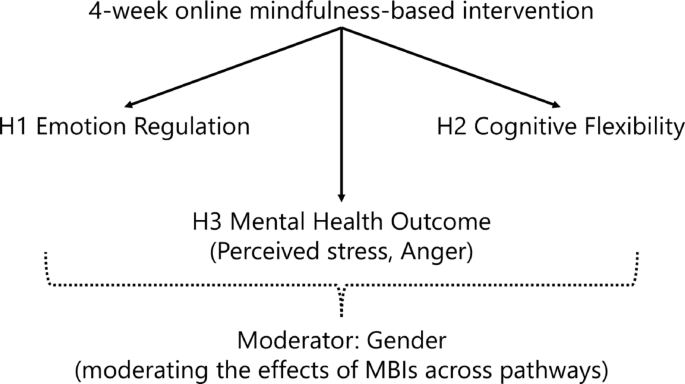
Women who completed four weeks of daily app-based mindfulness training reduced their angry reactions with a medium-to-large effect size (Cohen's d = −0.56, p < 0.001). Men on the identical program showed no significant change on that measure. That gender gap in emotional outcomes, drawn from a randomized crossover trial of 300 Japanese workers, anchors one of the clearest subgroup signals to emerge from the growing body of research on digital mindfulness-based interventions.
The trial was conducted by Koichiro Adachi, Takumu Kurosawa, and Ryu Takizawa, who recruited working adults employed at least 20 hours per week during 2022-2023 in Japan. Participants were randomly assigned to either an immediate-intervention group or a waitlist control in a crossover design. The four-week program ran through a smartphone app, with daily guided sessions built around breathing and body-scan meditations. Supplementary modules added loving-kindness and open-monitoring components. At baseline and post-intervention, the team measured perceived stress, anger, psychological flexibility, self-esteem, and multiple emotion-regulation outcomes.
The angry-reaction finding was not the only gender-differentiated result. Interaction analyses also revealed a group-by-gender effect for cognitive flexibility (p = 0.023), and simple-slope analyses showed that women gained on that measure too (p = 0.034, Cohen's d = 0.36), while men again showed no significant change. The authors call the full pattern "tentative": neither interaction survived correction for multiple comparisons, and the exploratory analyses are explicitly framed as hypothesis-generating rather than confirmatory.

Those limits are substantial, including the short duration, app-only format, non-clinical Japanese working-adult sample, and uncorrected interaction effects. But the 300-person sample and within-subject crossover design are genuine methodological strengths for this literature, and the directional consistency across two emotion-regulation facets gives the signal some weight.
For practitioners tracking their own progress inside a mindfulness app, the most concrete implication is which subskills to monitor: cognitive flexibility and angry reactions were the two measures where the brief daily program, blending body-scan, breathing, loving-kindness, and open-monitoring sessions, produced detectable change within four weeks. Adachi and colleagues call for follow-up preregistered personalization studies to test whether gender-sensitive content, different practice emphases, or adjusted session frequency could improve outcomes for participants who showed smaller gains, and whether the pattern replicates beyond its current Japanese working-adult context.
This article was produced by Prism’s automated news system from verified source data, official records, and press releases, then run through automated quality and moderation checks before publishing. The system is built and supervised by the people who set the standards it runs under. Read our full AI policy.
Did this article answer your question?