April Dávila’s Mindful Writing Workshop Blends Meditation and Storytelling
April Dávila turns meditation into a practical writing tool, with a two-part live workshop built to quiet perfectionism and get new pages moving.
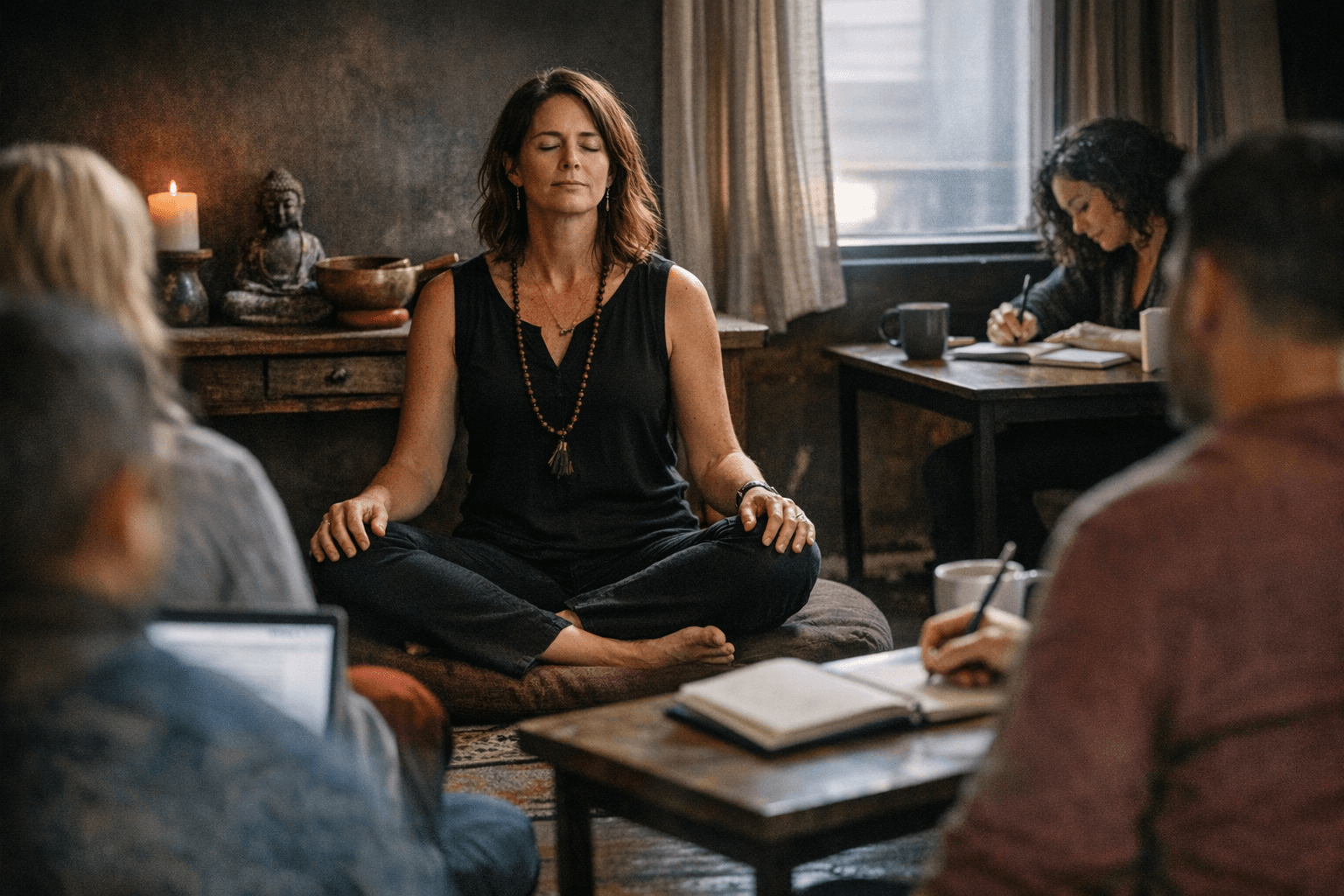
April Dávila is taking mindfulness out of the meditation corner and placing it right at the desk. Her two-part live online workshop, The Quiet Page: Mindful Writing Workshop, meets on April 21 and April 28, 2026, at 3 p.m. PT, and it is built for writers who want steadiness, self-compassion, and a way through creative gridlock.
Mindfulness, but make it useful on a deadline
The promise here is not a vague reset. Dávila’s workshop treats meditation as a working tool for the exact pressure points that stall writing: distraction, doubt, perfectionism, and the knot of resistance that can make even a promising draft feel out of reach. Instead of separating inner calm from the page, the class folds mindfulness directly into the writing process, so the practice supports the next sentence, the next paragraph, and the next decision.
That framing matters because many writing classes spend most of their energy on craft alone. Dávila’s approach recognizes something writers know instinctively: the obstacle is often emotional before it is technical. A draft does not usually stop because a writer forgot how to structure a scene. It stops because the inner noise gets loud, the self-criticism turns sharp, and the page starts to feel heavier than it should.
What the two-part workshop is designed to do
The Quiet Page is aimed at both aspiring and established writers, and the pitch is practical from the start. No meditation experience is necessary, which lowers the barrier for anyone who is curious about mindfulness but wary of classes that assume a spiritual background or years of practice. That openness makes the workshop feel less like an add-on wellness activity and more like a usable craft support.
Dávila says she will use simple mindfulness practices to help participants move through resistance with more steadiness, quiet the inner noise, reconnect with the joy of storytelling, and build a more sustainable writing practice. Those goals are specific, and they speak directly to the problems that can turn a writing session into a fight.
What that looks like in practice is a repeatable structure writers can return to whenever they get stuck. The workshop is not asking people to master an abstract philosophy. It is offering a way to sit down, settle the nervous system, and keep the page moving.
Why this approach lands with stuck writers
The appeal of Dávila’s class is that it understands writing as both a creative and an emotional discipline. When perfectionism takes over, people can lose momentum before they have a chance to discover what the draft wants to become. When deadlines pile up, even experienced writers can begin to treat the page as an adversary. Dávila’s workshop answers that friction with a steadier method: attention, breath, and guided support woven into the writing session itself.
That is what makes this such a strong mindfulness story for the writing community. The benefit is not just a calmer mood. It is something visible and concrete, like pages on the desk, a draft that moves again, or a clearer relationship to one’s own process. For writers who want more than inspiration and less than a full life overhaul, that kind of immediacy is the point.
Write More, Suffer Less expands the same model
The Quiet Page sits alongside a longer offering that shows just how central this work is to Dávila’s teaching. Write More, Suffer Less runs on Thursdays from April 16 through May 21, 2026, from 10 a.m. to 12 p.m. PT. Hosted by Dávila in collaboration with Hugo House, the course is described as a class for writers of all genres and experience levels who want to write with more ease, depth, and self-compassion.
Hugo House says the course uses mindfulness and meditation techniques to work with resistance and shift the relationship to writing. It also says participants are expected to leave with new pages, new insights, and a toolkit of mindfulness practices they can return to whenever writing feels stuck. That combination of guided meditation, short lessons, and writing exercises gives the class a shape writers can actually reuse on their own.
The larger series reinforces what the workshop suggests: this is not about making writing feel effortless. It is about making the process less punishing, so the work can continue.
The background behind the teaching
Dávila’s credibility in this space comes from both literary and mindfulness training. She is an award-winning author, speaker, and writing coach, and her debut novel, 142 Ostriches, won the WILLA Literary Award for Women Writing the West. Publishers Weekly called the novel a “vivid, uplifting debut,” a description that fits the kind of writer she seems to be coaching others to become: attentive, grounded, and willing to trust the work.
Her mindfulness credentials are equally central. She is certified as a mindfulness instructor by the Greater Good Science Center at the University of California Berkeley, and she says she trained in mindfulness teacher training with Jack Kornfield and Tara Brach. That background helps explain why her writing instruction feels different from standard productivity advice. The mindfulness is not decorative; it is embedded in the method.
Dávila also founded Sit Write Here, a coaching company built to help writers reduce writer’s block, get first drafts on the page, edit more effectively, and finish novels with more joy and less stress. She says she has helped hundreds of writers write more and suffer less, and she co-founded the online mindful writing community A Very Important Meeting. Together, those projects sketch a clear throughline: she is building an ecosystem where writing support and mindfulness practice feed each other instead of competing for attention.
A larger public project is taking shape
The workshop also points toward Dávila’s next major publication. Her forthcoming nonfiction book, Sit Write Here: 6 Mindfulness Practices to Help You Write More and Suffer Less, is due from St. Martin’s Press in July 2026. That book title alone captures the core of her teaching philosophy: writing becomes more sustainable when writers are given practices that help them meet resistance without spiraling into self-sabotage.
For anyone trying to get unstuck, that is the real value of this moment in Dávila’s work. The Quiet Page offers a live, structured entry point. Write More, Suffer Less extends the method over several weeks. The book will carry the same idea into print. Together, they make mindfulness feel less like a side interest and more like a craft tool for getting words back onto the page.
This article was produced by Prism’s automated news system from verified source data, official records, and press releases, then run through automated quality and moderation checks before publishing. The system is built and supervised by the people who set the standards it runs under. Read our full AI policy.
Did this article answer your question?