Art of Living pushes corporate mindfulness to sharpen leadership
Art of Living is pitching meditation as a boardroom tool, with corporate sessions built to sharpen decisions, communication and conflict response under nonstop digital pressure.
Mindfulness is moving into the boardroom
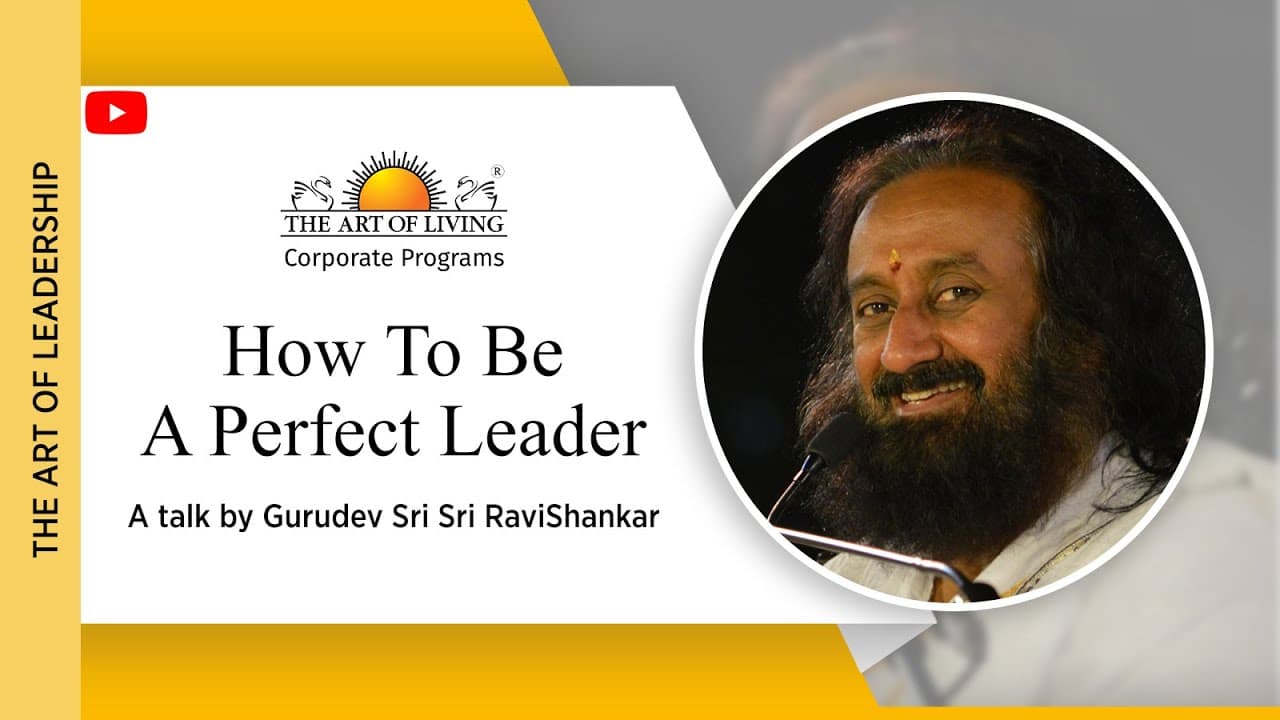
Gurudev Sri Sri Ravi Shankar’s message lands squarely in the workplace: the pressure of nonstop messages, meetings and decisions is now a leadership issue, not just a personal stress issue. In that setting, meditation is being framed less as an escape and more as a tool for staying calm, clear and effective when the inbox will not stop.
That shift matters because the promise is practical, not abstract. The Art of Living says its corporate programs are designed for leadership, team-building and change management, with a direct aim at improving leadership skills, decision-making ability, communication, intuition, innovation and people-management skills. In other words, the pitch is about what happens in real meetings, real conflict and real executive calls.
What changes in the workplace
The corporate case for mindfulness gets concrete fast. If a leader is making faster decisions, the claim is not that they become less busy, but that they become less reactive. If meetings sound different, the goal is not a softer culture for its own sake, but clearer communication, less friction and a better response to disagreement.
That is where the boardroom behaviors come into focus:
- decision speed, by reducing the mental noise that slows judgment
- meeting tone, by making communication more measured and less combative
- email overload, by helping leaders create a pause instead of a reflexive reply
- conflict response, by replacing knee-jerk escalation with steadier action
The Art of Living says its workshops run from 1.5 hours to 3 full days, which gives employers a wide range of entry points. A short session can function as a reset for a team under pressure, while a longer format is built for deeper work on leadership habits and organizational change.
APEX targets senior executives
For senior leaders, the organization’s APEX program is the clearest example of how mindfulness is being packaged for business culture. It is aimed at senior executives, CXOs and functional heads, and it emphasizes strategic foresight, intuitive decision-making, executive presence and culture-building.
That matters because it moves the conversation beyond personal wellness. A program like APEX is not just about stress relief after work, it is about how leaders carry themselves in the room, how they read risk, and how they shape a team’s response to uncertainty. The program description also ties those outcomes to improved teamwork, creativity and innovation, which is exactly where many companies now hope mindset training will have a measurable payoff.
The research backdrop is part of the sales pitch
The Art of Living is not shy about citing research support. Its corporate program pages reference Harvard Medical School, Yale University, Stanford University, AIIMS New Delhi, NIMHANS Bengaluru and TISS Mumbai as part of the evidence base it points to when describing its work.
The organization also says more than 100 independent studies have linked Sudarshan Kriya with reduced stress, anxiety and depression, along with better sleep quality, increased immune function and lower blood pressure. That is the most important reality check for readers: the claims are broad and encouraging, but they are still framed as links and outcomes reported across studies, not a promise that every executive will leave a workshop transformed.
For business readers, the useful takeaway is that the evidence conversation has already moved beyond theory. The question is no longer whether mindfulness can be discussed in a corporate setting, but which outcomes companies actually want from it, and how they want to measure them.
A long-running movement now aimed at modern leadership
The corporate push sits inside a much older spiritual movement. The Art of Living says Gurudev Sri Sri Ravi Shankar has taught breath-based meditation techniques since 1981, founded the organization in 1981, and that Sudarshan Kriya came into being in 1982 in Shimoga, Karnataka, after a ten-day period of silence.
The scale of that movement helps explain why its business programs have gained traction. The organization says its corporate work has reached more than 510,000 participants across 615-plus organizations in 30-plus countries, and that more than 25 years of corporate training has reached over 300,000 individuals worldwide. It also says its broader work now reaches 150-plus countries and more than 450 million people, while another official site places the total at over 800 million worldwide.
That kind of reach has helped push meditation into mainstream leadership culture. Newsweek has noted that public figures including Oprah Winfrey, Sundar Pichai, Arianna Huffington and Marc Benioff have spoken publicly about meditation practices, underscoring how far the topic has traveled from the fringe into executive conversation.
How readers can access something similar
The most practical part of the story is that this is not limited to elite retreats or one-off inspiration. The Art of Living says its corporate sessions can be delivered in formats as short as 1.5 hours, which makes them realistic for employer-based training, and as long as three full days for deeper leadership development.
For teams looking for a workable entry point, the clearest path is to look for employer-sponsored wellness or leadership programming that includes breathing tools, decision-making support and communication training. For individuals, the most accessible version is often the short-format workshop, which offers a bounded way to test whether meditation changes how you handle the next hard meeting, the next tense email and the next call you have to make under pressure.
The larger point is simple: mindfulness is no longer being sold as a quiet corner away from work. In the Art of Living’s corporate framing, it is becoming a tool for the exact moments when work gets loudest, fastest and hardest to manage.
This article was produced by Prism’s automated news system from verified source data, official records, and press releases, then run through automated quality and moderation checks before publishing. The system is built and supervised by the people who set the standards it runs under. Read our full AI policy.
Know something we missed? Have a correction or additional information?
Submit a Tip