Mindfulness training lowers depression in athletes by building resilience
Resilience, not just relaxation, looks like the pathway. In 401 athletes and a 50-athlete trial, mindfulness cut depressive mood by strengthening bounce-back capacity.
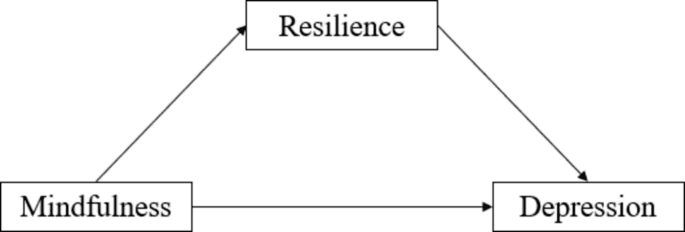
Mindfulness training seems to lower depressive mood in athletes, but the useful part of this paper is not a vague calm-down story. The clearest signal is that resilience appears to be the bridge between mindfulness and better mood, which is exactly the kind of finding coaches and sport psychologists can use.
Published in *Mindfulness*, the Springer Nature journal, the paper by Fengbo Liu, Jinjin Li, and Qingyang Yu looks at athletes through a performance lens instead of a wellness slogan. It asks a simple but important question: does mindfulness help athletes feel less depressed, and is that benefit explained by resilience?
What the study found
The researchers used two complementary studies. The first was a cross-sectional survey of 401 athletes, who were measured with three standard tools: the FFMQ for mindfulness, the CD-RISC-10 for resilience, and the CES-D for depressive symptoms. In that group, higher mindfulness was significantly associated with lower depression and higher resilience, and resilience significantly mediated the link between mindfulness and depressive mood.
That mediation detail matters. It says the relationship is not just that mindful athletes happen to feel better, but that the ability to recover from pressure, setbacks, and stress may be part of how mindfulness works. For anyone who has watched an athlete spiral after a bad performance, that is a much more useful frame than “meditation makes you chill.”
The intervention test is where it gets interesting
The second study moved beyond correlation. Fifty athletes were randomized to either a seven-week mindfulness group or a waitlist control group, with measurements taken before and after the program. After training, the mindfulness group showed significant increases in mindfulness and resilience, along with a significant decrease in depression scores compared with the control group.
The most important line in the results is also the most practical: the indirect effect through resilience was significant, while the direct effect of mindfulness training was not significant in the intervention study. In plain English, the mood benefit seems to flow largely through resilience rather than through a simple one-step lift in mood.
That is the part coaches should stop and underline. If the direct path is weak and the indirect path through resilience is strong, then mindfulness is not just a pre-competition relaxation trick. It is a skill-building tool for recovering after a blown rep, a bad split, a loss, or a month of training stress.
Why this matters in sport, not just in a meditation studio
This paper lands in the middle of a much bigger athlete mental health conversation. The International Olympic Committee’s consensus work has already made clear that mental health problems among elite athletes are prevalent, and the *British Journal of Sports Medicine* has carried that conversation forward through the IOC consensus statement. NCAA data collected in the 2022-23 academic year also showed how wide the issue is, with 23,272 current student-athletes participating in the national Student-Athlete Health and Wellness Study.
That broader context matters because it keeps mindfulness from being treated as a fringe add-on. In college and elite sport, the question is not whether athletes need more pressure. They already have plenty. The real question is which mental skills help them absorb that pressure without paying for it later in depressive symptoms, burnout, or mental fatigue.

Earlier athlete research has already connected mindfulness with burnout, subjective well-being, flourishing, cognitive function, and resilience. This new paper adds a sharper point: resilience may be the mechanism that makes mindfulness more than a feel-good practice. It gives the sports world a cleaner target than “be more mindful” and pushes the conversation toward “build the capacity to recover.”
What coaches, trainers, and athletes should do differently
If resilience is the real lever, then mindfulness programming should be judged by more than whether an athlete says they feel relaxed after a session. The useful question is whether they rebound faster after stress and keep their head after disruption.
That changes how you think about implementation:
- Build mindfulness into performance support, not just recovery time. The goal is not only to lower arousal before competition, but to strengthen the athlete’s response to adversity.
- Track resilience alongside mood. The study used the CD-RISC-10, which is a reminder that resilience can be measured instead of assumed.
- Look for changes after setbacks, not just after calm sessions. If an athlete handles a poor race, a bad practice, or a tough stretch with less emotional collapse, that is the relevant win.
- Treat mindfulness as part of sport psychology, not a wellness perk. The study’s strongest result points to a mechanism that belongs in performance conversations, injury comeback plans, and team mental health support.
That framing is also more honest. Mindfulness is not a cure-all, and this paper does not pretend otherwise. It suggests a narrower but more actionable benefit: athletes who train mindfulness may become better at recovering from the kind of stress that drives depressive mood in the first place.
The takeaway is simple and practical. If you are using mindfulness with athletes, stop measuring success only by how calm they look in the moment; start asking whether they bounce back faster the next time sport punches them in the face.
This article was produced by Prism’s automated news system from verified source data, official records, and press releases, then run through automated quality and moderation checks before publishing. The system is built and supervised by the people who set the standards it runs under. Read our full AI policy.
Know something we missed? Have a correction or additional information?
Submit a Tip