Augmented reality mindfulness shows promise for chronic low back pain
An AR body-scan pilot suggests mindfulness may be easier to stick with when it is visual, guided, and built around pain care. The early signal is usability, not proof.
Why this pilot matters
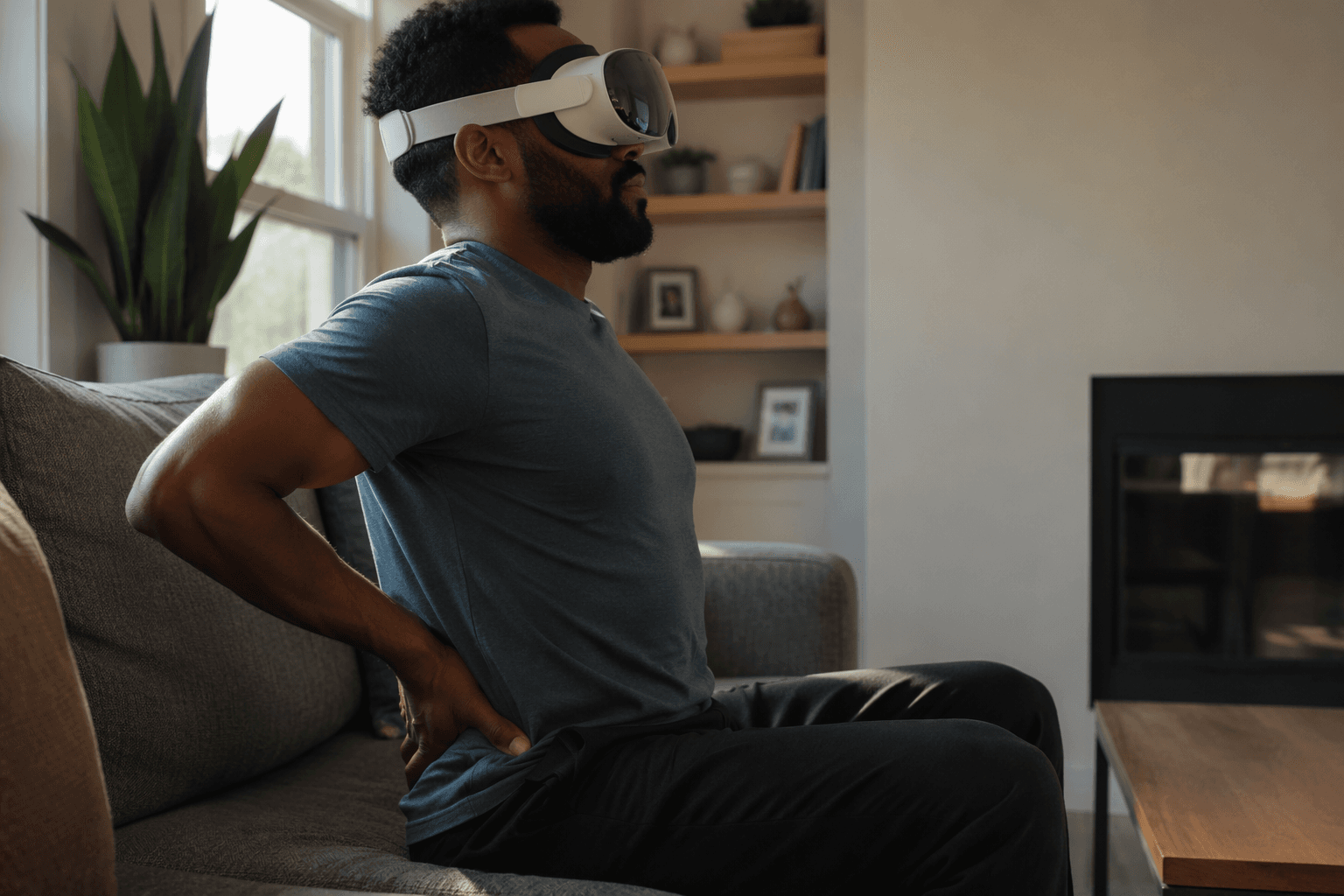
Chronic low back pain is exactly the kind of problem that pushes mindfulness into practical territory. The condition is shaped not only by tissue damage, but also by attention, muscle tension, stress, fear, and movement avoidance, which is why a guided body scan can be more than a relaxation exercise. This pilot tests a simple but important idea: if mindfulness is delivered through augmented reality instead of a static audio track or a classroom-style lesson, will people stay with it more easily?
That question lands in a huge public-health landscape. The World Health Organization says 619 million people lived with low back pain in 2020, with cases projected to climb to 843 million by 2050. It is the leading cause of disability worldwide, and about 90% of cases are non-specific, which leaves a lot of room for nonpharmacological care that can be used at home, alongside rehabilitation, or without medication.
What the augmented reality version changes
The intervention in this study paired psychoeducation with a mindfulness-based stress reduction body-scan component. That matters because the format is not trying to invent a new practice from scratch. It is repackaging a familiar mindfulness tool in a more immersive frame, with visual support that may help people who struggle with abstract instructions or who simply find it easier to follow attention when it is scaffolded by technology.
That is where the comparison with standard mindfulness instruction becomes useful. Traditional delivery often depends on audio guidance, written handouts, or in-person teaching, all of which can work well but may feel less interactive or less engaging for people dealing with pain, fatigue, or concentration problems. AR changes the presentation, and that could affect access, adherence, and patient experience even before it changes pain scores.
The broader clinical logic is strong. If the practice feels more concrete, easier to navigate, and less mentally effortful to begin, then it may become something people actually repeat. In pain care, repetition is the whole game, because a method that is technically sound but hard to use at home will never reach its full value.
What the early data actually shows
The most useful way to read this pilot is as a feasibility and user-experience study, not a final verdict. A 2025 Frontiers in Pain Research paper on the same concept included 40 participants across two one-arm studies. Dropout was 10% in Study I and 0% in Study II, which points to strong acceptability for a new digital format that asked people to engage with both education and a body-scan practice.
Study II also showed a significant reduction in negative affect and improved valence after the enhanced AR body-scan intervention. That is encouraging because it suggests the experience may be doing more than simply occupying attention. It may be shifting the emotional tone around pain, which is one of the areas mindfulness-based approaches are often aiming to influence.
Still, a one-arm pilot cannot yet tell you whether AR is better than conventional mindfulness instruction, whether it beats usual care, or whether the benefit lasts once the novelty wears off. What it can show is that the approach is technically workable, acceptable to participants, and promising enough to justify a more rigorous trial.
Why the evidence base already points this way
This pilot did not appear in a vacuum. In 2017, the American College of Physicians recommended nonpharmacologic treatment first for chronic low back pain, including exercise, multidisciplinary rehabilitation, acupuncture, and mindfulness-based stress reduction. That guideline matters because it places mindfulness inside mainstream pain care rather than on the fringe, and it does so with moderate-quality evidence behind MBSR.
The wider burden numbers make that guidance harder to ignore. A 2023 Global Burden of Disease analysis found that low back pain caused 69 million years lived with disability in 2020 and projected a 36.4% rise in cases by 2050. The burden is especially high in Central Europe, Eastern Europe, and Australasia, which reinforces why low-cost, noninvasive, scalable tools remain so attractive.
The research ecosystem around low back pain has been building in the same direction. The Stanford Center for Low Back Pain was described in 2022 as a National Institutes of Health P01-funded multidisciplinary research center, and a Stanford-associated 2022 protocol outlined large randomized trials comparing mindfulness-based stress reduction, cognitive behavioral therapy, and acupuncture. That kind of work shows that the field is moving toward mechanism, comparison, and implementation, not just broad promises.
How this compares with other mindfulness pain findings
The AR pilot also sits alongside newer clinical evidence that mindfulness can matter in harder-to-treat groups. A 2025 randomized clinical trial in adults with opioid-treated chronic low back pain found that both mindfulness-based therapy and CBT improved pain, function, quality of life, and opioid dosage at 6 and 12 months. The key point there was not that one approach beat the other, but that structured mind-body care can produce meaningful gains even in a complex population.
That makes the AR idea feel less like a novelty and more like a delivery problem. The question is no longer whether mindfulness belongs in chronic pain care, because the guideline and trial literature already support that direction. The real question is whether immersive tech can make the practice easier to adopt, easier to repeat, and easier to fit into daily life without stripping away what makes the exercise effective.
Researchers named across this space, including Manuela Ferreira, Sean Mackey, Beth Darnall, Philippe Goldin, Robin Conen and Ana N. Tibubos, reflect how multidisciplinary this work has become across Stanford, the University of Washington School of Medicine, Trier University, Trier University of Applied Sciences and University Medical Center Mainz. That breadth matters because this is not just a tech story or just a mindfulness story. It is a pain-care story about delivery, uptake, and whether the format helps people stay engaged long enough for practice to matter.
For anyone following mindfulness-based pain care, the takeaway is practical: augmented reality is showing a plausible route to make body-scan work feel more usable, not merely more futuristic. The pilot signal is promising because it improved feasibility, user experience, and emotional response, but the decisive test will still be whether larger trials can show durable benefit over standard instruction.
This article was produced by Prism’s automated news system from verified source data, official records, and press releases, then run through automated quality and moderation checks before publishing. The system is built and supervised by the people who set the standards it runs under. Read our full AI policy.
Did this article answer your question?