EEG-guided mindfulness improves depression and sleep in older adults
A 54-person trial found daily FocusZen sessions cut depression, anxiety and sleep problems in older adults, while EEG shifts hinted at a neural effect.
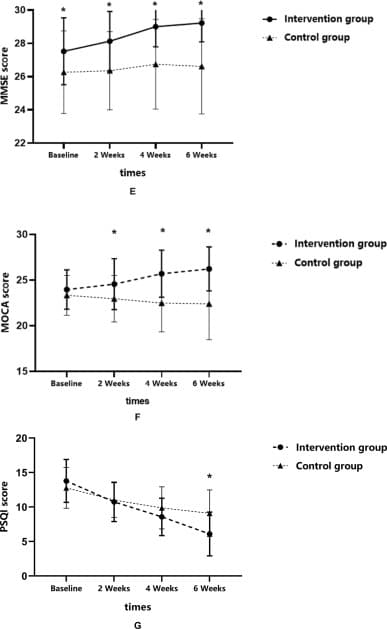
A digital mindfulness program with EEG feedback beat a health-education control in older adults with mild-to-moderate late-life depression, improving depressive symptoms, anxiety, sleep disturbance and cognition over six weeks. The question for mindfulness readers is whether that extra layer of brainwave feedback actually adds something beyond a standard app, and this trial says it might.
The study tested the FocusZen Mindfulness Stress Reduction System in Beijing under the Laboratory of Mental Disorders at Beijing Anding Hospital, Capital Medical University. Kemeng Zhu, Maoxin Hu, Chaomeng Liu, Yida Wang, Chengwei Guo, Haotian Shen, Nan Ding, Xiao Wang, Li Ren and Qinge Zhang ran the randomized trial, which was registered as ChiCTR2400086063 and published online ahead of print in the Journal of Psychiatric Research under DOI 10.1016/j.jpsychires.2026.05.037.
Fifty-four participants were split evenly, with 27 assigned to daily FocusZen sessions and 27 to general health education. The primary outcome was change in HAMD-17 depression scores. Secondary measures included HAMA anxiety, PSQI sleep quality, MoCA cognition and frontal EEG spectral activity. The intervention group did better across the board, with statistically significant gains in depression, anxiety, sleep and cognition, plus higher response and remission rates than the control group.
The most interesting wrinkle is the EEG signal. Exploratory analysis found increased frontal theta and alpha activity in the FocusZen group, which suggests the program may be doing more than delivering relaxation prompts or coping drills. Those rhythms are often tied to attention and internal regulation, so the finding gives the digital intervention a mechanistic hook that many mindfulness apps never get close to claiming.

That matters because the broader evidence base for mindfulness in older adults is still modest. A 2025 meta-analysis in The Journals of Gerontology: Series B pooled 46 studies and found an overall Hedges’ g of 0.25, with more noticeable effects for depression, sleep, anxiety and mental functioning. A 2024 systematic review of mindfulness-based neurofeedback found just 9 EEG reports and 9 fMRI reports, and said stronger controlled trials were still needed. Prior randomized work in late-life depression has also linked mindfulness-based cognitive therapy to symptom improvement and changes in brain connectivity, but those studies relied on therapist-led formats, not a product like FocusZen.
That is where the practical appeal sits. Daily at-home sessions are easier to scale than a clinic program, especially when late-life depression overlaps with sleep problems, anxiety and cognitive complaints, and access to consistent psychotherapy can be uneven. FocusZen does not look like a replacement for standard care, but it does look like a more specialized, more measurable version of digital mindfulness, one that may be worth the extra complexity only when the goal is depression plus sleep, not just a calmer meditation habit.
This article was produced by Prism’s automated news system from verified source data, official records, and press releases, then run through automated quality and moderation checks before publishing. The system is built and supervised by the people who set the standards it runs under. Read our full AI policy.
Did this article answer your question?