Breathwork outperforms body scan meditation in altered state trial
In 24 experienced adults, high-ventilation breathwork beat body scan on altered-state measures and one-week insight, but the trial was small.
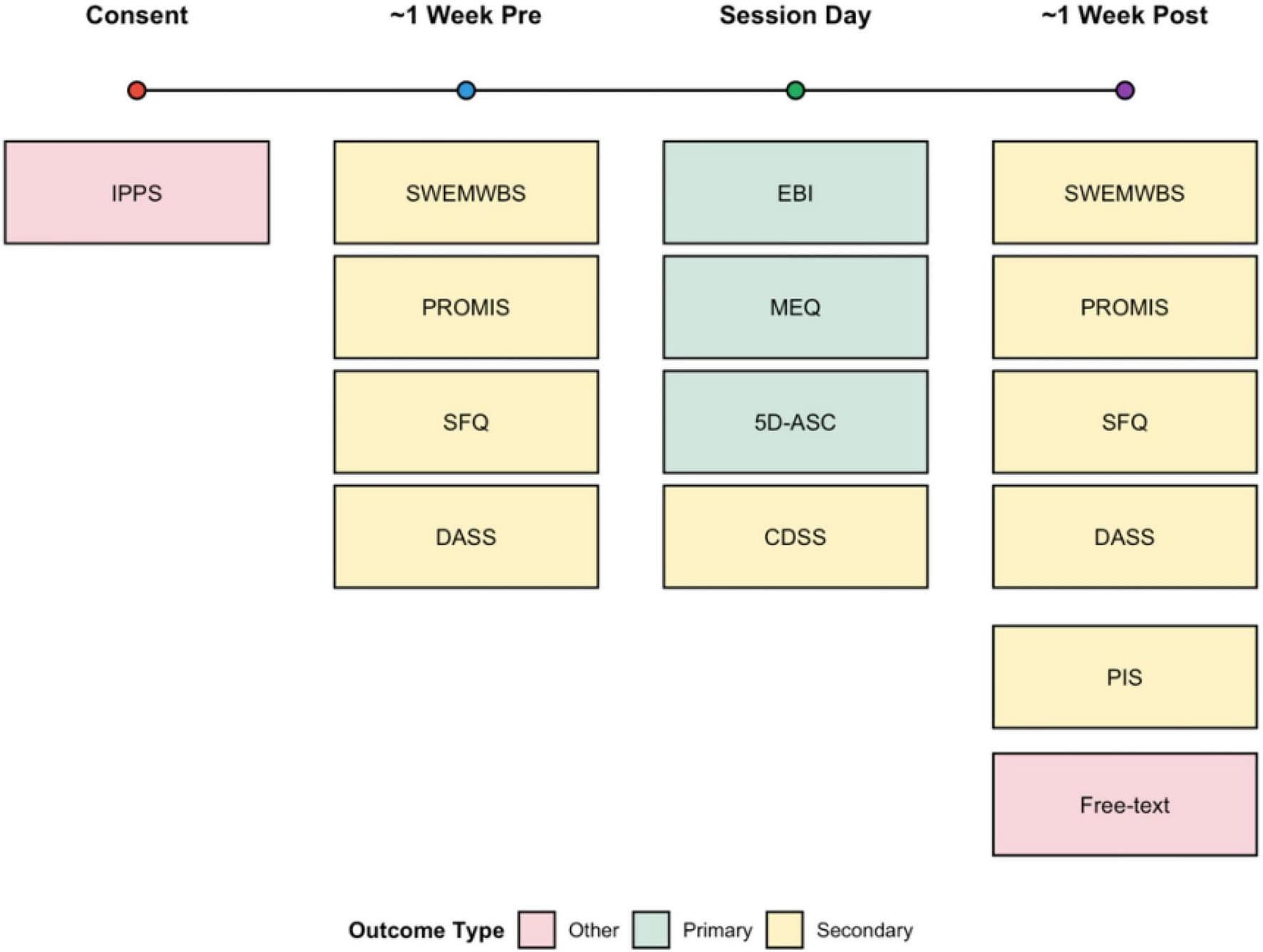
Breathwork did more than quiet the mind in this trial, it pushed past the familiar territory of meditation into altered states of consciousness. In a single-session randomized study of 24 healthy adults with prior high-ventilation breathwork experience, the practice outperformed body scan meditation on a slate of measures tied to mystical and psychedelic-like experience.
The study, published June 10, 2026 in Frontiers in Psychology as volume 17, article 1851882, was led by Guy W. Fincham, Edward Caddye, Amy A. Kartar, Elizabeth A. Lilley, Nicola Stoke and Alessandro Colasanti. The team described it as the first randomized controlled trial to test breathwork and altered states of consciousness directly, with the trial registered on ClinicalTrials.gov as NCT06916312 and sponsored by the University of Sussex.
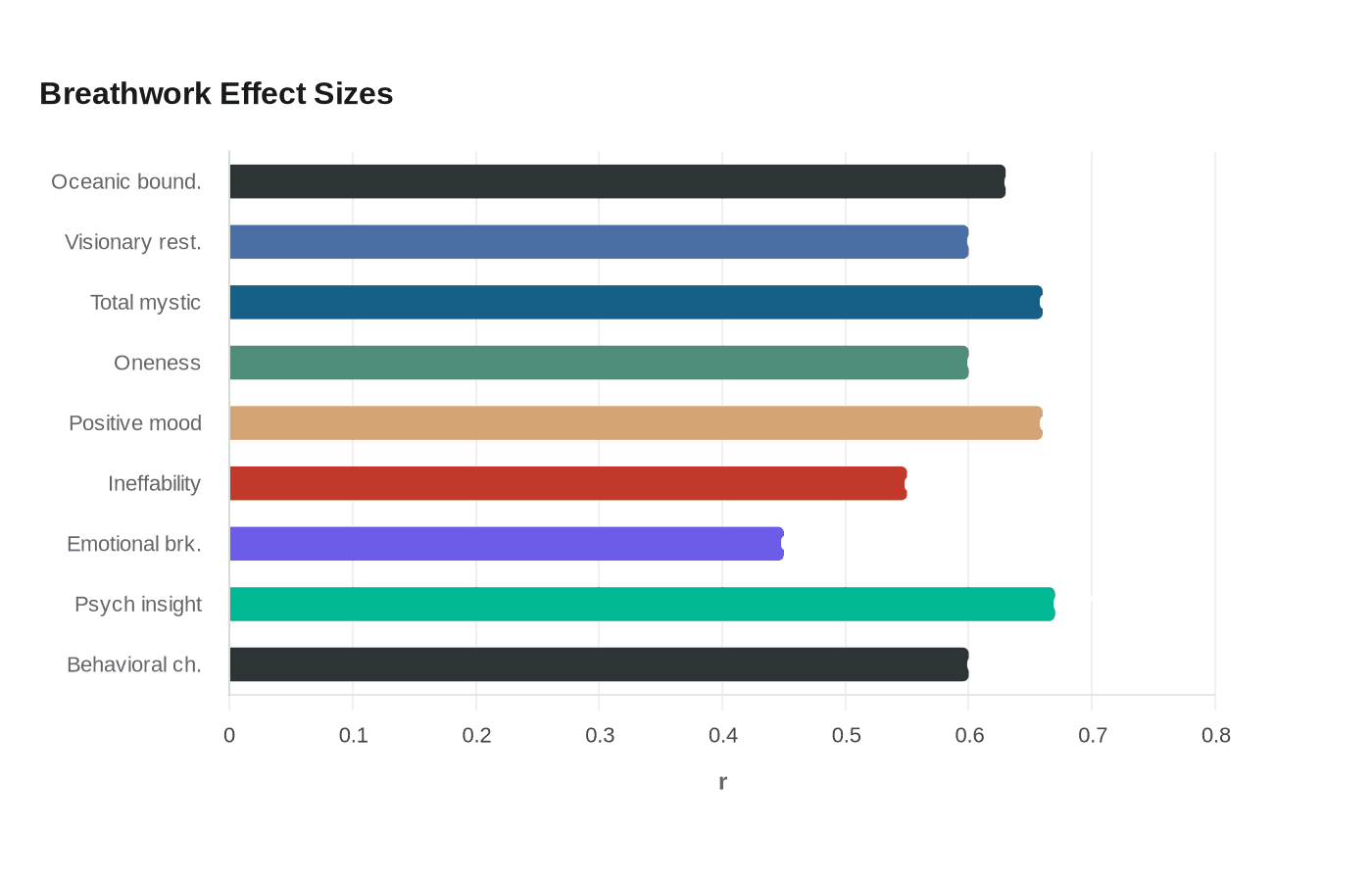
The comparison matters because body scan meditation is a familiar mindfulness baseline: steady attention, systematic awareness, no invitation to chase intensity. High-ventilation breathwork aimed at something different. According to the paper, breathwork produced larger effects than body scan meditation on oceanic boundlessness, visionary restructuralisation, total mystical experience, oneness, positive mood, ineffability and emotional breakthrough. At one-week follow-up, it was also linked to greater psychological insight and behavioral change.
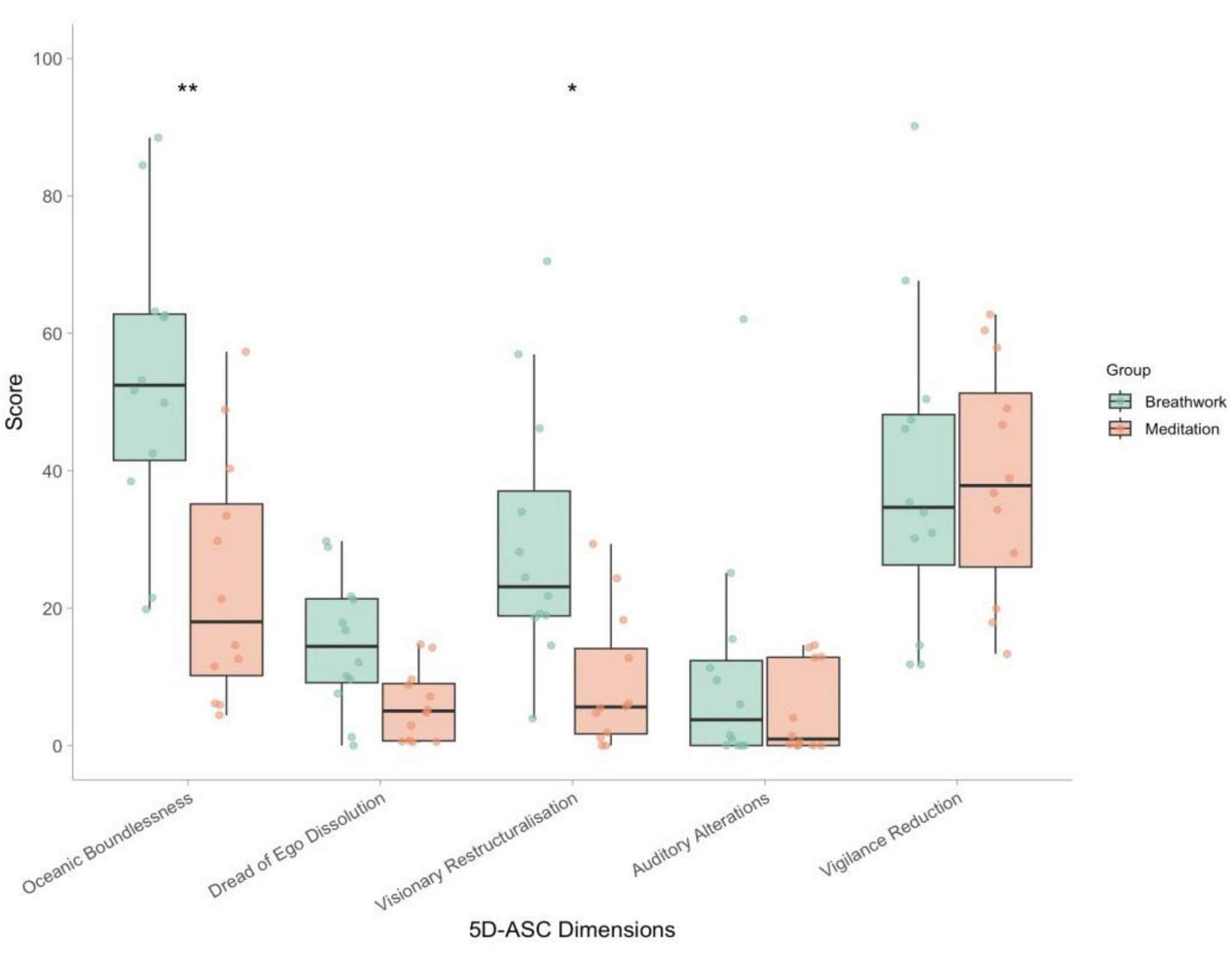
The numbers sharpen the contrast. Breathwork showed stronger effects on oceanic boundlessness, with p = 0.007 and r = 0.63, visionary restructuralisation at p = 0.018 and r = 0.60, total mystical experience at p = 0.007 and r = 0.66, oneness at p = 0.018 and r = 0.60, positive mood at p = 0.007 and r = 0.66, ineffability at p = 0.038 and r = 0.55, and emotional breakthrough at p = 0.028 and r = 0.45. One week later, psychological insight and behavioral change remained stronger after breathwork, with p = 0.002 and r = 0.67, and p = 0.008 and r = 0.60.
That is where the line gets clear for mindfulness practitioners. This was not a broad test of beginner-friendly breathing for relaxation. It was a controlled look at an intensified method, in healthy adults who already knew high-ventilation breathwork, and the authors still frame controlled research on these effects as limited. Stress, anxiety, depression and wellbeing improved in both groups over time, which keeps body scan meditation in the picture as a real contemplative tool, even if it did not trigger the same altered-state profile.
The paper also places breathwork in a longer lineage, noting that it has been used across cultures and throughout history to evoke altered states. That framing fits the broader research program around Brighton and Sussex Medical School, the University of Sussex and Sussex Partnership NHS Foundation Trust, including a 2025 brain-imaging study from the Colasanti Lab that found high-ventilation breathwork could produce powerful altered states similar to psychedelic substances, without significant fear or panic attacks but with some physical discomfort.
For anyone weighing practice choices, the takeaway is straightforward: body scan meditation stays on the mindfulness side of the line, while high-ventilation breathwork can move into a different territory entirely. The trial suggests that territory may hold promise for insight and therapeutic work, but it also belongs first to experienced practitioners working under careful supervision, not to casual experimentation.
This article was produced by Prism’s automated news system from verified source data, official records, and press releases, then run through automated quality and moderation checks before publishing. The system is built and supervised by the people who set the standards it runs under. Read our full AI policy.
Did this article answer your question?