How adolescents engage with mindfulness may decide if it works
Teen mindfulness rises or falls on participation, not just attendance. The strongest programs are the ones built for real adolescent use, not adult habits in smaller sizes.
Engagement is the question that changes the whole conversation
The real test for adolescent mindfulness is not whether it sounds helpful on paper. It is whether teenagers actually stay with it, take part in it, and use it in ways that survive the school day, the social calendar, and the pressures that keep pulling them away.
That is why the newest review matters. It treats engagement as productive involvement, a broader idea than simple attendance, and uses that lens to ask what helps or hinders mindfulness-based interventions for teens. For adolescent programs, that shift is practical, because small and inconsistent effects often have less to do with the idea of mindfulness itself than with whether the format fits young people’s lives.
The evidence base is moving toward implementation, not just efficacy
Researchers have already been circling this issue. A 2022 scoping review of universal school-based mindfulness training in adolescents searched six databases and grey literature, screened 5,479 articles, and ended up with 31 studies. Only 25 of those examined implementation factors, which is a clear sign that the field still has more to learn about how programs work in real settings, not just whether they can work under ideal conditions.
A later review in Psychiatric Services identified 24 school-based mindfulness interventions across 41 studies and rated three programs as having high evidence: Learning to BREATHE, Mindfulness in School Project, and mindfulness-based stress reduction, or MBSR. That same review also noted that few studies looked closely at underserved populations, leaving a gap between the programs most studied and the young people who may need them most.
Together, those reviews point to the same conclusion: adolescent mindfulness is no longer just a question of whether it belongs in schools. It is a question of which formats are strong enough, flexible enough, and accessible enough to hold teenagers’ attention long enough to matter.
The results are promising, but they are not simple
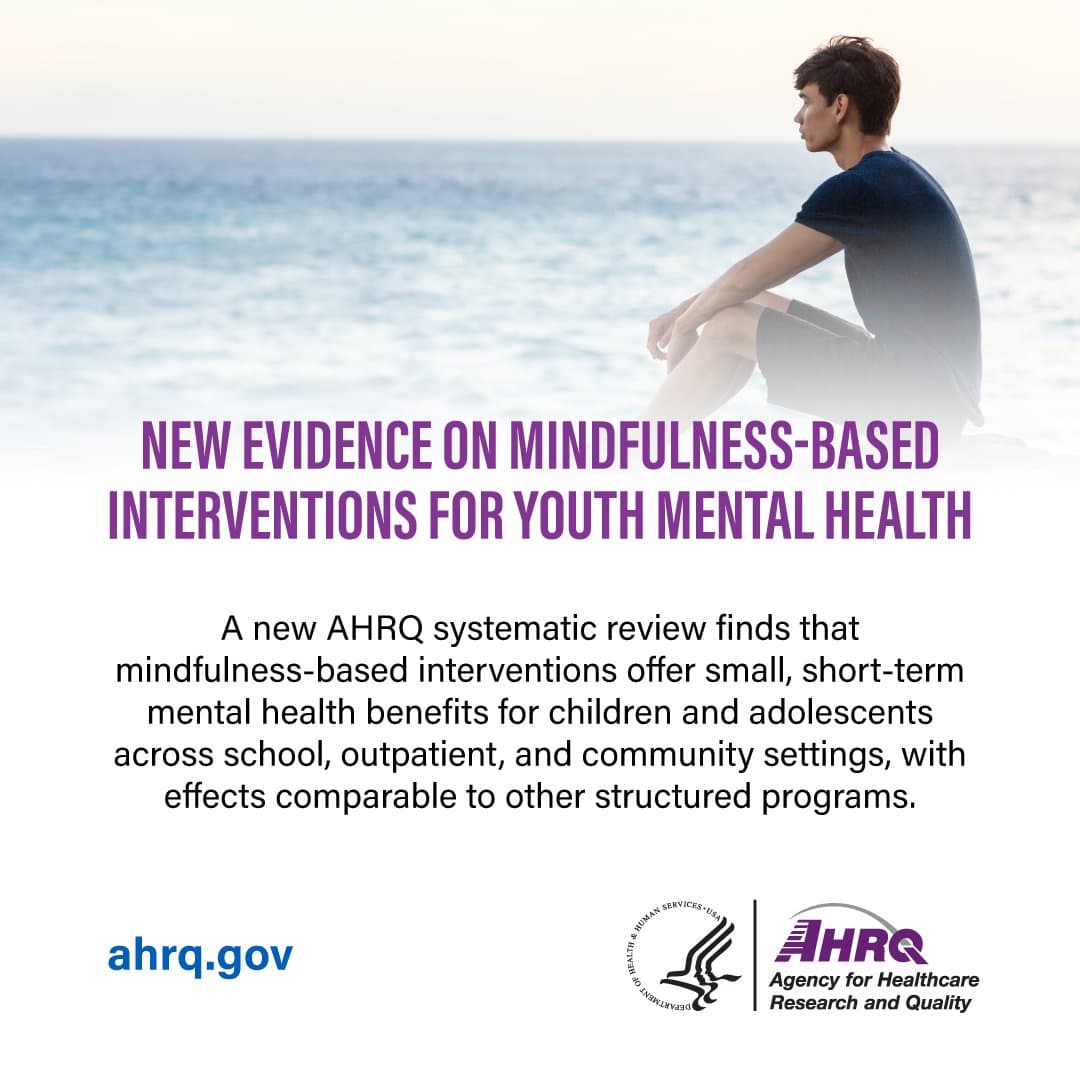
A 2024 reanalysis of adolescent school-based mindfulness trials sharpened the picture further. Using 22 randomized controlled trials with 16,558 participants, it found small improvements in anxiety and stress, with an effect size of d = 0.17, and wellbeing, with an effect size of d = 0.10, when mindfulness was compared with active controls. But there was no overall benefit versus all controls, and there were no effects at follow-up.
That pattern is important because it shows how fragile the gains can be if the program is not engaging enough to stick. Short-term shifts may appear when teens are in the room, but if the practice does not continue to feel relevant after the session ends, the benefit may evaporate before it becomes part of daily life.
For parents, schools, and program leaders, that means the design brief is bigger than meditation instruction alone. It is about whether the intervention feels usable in the real world teens inhabit.
What helps adolescents stay with mindfulness
The review’s clearest message is that mindfulness for teens cannot simply be a shorter version of an adult curriculum. A program may be evidence-based in theory, but if the language feels alien, the setting is not developmentally appropriate, or the activities do not connect with what adolescents care about, engagement drops fast.
Several design lessons come through clearly:
- Build a social structure, not just a solo practice. Adolescents are more likely to stay involved when the program feels relational and not like a private assignment they have to complete alone.
- Keep the content relevant to daily stressors. School pressure, friendships, family conflict, sleep, and screen overload are more immediate to teens than abstract wellness goals.
- Use formats that invite active participation. Passive listening is a weak fit for many adolescents, while practices that involve reflection, discussion, or brief in-class application are easier to absorb.
- Make the practice portable. If teens can carry something from the session into a hallway, a locker room, a bus ride, or a night before a test, the intervention has a better chance of becoming a habit.
Those are not cosmetic choices. They are the conditions that determine whether mindfulness feels like a meaningful tool or another program teenagers are expected to endure.
What schools and youth programs should look for
School systems and youth leaders often search for mindfulness offerings that are easy to schedule and simple to deliver. The better question is whether the format matches adolescent development. A program that fits the calendar but ignores how teens actually learn may be efficient on paper and ineffective in practice.
The strongest sign of quality is not just completion, but genuine uptake. Look for programs that create repeated practice, peer-aware structure, and clear links between the exercise and real stress. If a curriculum only works while an adult is guiding every breath, it is not yet doing the job the field now expects of it.
That same logic applies to clinics and community youth groups. Programs need enough structure to be recognizable and enough flexibility to feel relevant, because adolescents do not benefit from mindfulness simply by being exposed to it once or twice. They benefit when they can actually use it.
Why the public-health stakes keep growing
The reason schools and health systems keep returning to mindfulness is easy to understand. The PCORI and AHRQ review notes that emerging evidence points to rising youth mental health needs during the COVID-19 pandemic, with up to one in five children and adolescents experiencing clinically significant depression and as many as one in four experiencing anxiety. It also notes that nearly 12% of U.S. parents report using integrative therapies for children, including mind-body approaches such as mindfulness-based interventions.
That makes engagement more than an academic issue. When the need is this large and the appetite for integrative care is already there, programs cannot afford to lose teens to boring delivery, awkward framing, or settings that feel disconnected from their lives.
Mindfulness for adolescents is now at the point where the field has enough evidence to stop asking only whether it can help. The harder and more useful question is whether the practice is designed so teens will actually stay with it, and the best programs will be the ones that answer that question before the first session even begins.
This article was produced by Prism’s automated news system from verified source data, official records, and press releases, then run through automated quality and moderation checks before publishing. The system is built and supervised by the people who set the standards it runs under. Read our full AI policy.
Did this article answer your question?