Iraq veteran finds mindfulness and healing in bourbon tasting
At a 30-person bourbon dinner, Fred Minnick turns a small sip into a mindfulness drill for skeptics. The practice helped him steady himself after Iraq and PTSD.
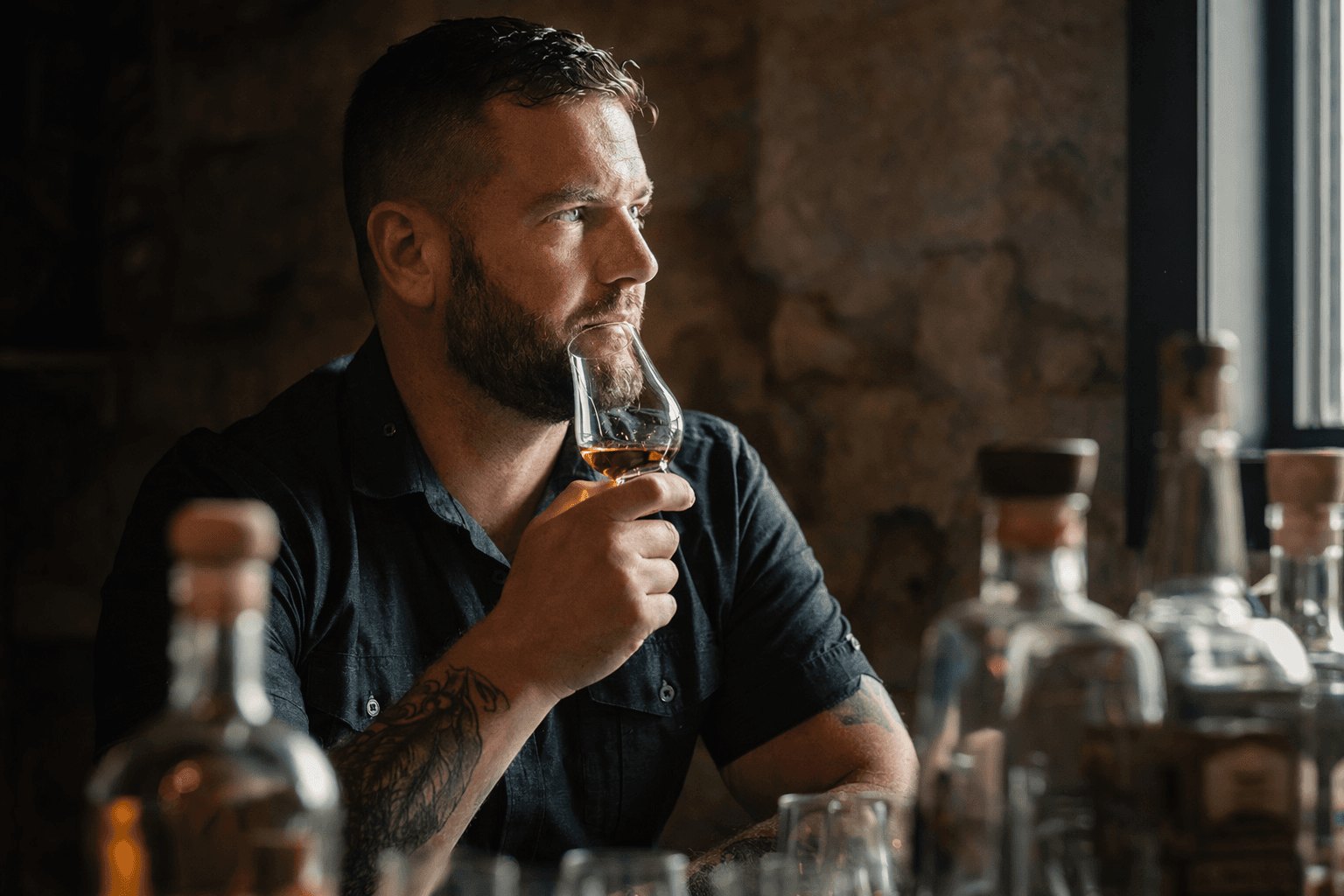
Fred Minnick does not sell mindfulness as a cushion, a clinic tool, or a wellness slogan. He turns it into a glass of bourbon, a tiny sip, and the discipline to stay with what the body actually notices.
A bourbon tasting that doubles as attention training
Inside Cordelia, in Cleveland’s historic district, Minnick hosted about 30 people for a dinner tied to his new book, *Bottom Shelf: How a Forgotten Brand of Bourbon Saved One Man’s Life*. The scene had the feel of a spirits event, but the real lesson was closer to meditation instruction: slow down, reduce the dose, and pay attention to what changes from one moment to the next.
That is what makes Minnick such a compelling entry point for mindfulness. He is not coming at the subject as a teacher on a cushion. He is an Iraq veteran and spirits writer who has built eight books mostly around bourbon and spirits, and he uses tasting as a way to show how awareness can be practiced in ordinary life. His idea of taste mindfulness asks people to hold a glass, take a small sip, and notice flavor, texture, sensation, and the body’s response before the mind races ahead.
How a small sip becomes a mindfulness practice
Minnick’s approach works because it is concrete. A tasting does not ask anyone to empty the mind or adopt a new identity; it asks for restraint, attention, and timing. That makes it especially usable for skeptics, people who may be wary of the language of meditation but are willing to experiment with a structured sensory exercise.
At the Cordelia dinner, the practice was embedded in the ritual itself. The room, the shared table, and the measured pour all created a container for attention, and the bourbon became the object of focus rather than a distraction from it. Minnick’s framing is simple but powerful: pull flavor out of life by noticing more, not by consuming faster.
For readers looking to borrow the method without the performance, the sequence is straightforward:
1. Hold the glass before tasting and pause long enough to register the urge to rush.
2. Take a small sip instead of a full swallow.
3. Notice what lands first on the tongue, then what develops in the mouth and body.
4. Stay with the aftertaste and the physical sensation long enough to see it change.
5. Stop at awareness, not at escalation.
The point is not bourbon itself. The point is the shift from automatic behavior to deliberate noticing.
Why the backstory gives the ritual real weight
Minnick’s tasting practice carries more force because of where it came from. NPR reports that he deployed to Iraq for more than a year with the National Guard, including the violent summer of 2004 in Mosul. After he came home in early 2005, he said he was angry, hypervigilant, and on edge, scanning for bombs and snipers that were not there and picking fights with people who were.
He has said his wife, Jaclyn Minnick, helped him get into therapy at the Department of Veterans Affairs, and he describes that care as life-saving. After the acute crisis, a therapist suggested mindfulness, and he began using it to pull his brain away from triggers and back into the present moment. That sequence matters: support came first, treatment came next, and mindfulness entered as part of a wider recovery rather than as a cure-all.
A 2024 SUCCESS profile adds another layer to that history. It reports that on June 24, 2004, Minnick’s team was ambushed and a grenade landed about 10 feet from him but did not detonate. The same profile says he later used exposure therapy, writing, and cognitive behavioral therapy alongside mindfulness. Taken together, those details make clear that his present-day bourbon ritual is not a cute wellness hack. It is the product of trauma, treatment, and years of learning how to stay regulated.
The tension between healing and alcohol
That tension is impossible to ignore, and it is part of what makes the story useful rather than gimmicky. Alcohol is not a universal mindfulness tool, and for many people it can complicate trauma, recovery, and self-regulation. Minnick’s story does not erase that reality; instead, it shows one person using a familiar ritual in a tightly structured way, with attention and restraint at the center rather than intoxication.
The distinction matters. In Minnick’s telling, the lesson is not “drink to heal.” It is that almost any repeated action can become a practice if it is slowed down, bounded, and examined honestly. A tasting table, in that sense, becomes a laboratory for awareness, but only because the goal is perception, not escape.
That is why his work speaks to more than bourbon fans. It opens a door for readers who have dismissed mindfulness as abstract or overly polished. Here, mindfulness lives inside a social dinner, with real stakes, real memory, and a real veteran who knows what it is like to live in a body stuck on alert.
What skeptics can take from Minnick’s method
Minnick’s version of mindfulness is useful because it meets people where they already are. If formal meditation feels foreign, the same principles can be practiced through any familiar routine that involves smell, texture, sound, or taste. The key is to strip away autopilot and create a brief but deliberate encounter with experience.
A few practical lessons stand out from the tasting:
- Keep the ritual small. Minnick’s method depends on tiny amounts, not excess.
- Use the senses as anchors. Flavor, texture, and bodily sensation give the mind something immediate to track.
- Let presence be the goal. The point is not to analyze everything, but to notice what is actually happening.
- Respect the limits of the medium. Alcohol is a complicated vessel for mindfulness, so the practice only works when restraint stays central.
- Pair awareness with support. Minnick’s recovery included therapy at the VA, Jaclyn Minnick’s help, and additional tools such as exposure therapy, writing, and CBT.
That combination makes the story resonate far beyond a bourbon room in Cleveland. Minnick shows how mindfulness can live inside a habit, a social setting, or even a tradition that looks nothing like meditation from the outside.
A model for everyday presence
Fred Minnick’s appeal is not that he found an unusual way to talk about mindfulness. It is that he found a real-world practice that could survive contact with a skeptical audience, a hard history, and a public room full of people. At Cordelia, with about 30 attendees around the table, he turned tasting into a demonstration of attention under pressure.
That is the deeper takeaway: mindfulness does not have to arrive wrapped in incense or jargon to be effective. Sometimes it starts with a glass in the hand, a breath before the sip, and the discipline to stay with what is there.
This article was produced by Prism’s automated news system from verified source data, official records, and press releases, then run through automated quality and moderation checks before publishing. The system is built and supervised by the people who set the standards it runs under. Read our full AI policy.
Did this article answer your question?